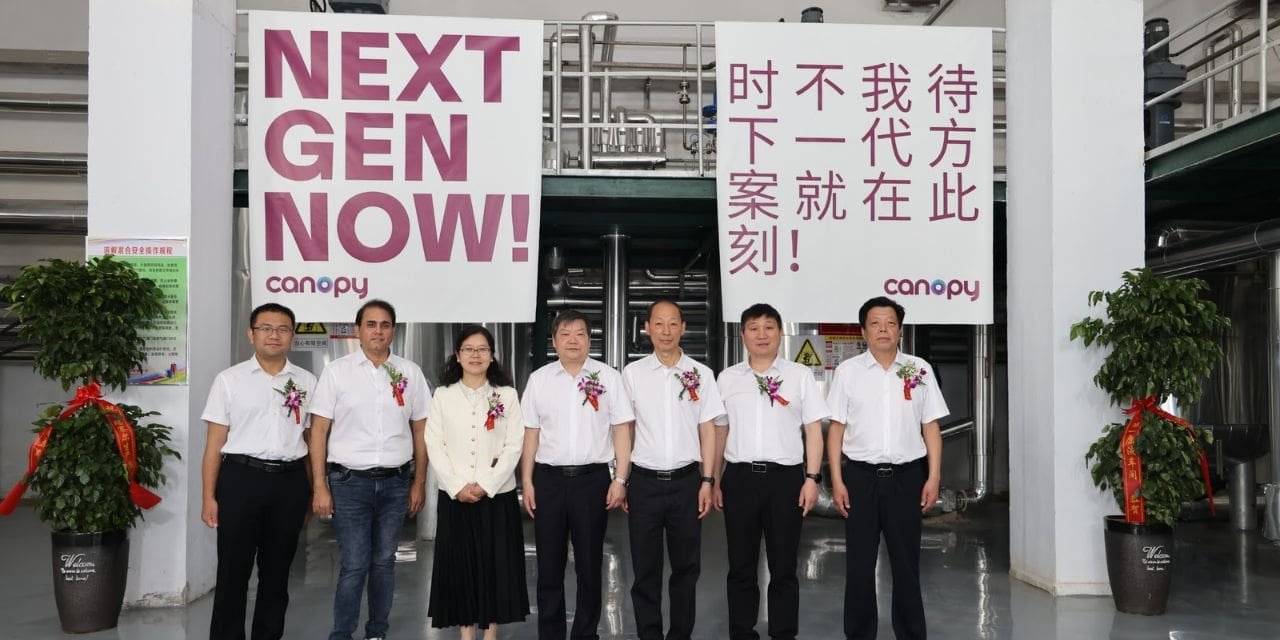
Bailu Group (Xinxiang Chemical Fiber Co.) has unveiled a small-scale pilot facility for circular viscose production at its newly launched BylurRecel site. The project marks a significant stride in China’s man-made cellulosic fibre (MMCF) sector towards Next Gen and closed-loop production systems.
The BylurRecel line departs from traditional viscose manufacturing by using a direct-dissolution method—bypassing the dissolving pulp stage—to regenerate cellulosic fibres from recovered textiles, mainly post-consumer sources such as discarded hotel linens, with some pre-consumer waste inputs.
With an initial 1,000-tonne annual capacity for viscose staple fibre and a second line in development for viscose filament fibre, Bailu aims to produce around 600 tonnes of Next Gen fibre in 2025. Scale-up plans depend on pilot performance and supply chain readiness.
Nicole Rycroft, Founder of Canopy, applauded Bailu’s innovative approach, noting its potential to reduce reliance on forest-sourced fibres and enhance China’s circular textile economy. She emphasized the project’s promise in reducing the environmental footprint through less energy, water, and chemicals.
At scale, BylurRecel could play a key role in achieving China’s 2030 goal to cut textile waste by 30%, supporting a textiles–consumption–reuse loop. The project complements Bailu’s existing BAILU-ECO line using Södra’s OnceMore™ pulp and underscores its commitment to sustainable sourcing, as recognized by its Dark Green Shirt in Canopy’s 2024 Hot Button Report.