Piyush Goyal Highlights Four Key Pillars for India’s Vision 2047
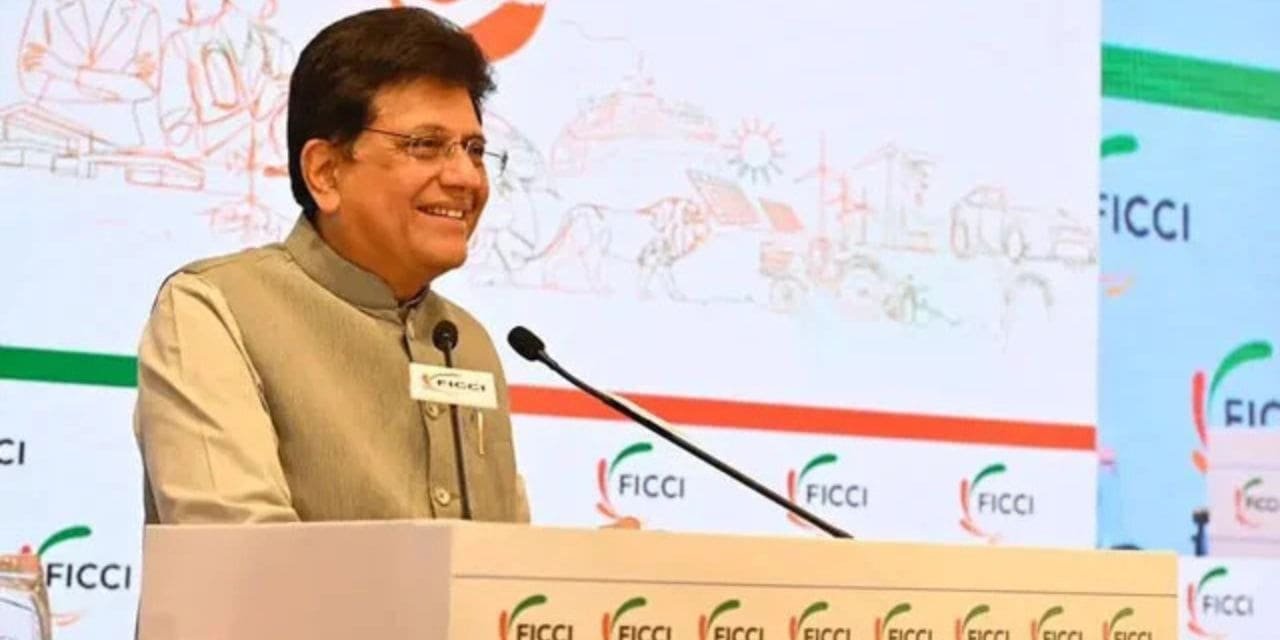
Union Minister of Commerce & Industry Piyush Goyal emphasised manufacturing, skilling, investment and technology as the four key pillars for India’s growth journey towards becoming a developed nation by 2047. He shared these priorities at the Curtain Raiser of the 98th Annual General Meeting and Annual Convention of FICCI in New Delhi.
Strengthening Domestic Manufacturing
Goyal stated that building a strong domestic manufacturing base remains the first priority. India must increase competitive industrial output and enhance self-reliance in products that can be efficiently produced within the country.
However, he cautioned industries to carefully assess supply–chain vulnerabilities and avoid dependence on a single sourcing destination.
He added that as global trade becomes increasingly strategic, transforming India into a major global manufacturing hub must stay a national mission.
Skilling India’s Workforce
The second pillar focuses on creating a highly skilled, performance-driven workforce. Goyal noted that underemployment, rather than unemployment, is India’s bigger challenge.
Therefore, he urged a shift in mindset towards valuing technical skills and practical capability instead of only pursuing white-collar roles.
He said that developing trained welders, electricians and technicians with discipline and precision will be essential for long-term growth.
Building an Investment-Friendly Ecosystem
Goyal identified investment as the third critical dimension. He said the Government is committed to improving ease of doing business by removing bottlenecks, reducing compliance burdens, decriminalising outdated provisions and eliminating obsolete laws.
Furthermore, the Government continues to refine FDI and FII processes to accelerate investment flows.
According to Goyal, a robust investment climate will create jobs, attract new technologies, strengthen innovation and support advanced sectors such as defence and security.
He emphasised that stable policies and predictable regulations are vital for progress during the Amrit Kaal.
Technology, Innovation and Knowledge Growth
The fourth pillar centres on technology-led transformation. Goyal stressed integrating artificial intelligence, quantum computing and machine learning into the national growth framework.
With 2.3 million STEM graduates produced annually and rapid expansion in Global Capability Centres, India already has a strong talent pool.
He referenced the recently launched ₹100,000 crore Research, Development and Innovation Fund, which aims to accelerate innovation and support startups.
Governance Reforms and Trust-Based Policy
Goyal highlighted the impact of the Jan Vishwas Act, which has played a key role in decriminalising minor offences and enhancing industry confidence.
He noted that the reforms foster entrepreneurship, improve compliance systems and promote a predictable business environment.
India’s Economic Transformation and Global Recognition
Goyal said India’s transformation has been made possible through the Prime Minister’s “politics of trust”, which strengthened relationships between citizens, businesses and the Government.
He mentioned that India has risen from the 11th largest to the 4th largest economy, and is on track to become the third largest global economy, aiming for a USD 30–35 trillion GDP.
Role of FICCI in Nation Building
The Minister celebrated FICCI’s historic contribution, noting that Mahatma Gandhi supported its establishment to promote economic nationalism and self-reliance.
Today, FICCI represents over 250,000 companies and continues to expand global partnerships. He encouraged it to extend its reach into remote areas and strengthen the vision of “FICCI Bharat 2047.”
Five-Point Agenda for Partnership
Goyal proposed a five-part collaboration plan:
-
F — Fiscal discipline
-
I — Innovation
-
C — Connectivity & infrastructure
-
C — Commerce
-
I — Inclusive growth
He urged FICCI to support MSMEs, mentor young leaders, study global best practices and drive sustainability and competitiveness.
Commitment to India’s 2047 Growth Vision
Goyal concluded that India is a beacon of economic stability in an uncertain global environment.
He expressed confidence that collective effort will enable India to become a fully developed nation by 2047.