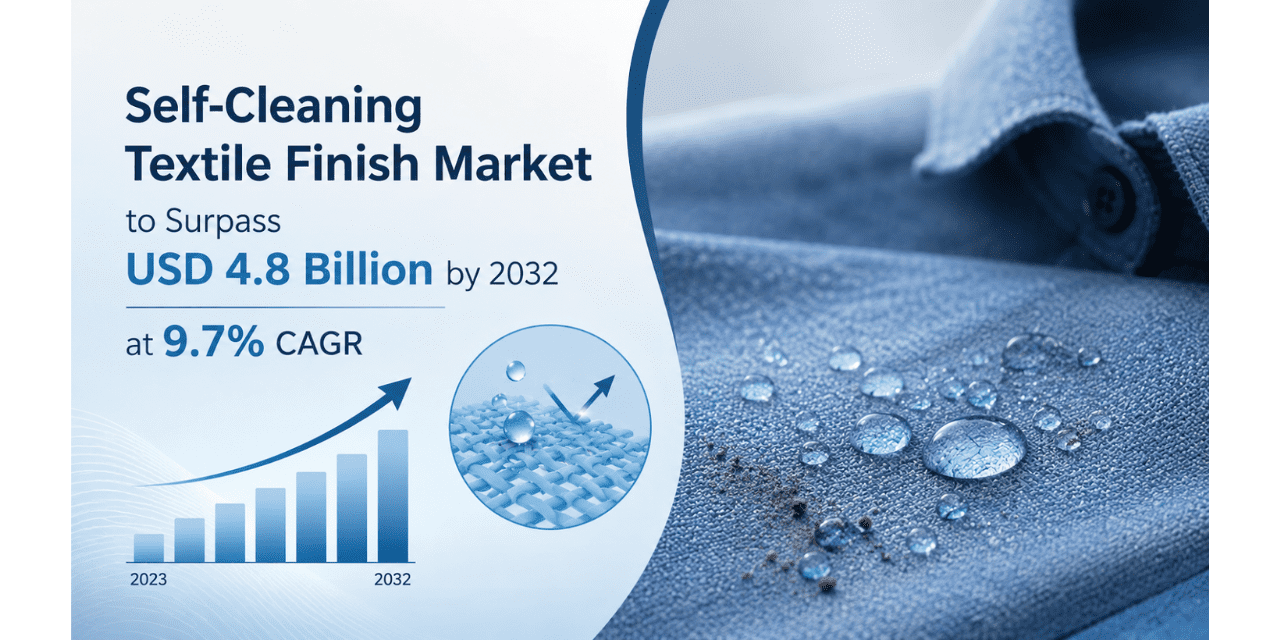
The global self-cleaning textile finish market is experiencing significant growth as textile manufacturers increasingly adopt nanotechnology, hydrophobic coatings, and antimicrobial solutions to improve fabric performance, durability, and hygiene standards. According to data released by Marketintelo, the market was valued at approximately USD 2.1 billion in 2024 and is projected to reach nearly USD 4.8 billion by 2032, expanding at a CAGR of 9.7% between 2025 and 2032.
The adoption of self-cleaning textile technologies rose sharply in 2025, with demand increasing by 28% year-on-year. Growth is being driven by expanding applications across healthcare textiles, sportswear, automotive interiors, military fabrics, and performance apparel. More than 62% of textile manufacturers surveyed during 2025 reported increased investments in advanced functional fabric coatings compared to 2022 levels.
Nano-coated fabrics emerged as a major segment within the market, accounting for 41% of the industry share in 2025. Water-repellent textile demand increased by 31% year-on-year, while antimicrobial self-cleaning fabrics demonstrated the ability to reduce bacterial growth by up to 99.4%.
Global investments in textile research and development crossed USD 780 million in 2024, while integration of smart textile technologies increased by 22% between 2023 and 2025. Europe’s sustainable textile coating segment also expanded by 18.5% during 2025, reflecting growing demand for environmentally responsible textile solutions.
The market has shown consistent expansion over the past several years. Industry valuation increased from USD 1.05 billion in 2018 to USD 2.32 billion in 2025, supported by heightened hygiene awareness and increased procurement of infection-control textiles by healthcare institutions worldwide.
Asia-Pacific continues to dominate the global market, accounting for approximately 46% of total production volume in 2025. China and India remain key manufacturing hubs due to competitive production capabilities and growing textile exports. China generated more than USD 620 million in market revenue during 2025, while India’s smart textile production increased by 24% year-on-year.
Japan invested nearly USD 95 million in nano-fabric research and development projects, while South Korea reported a 17% increase in antimicrobial textile exports during 2024.
North America represented nearly 27% of the global market, supported by strong demand from healthcare and military applications. Between 2023 and 2025, the U.S. Department of Defense allocated over USD 110 million toward advanced protective textile innovation programmes.
Europe accounted for 21% of global demand, driven largely by sustainability regulations and the increasing adoption of eco-friendly coating technologies. Germany alone increased technical textile investments by over 14% in 2025.
Nanotechnology continues to play a major role in product innovation within the self-cleaning textile finish industry. Nano titanium dioxide coatings currently account for nearly 39% of all self-cleaning textile applications because of their ability to break down organic contaminants when exposed to UV light.
Performance data from recent textile innovations show that hydrophobic coatings can reduce water absorption by up to 95%, while self-cleaning fabrics are capable of extending garment lifespan by 28–35%. Commercial users have also reported annual maintenance cost reductions of around 22%, alongside a 30% decline in industrial laundry frequency after adopting these technologies.
Smart fabrics integrated with self-cleaning capabilities recorded a 22% increase in production between 2023 and 2025, particularly within sportswear, medical textiles, and wearable technology segments.
Environmental sustainability is also accelerating market adoption. Traditional textile cleaning contributes significantly to global water pollution, whereas self-cleaning fabrics can reduce washing frequency by nearly 40–50%, lowering water and energy consumption.
Globally, investments in green coating technologies rose by 26%, while EU textile sustainability funding exceeded USD 420 million during 2024. Water-saving textile technologies are also estimated to reduce industrial water usage by nearly 18 billion litres annually.
Brands implementing self-cleaning textile finishes reported additional business benefits, including 18% lower maintenance costs and 15% higher consumer retention rates.
Looking ahead, the self-cleaning textile finish market is expected to continue expanding rapidly as functional textiles become increasingly mainstream across healthcare, fashion, automotive, and industrial sectors.
By 2032, nano-enabled textile coatings are expected to account for more than 55% market penetration, while smart wearable integration is projected to grow at a CAGR of 12.8%. Sustainable self-cleaning fabrics could also reduce textile washing energy consumption by nearly 45%, with global production volumes expected to surpass 18 million metric tons annually.
The growing focus on hygiene, sustainability, and high-performance materials is expected to position self-cleaning textile technologies as a major component of next-generation textile manufacturing and smart fabric innovation.
Read A Full Report: https://marketintelo.com/report/self-cleaning-textile-finish-market