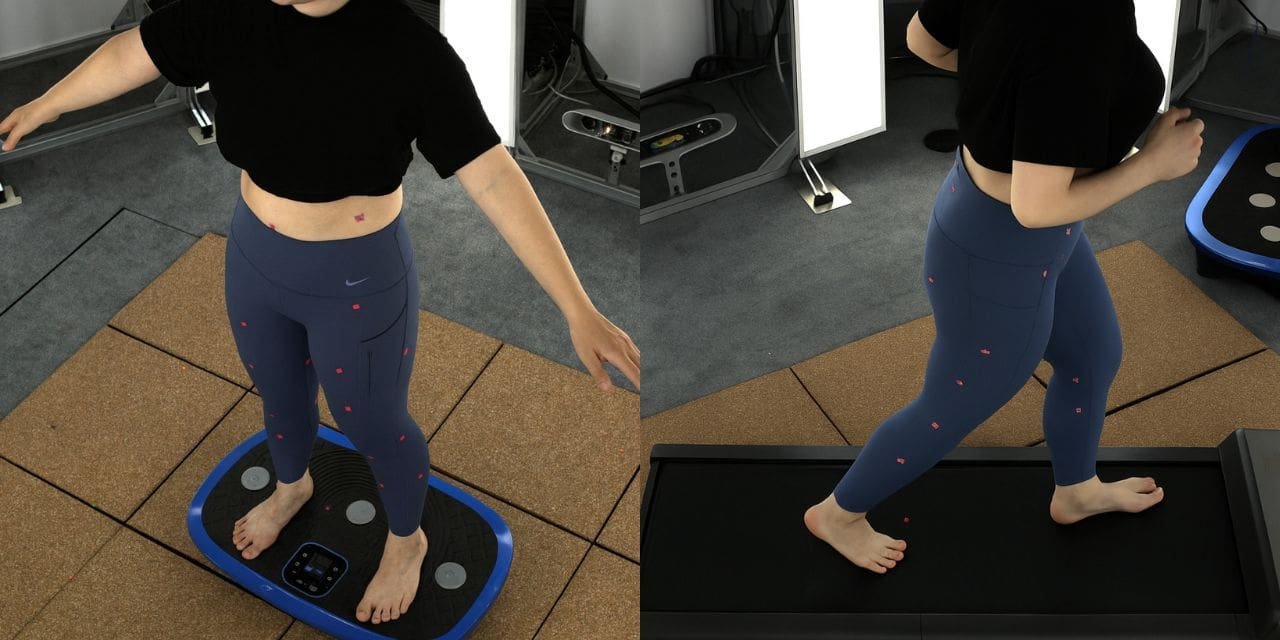
Researchers at The Hong Kong Polytechnic University (PolyU) have pioneered a groundbreaking anthropometric method that precisely measures soft tissue deformation during body movement, addressing a long-standing challenge in sportswear and medical apparel design.
Led by Prof. Joanne Yip, Associate Dean and Professor at the School of Fashion and Textiles, the team developed an image recognition algorithm integrated with an analytical model based on elastic theory (Boussinesq solution). This approach enables accurate tissue deformation measurements while minimizing motion-related errors, offering garment designers a data-driven framework to link fabric pressure with tissue response.
Why It Matters:
Soft tissue deformation is a crucial factor influencing fit, comfort, appearance, blood circulation, and muscle support. Traditional methods often produced errors during motion, resulting in ill-fitting garments. PolyU’s method reduces inaccuracies, delivering remarkable precision with deviations of just 1.15 mm in static conditions and 2.36 mm in motion.
Applications in Sportswear & Medical Apparel
The innovation is highly adaptable to compression garments like sports leggings, post-surgical garments, and compression stockings. By adjusting material and design parameters, manufacturers can optimize fit, performance, and injury prevention. Tests with sports leggings of varied materials and dimensions confirmed the model’s predictive accuracy, linking mechanical properties directly to ergonomic performance.
Industry Impact:
-
Streamlines prototyping by integrating into CAD/CAM systems.
-
Reduces reliance on costly motion-capture tools, benefiting SMEs.
-
Supports personalized garment design tailored to individual tissue responses, particularly valuable for medical wear.
-
Advances biomechanical simulation for next-gen wearable technology.
Prof. Yip noted, “Our method can be tailored across garment types, from athletic compression wear to medical apparel, delivering performance, comfort, and safety through accurate prediction of tissue deformation.”
The findings were published in Frontiers in Bioengineering and Biotechnology, showcasing PolyU’s interdisciplinary excellence in fashion, biomechanics, materials science, and engineering. This breakthrough sets the stage for more innovative, accessible, and high-performance garment design solutions worldwide.