

Mrs Bijal Dedhia
Assistant Professor
Dept. Textile Science and Fashion Design
Dr Bhanuben Mahendra Nanavati College of Home Science

Dr Pradnya Prashant Ambre
Head, Assistant Professor,
Dept. Textile Science and Fashion Design
Dr Bhanuben Mahendra Nanavati College of Home Science
Abstract
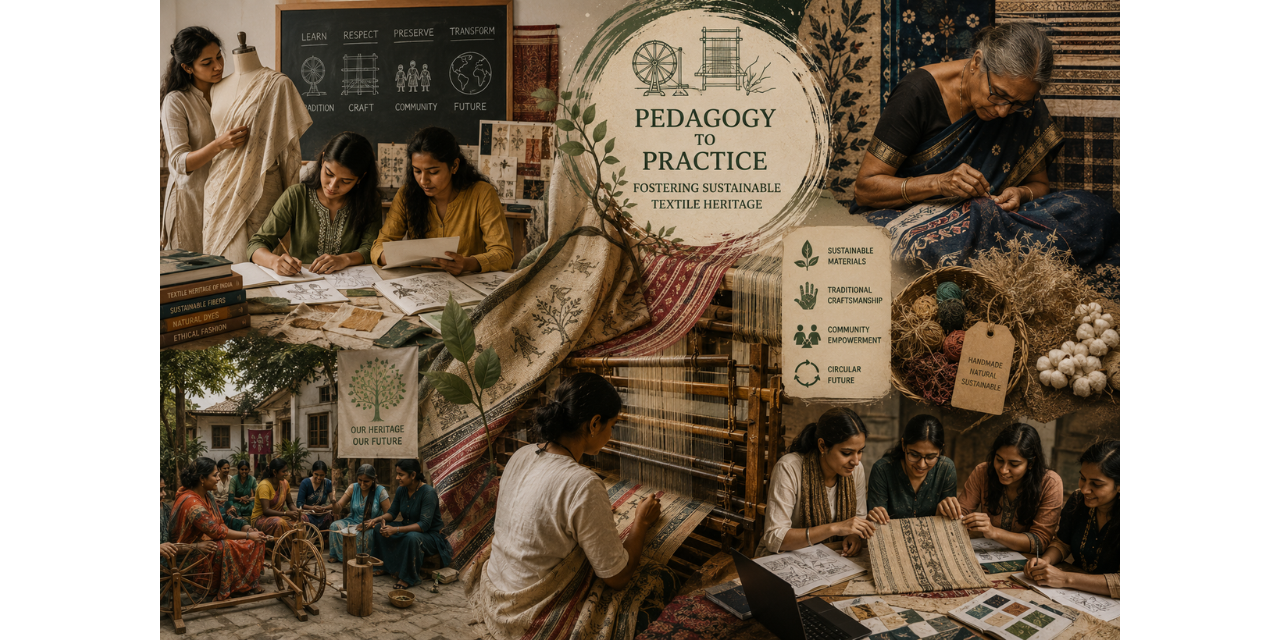
India’s handloom tradition is a vibrant expression of the country’s cultural heritage, craftsmanship, and indigenous knowledge. Beyond its economic importance, it reflects sustainable practices and centuries-old weaving traditions that deserve to be preserved and appreciated by younger generations. In recognition of this, the Government of India introduced National Handloom Day in 2015 to celebrate the contribution of handloom weavers and promote awareness of India’s rich textile heritage. While many educational institutions observe this day through exhibitions and awareness programmes, these activities are often limited to one-time events with little integration into the teaching-learning process. This paper presents an innovative pedagogical approach adopted by the Department of Textile Science and Fashion Design at Dr Bhanuben Mahendra Nanavati College of Home Science (Empowered Autonomous), Mumbai, where National Handloom Day has been transformed into a structured experiential learning platform over the past six years (2020–2025).
Using a qualitative case study approach, the paper draws on departmental documentation and reflective practices to examine how activities related to handloom heritage were purposefully integrated into undergraduate education. The initiative combines Indian Knowledge Systems (IKS), expert lectures, artisan interactions, field visits, creative design competitions, entrepreneurship, and student-led event management to create meaningful learning experiences beyond the classroom. Students from all three years participate through progressively defined roles, allowing them to develop not only knowledge of India’s textile heritage but also creativity, leadership, communication, teamwork, organisational skills, and entrepreneurial thinking. The thematic analysis highlights six key educational outcomes: heritage awareness, experiential learning, creativity and innovation, collaborative leadership, entrepreneurship, and continuous pedagogical improvement.
The paper proposes a Pedagogy-to-Practice (P2P) Framework that demonstrates how heritage-based experiential learning can enrich textile and fashion education while aligning with the principles of the National Education Policy (2020), Indian Knowledge Systems, and Education for Sustainable Development. The framework offers a practical and replicable model for higher education institutions seeking to preserve India’s living textile heritage while preparing students to become creative, culturally aware, and socially responsible professionals.
Keywords: National Handloom Day, Indian Knowledge Systems, Experiential Learning, Heritage Education, Sustainable Practices, Student Leadership.


