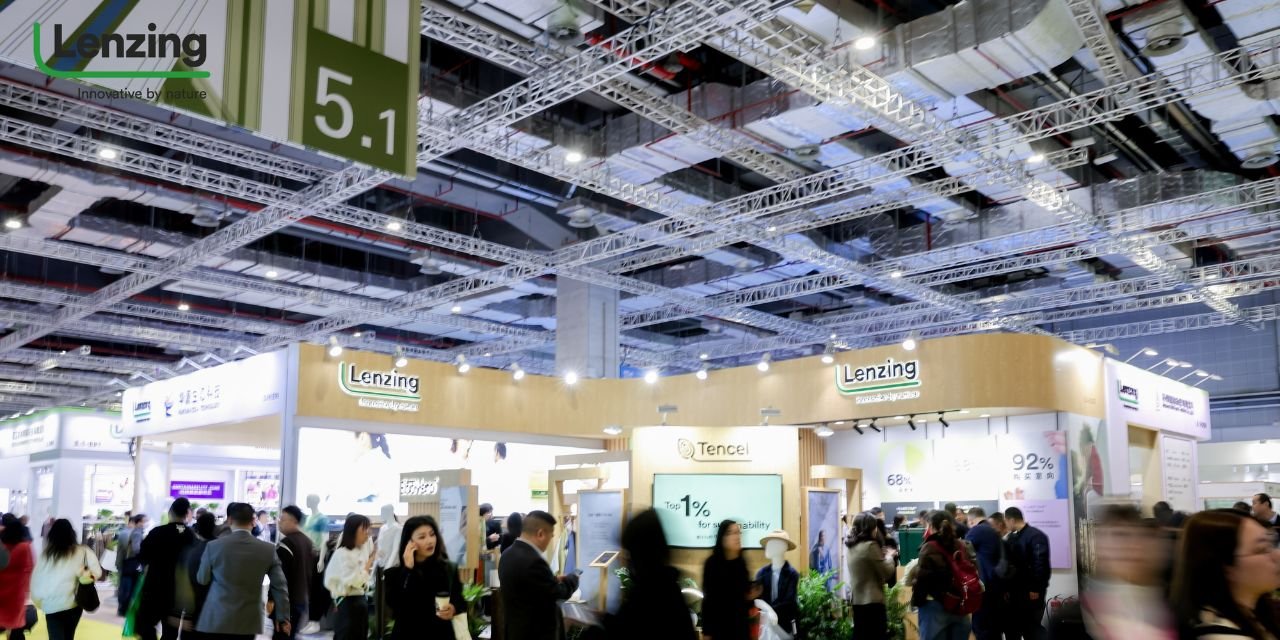
The Lenzing Group has introduced its latest fibre innovation, TENCEL™ Lyocell – HV100, to the Chinese market at the Intertextile Shanghai Apparel Fabrics – Spring Edition held from 11–13 March 2026 in Shanghai.
Originally developed for denim constructions and first presented at Kingpins Amsterdam in September 2025, the new fibre is now expanding into broader woven apparel categories, supporting Lenzing’s strategy to deliver premium and responsible textile solutions.
Expanding Beyond Denim Applications
The launch of TENCEL™ Lyocell – HV100 is being accelerated through strong partnerships with textile mills and industry stakeholders.
While initial development focused on denim fabrics, the fibre is now being explored in applications such as:
-
Bottom-weight fabrics including chinos
-
Shirting fabrics
-
Other woven apparel materials
Chinese mill partners are playing a key role in advancing these next-stage applications and scaling the technology across global supply chains.
According to Yann Lepage, the innovation reflects the company’s collaborative approach to textile development.
“China is one of the world’s leading markets for innovation and we are committed to strengthening our partnerships with brands, retailers and fabric mills across the country. The new TENCEL™ Lyocell – HV100 fibre reflects our collaborative approach to innovation, acting on client insight with our R&D expertise to deliver a differentiated solution to the market.”
Strong Consumer Trust in the TENCEL™ Brand
The growing momentum behind the new fibre is supported by strong consumer trust in the TENCEL™ brand, particularly in China.
A NielsenIQ study indicates that:
-
TENCEL™ has been the most recognised fibre brand in China for five consecutive years
-
92% of Chinese consumers familiar with the brand show purchase intent for apparel containing TENCEL™ fibres
-
Globally, 85% of consumers familiar with the brand express purchase intent
-
88% report satisfaction with products containing TENCEL™ fibres
Engineering Natural Texture with Advanced Fibre Technology
Unlike conventional lyocell fibres known for their smooth appearance, TENCEL™ Lyocell – HV100 has been engineered to create fabrics with a more natural and organic aesthetic.
Using Variocut technology, the fibre features controlled variations in staple length, producing subtle surface irregularities and a matte finish that mimics the texture of naturally grown fibres.
Julia Ulrich explained the unique characteristics of the innovation.
“TENCEL™ Lyocell – HV100 provides a look and feel that is more reminiscent of naturally grown fibres. It opens up new possibilities in segments where a more matte and irregular fabric surface is desired.”
Chinese Mills Driving Innovation
Chinese textile manufacturers are playing a critical role in bringing the new fibre to commercial scale.
Partners such as Advance Denim are working closely with Lenzing to develop high-performance fabrics using the fibre.
Vincent Hu noted that the fibre delivers the rugged matte texture sought by premium denim markets while maintaining comfort and sustainability credentials.
Wang Zongwen highlighted the collaborative innovation between the companies.
“Having partnered with Lenzing for over two decades, we have jointly tackled a ‘seemingly impossible’ challenge, building on the exceptional drape, strength and environmental advantages of TENCEL™ Lyocell while endowing it with a cotton-like natural lustre.”
Environmental Performance
The fibre maintains the environmental credentials associated with the broader LENZING™ Lyocell portfolio.
Key sustainability features include:
-
At least 50% lower carbon footprint compared to generic lyocell fibres
-
At least 50% lower water consumption
-
Wood sourcing from FSC® or PEFC-certified forests
-
Closed-loop manufacturing with more than 99.8% solvent recovery
Supporting the Future of Textile Innovation
The China debut of TENCEL™ Lyocell – HV100 marks the next stage of Lenzing’s fibre innovation strategy, enabling higher-value textile development and broader collaboration across the global textile supply chain.
By combining advanced fibre engineering, sustainability and mill partnerships, the innovation aims to support brands and manufacturers in meeting evolving consumer expectations for responsible and high-performance fabrics.