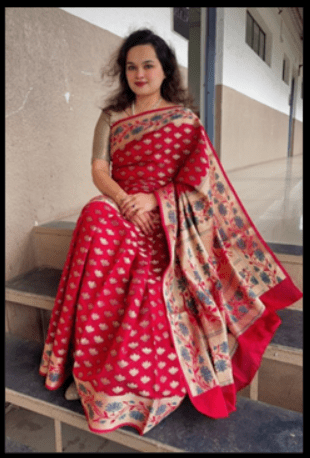
Ms Sayali Sanjay Bhamare
As we all know, Khadi is the fabric which belongs to the Swadeshi movement. Let us understand the Swadeshi Movement. This movement started on 7 August 1907 in Calcutta by Mahatma Gandhiji. Mahatma Gandhiji promoted Indian made fabrics and other products to support local business. The main objective of the Swadeshi movement was to boycott British products. The Swadeshi movement promoted self-reliance and nationalism among the Indian people. The Swadeshi movement was led by figures like Lokmanya Tilak, Lajpat Rai, Aurobindo Ghosh, etc. It became a key movement in India’s independence struggle. From then Khadi fabric was called the fabric of India.
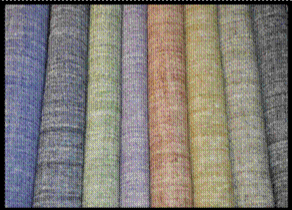
What is Khadi? Khadi is made by Indian people in India. It is made from natural fibres like cotton, silk, wool and linen. It is hand-spun and hand-woven. Natural dyes are used while producing Khadi fabric. No chemicals and synthetic fibres, or dyes are used while producing the fabric. All these properties make Khadi fabric sustainable as it has a low carbon footprint on the environment. It also has health benefits as it is skin-friendly. Khadi fabric is known for its durability and long lifespan. Khadi production helps to support the local economy by empowering rural artisans. The use of Khadi was reduced in the last decade. It is rising again as the ”Vocal for Local” movement has started by our Hon. PM Narendra Modi, sir.
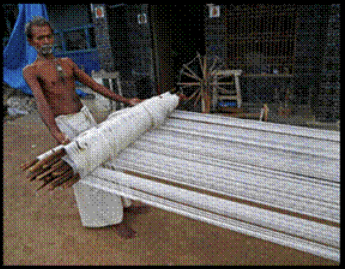
The Process of Weaving Khadi Fabric
1) Fibre cultivation: Fibres are picked by hand in the fields or made available by their natural method.
2) Washing: Fibres are then washed to clean the natural dirt, and then combing is done. Fibres are made ready for spinning.
3) Spinning: Fibres are then spun on the Charkha or handloom. At the same time, they are twisted to make them stronger.
4) Yarn Preparation: Yarns are prepared on bobbins.
5) Weaving: Yarns are loaded on the charkha or handloom, and weaving is done manually by artisans.
6) Dying: Woven fabric is sent for dying. Natural dyes are used.
7) Finishing: Dyed fabric is washed and cleaned. Then, mechanical finishes are given to the fabric to make it ready for final use.
Khadi in Fashion
Khadi is used in today’s fashion as it is a versatile fabric. A wide range of styles like traditional wear, formal wear and also casual wear are made from Khadi fabric. It can be incorporated into various styles and suits both ethnic and western wardrobes. Khadi fabric is suitable for all types of surface ornamentation techniques like embroidery, printing, painting, and fabric manipulation. Traditional and ethnic wear like Kurta and Tunics, Sarees, Lehengas, Dhoti can be simple or have modern and western detailing. Classic handloom sarees like Chamba Roomal, Kota Doria, etc, are made from Khadi itself. Contemporary and western wear like jackets and blazers dresses, kaftans, co-ords, and trousers look fashionable if properly designed and made from Khadi fabric. Many designers have also created Khadi denim for eco-friendly and lightweight, and stylish use. Outfits designed and made in Khadi offer a relaxed fit yet a stylish look. Khadi can be styled with various other fabrics and designs. Nowadays, accessories made from khadi, like handbags and some jewellery, are also trending. Khadi fabric is suitable for furnishing pieces like curtains, sofa covers, cushions, covers napkins, making it a sustainable choice and classy at the same time.
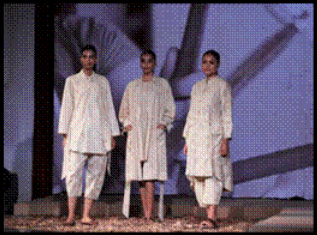
Khadi products are available on sites like Flipkart, Amazon, Myntra, Fashion Export. Mint Horizon is the brand which offers handwoven Khadi cotton dresses with intricate designs and patterns. Designer Aishika features handloom products from West Bengal, offering designer party wear Khadi sarees suitable for formal events. Brand Anishka Creations features pink designer brush printed Khadi organza sarees with blouse pieces, ideal for ceremonial occasions. There are many other brands and designers which feature products made from khadi.
While making it trendy and eco-friendly, Khadi faces many challenges to its survival, including production competition. financial issues, market access, lack of government support, etc. Let’s elaborate on it.
Production Challenges
- Competition: Khadi faces a big challenge of market competition from mass-produced and cheaper synthetic fabrics.
- Quality and design: There are issues with inferior quality and a less variety of design patterns that don’t fascinate to modern consumers.
- Raw materials: The availability, quality, and quantity of raw materials can be unsatisfactory. It leads to production issues.
- Technology: Outdated technology can limit productivity and affect the quality and texture of the fabric.
Financial and Market Challenges
- Financial strain: Khadi units often struggle with a shortage of financial capital
- GST impact: The Goods and Services Tax (GST) has increased production costs, making Khadi less competitive and the final product expensive.
- Declining government support: There has been a reduction in government schemes related to Khadi production, leading negative impact on sales and generation.
- Marketing and sales: Poor marketing linkages, limited working hours of Khadi Bhandars, and a lack of brand promotion and sales, particularly in urban and global markets.
Other Challenges
- Bureaucracy: Complex and time-consuming administrative procedures can delay processes like raw material procurement.
- Awareness: There is a need for greater awareness and a shift in preference away from foreign brands and towards Khadi.
- Skilled labour: There is a shortage of skilled labour in some areas.
As every problem has a solution, these challenges also have solutions, which are described below.
Artisan and Production Solutions
- Improve artisan welfare: Increase artisan wages, and ensure mandatory contributions to artisan welfare funds
- Enhance quality and design: Focus on the quality of raw materials and introduce new design patterns to improve market appeal
- Modernise production: Adopt more advanced production techniques to improve efficiency while still respecting the traditional roots of Khadi
Government and Policy Solutions
- Increase financial assistance: Provide more financial aid through various govt. schemes
- Implement Direct Benefit Transfer (DBT): Ensure funds for schemes are transferred directly to artisans’ bank accounts to improve transparency and efficiency.
- Protect the Khadi brand: Develop a strong brand identity and implement legal protection for the “Khadi” brand to distinguish it from fake and inferior products and protect its integrity
Marketing and Outreach Solutions
- Target the youth: Promote Khadi’s relevance and importance, especially its environmental benefits, through outreach in schools and colleges to make it appealing to younger consumers.
- Promote “Swadeshi Khadi”: Encourage self-sufficient Khadi production and consumption through a strategy that supplements commercial sales,
- Highlight sustainability: Promote Khadi as a global icon of sustainability to attract consumers who are increasingly conscious of their environmental impact
- Global Level Collaborations: Global collaborations through brands and exhibitions can promote the sale of Khadi products.
- Designer and Celebrity collabs: Many people in India idolise public figures and follow their fashion trends. Designers can showcase their innovative patterns through public figures, and the overall trend will increase, leading to more demand for khadi products.
Conclusion
Khadi is a symbol of India’s rich cultural heritage, sustainability, and self-reliance. Despite facing challenges, khadi production can be revived through government support, technological advancements, market expansion, skill development, and sustainability initiatives. By promoting khadi, we can:
- Empower artisans and rural communities
- Preserve traditional crafts and culture
- Support sustainable and eco-friendly practices
- Foster economic growth and development
Let’s work together to revive and promote khadi, ensuring its legacy for future generations.