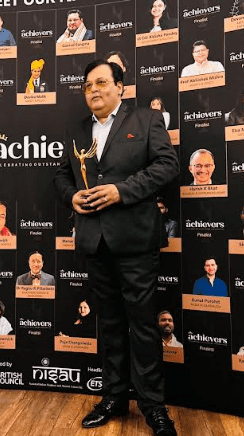
Indaco’s Design-to-Delivery Model Drives India’s Denim Export Growth
India’s position in global apparel manufacturing has often been misunderstood. It did not lag behind. It evolved differently. While countries such as Bangladesh built export-led garment economies, India developed a diversified industrial base supported by strong sectors including engineering, chemicals, and information technology. Today, this diversity is emerging as one of India’s strongest advantages as a sourcing destination.
India is also one of the world’s largest fashion-aware populations. Denim and casualwear are already part of everyday life across major cities and smaller towns. Because of this, the garment industry evolved not only for exports, but also to support strong domestic fashion demand, building a nuanced understanding of product construction, wash techniques, and fit evolution.
Indaco Jeans is one of the key denim manufacturers in India, leveraging the country’s strengths while adding its own expertise to serve global brands and retailers. Insights from Prasad Pabrekar highlight why India is increasingly competitive in denim exports and how the company’s design-to-delivery model supports this growth.
From Manufacturing to End-to-End Partnership
Founded in 2007, Indaco Jeans positioned itself not as a conventional production unit, but as a design-to-delivery partner. The company supports brands across the entire product lifecycle.
Its capabilities extend beyond manufacturing into in-house wash development, fabric selection inputs, market intelligence, and fit and construction improvements. With integrated operations covering research, sampling, cutting, stitching, washing, finishing, and packing, Indaco functions as an active collaborator rather than a passive vendor.
Reframing India’s Global Sourcing Position
Despite being one of the world’s largest producers of cotton and denim fabric, India has historically been underrepresented in global denim garment exports.
However, India’s decentralised manufacturing ecosystem, built through entrepreneur-led small and mid-sized factories, is now being seen as a strategic advantage. It enables flexibility, faster development cycles, and diversified sourcing, key requirements for global brands.
The signing of the India–EU Free Trade Agreement and India–UK Free Trade Agreement is expected to further strengthen India’s competitiveness by addressing previous cost disadvantages.
Technology-Led Growth and Scaling Capacity
Indaco’s response to evolving global demand has been investment-driven, with a strong focus on technology and scale.
The company is expanding its production capacity from 3 million garments annually to an upcoming 5 million. This reflects confidence in both its own growth trajectory and India’s rising role in global denim sourcing.
Technology integration spans multiple levels:
- Process innovation through laser technology, foam wash, and ozone applications
- Infrastructure improvements including water recycling systems and solar energy
- System upgrades focused on traceability and documentation readiness
Sustainability as a System, Not a Label
Sustainability in garment manufacturing is increasingly defined by integrated systems rather than standalone certifications. Indaco’s approach reflects this shift.
Material strategies include responsible cotton sourcing and recycled blends. Process improvements focus on controlled chemistry usage and water recycling. Workforce initiatives emphasise structured training and improved working environments.
At the same time, the company is strengthening traceability and compliance systems in preparation for evolving regulations such as the Ecodesign for Sustainable Products Regulation, which will require greater transparency across product lifecycles.
India’s Evolving Value Proposition
With the expected benefits of multiple free trade agreements, development-led partnerships between brands and manufacturers are becoming increasingly important.
Global retailers are no longer seeking only cost efficiency. They are looking for partners who can contribute to product innovation, speed, flexibility, and compliance.
Indaco’s investments in scale, technology, and integrated capabilities align with this shift. The company represents a broader transformation within India’s garment sector, moving from cost-driven manufacturing to capability-driven sourcing.
Conclusion
India’s denim export story is entering a new phase, driven by structural advantages, policy support, and evolving global demand. Models like Indaco’s design-to-delivery approach demonstrate how Indian manufacturers can move up the value chain.
With strong domestic expertise, expanding technological capabilities, and favourable trade agreements, India is increasingly positioned as a strategic sourcing partner for global denim brands.