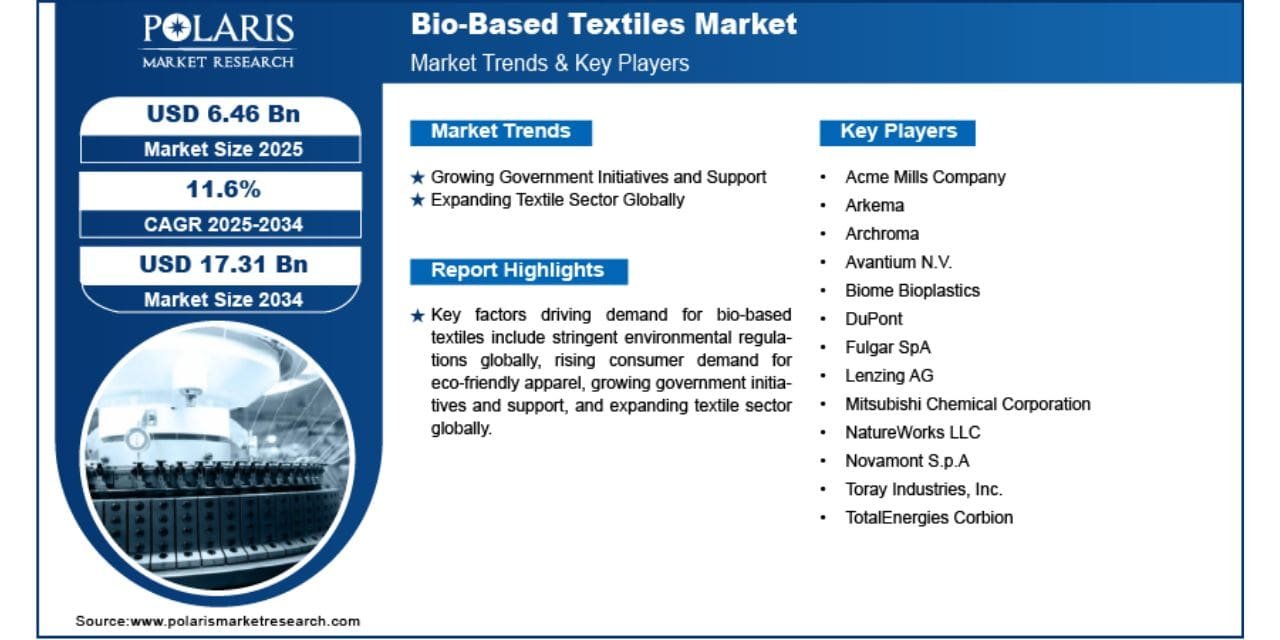
The global bio-based textiles market is set for remarkable expansion, projected to grow from USD 5.80 billion in 2024 to USD 17.31 billion by 2034, reflecting a CAGR of 11.6%, according to Polaris Market Research. Bio-based textiles are transforming both fashion and industrial fabrics by offering renewable, biodegradable, and low-carbon alternatives to petroleum-based materials. Derived from plants, animals, algae, and microorganisms, these fabrics include organic cotton, hemp, bamboo, PLA fibers, and innovative materials like algae-based textiles and mushroom mycelium.
Material Sources and Innovations
-
Plant-based: Cotton, flax, hemp, bamboo, jute, ramie, and upcycled agricultural byproducts such as banana stems, pineapple leaves, and orange peels, supporting circular economy models and regenerative farming.
-
Animal-based: Wool, silk, and other natural fibers produced through ethical sourcing, alongside breakthroughs in lab-grown leather and spider silk proteins.
-
Microbial/bioengineered: Bacterial cellulose, fungal mycelium, and algae fibers cultivated in controlled environments, as well as bioengineered silk and leather-like materials via precision fermentation.
Market Growth Drivers
Consumer demand for sustainable fashion—particularly among millennials and Gen Z—is accelerating adoption. The environmental costs of fast fashion have heightened interest in biodegradable, renewable fabrics. Government regulations and incentives, including carbon taxes, extended producer responsibility (EPR) policies, and bans on single-use plastics, are further pushing manufacturers toward bio-based alternatives.
Key Benefits
-
Lower carbon footprint and reduced reliance on pesticides, water, and fossil fuels
-
Biodegradability, reducing landfill waste and microplastic pollution
-
Safer for skin and worker health due to absence of toxic chemicals
-
Ethical sourcing and use of renewable agricultural byproducts
Conclusion
As sustainability becomes central to global textile production, bio-based textiles stand out as a scalable, eco-conscious solution for both everyday wear and industrial uses. With support from consumers, brands, policymakers, and researchers, the industry is positioned for long-term growth.