
Dr. Anshu Sharma
HOD, TSAD,
SNDT Women’s Univ.
Meghalaya is predominantly an agrarian state with abundant natural resources. However, its hilly terrain and fragile environment limit the establishment of large-scale industries. Therefore, promoting sustainable livelihood opportunities is essential for improving the state’s economy.
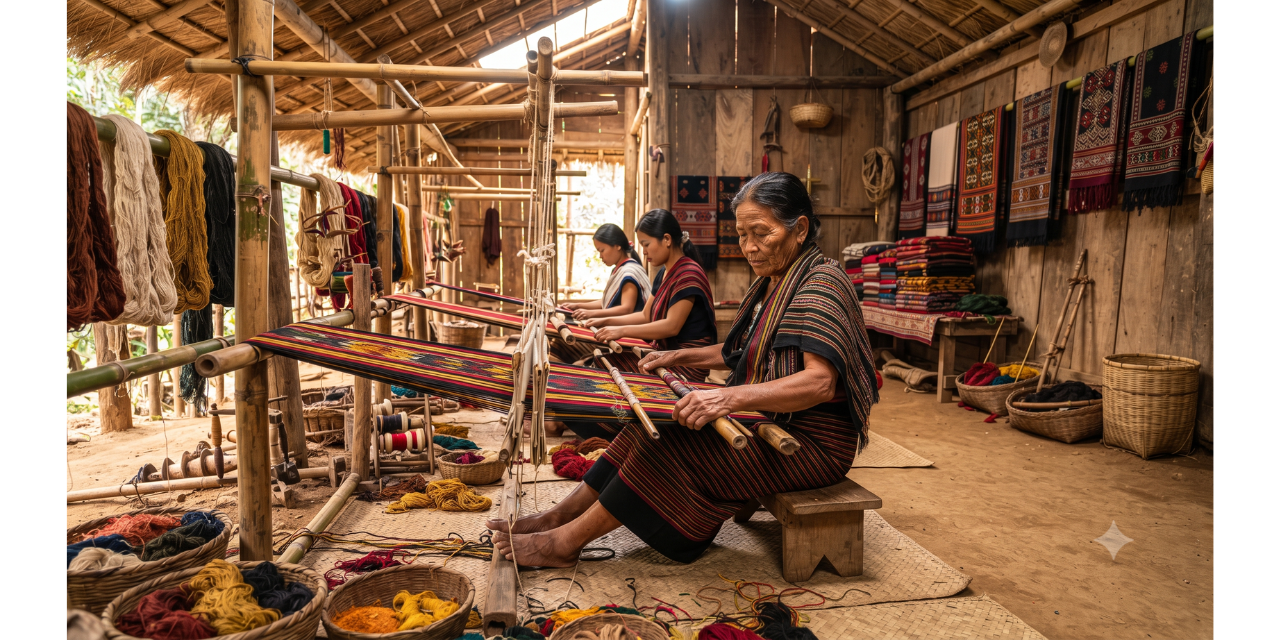
The traditional handloom and cottage textile industry has significant potential to generate employment, increase household income, and preserve the rich cultural heritage of the indigenous communities. The weaving tradition of the Garo community is an important part of this heritage and continues to play a vital role in the rural economy.
The present study examines the traditional textile units of the Garo Hills with the objective of understanding their production and marketing practices, identifying the major problems faced by the weavers, and suggesting measures for the development of the sector. Primary data were collected through interviews and field observations. Information was gathered on the socio-economic profile of the respondents, household production activities, raw material procurement, manufacturing processes, tools and equipment, product range, pricing, infrastructure, government support, and marketing practices.
The study also explored the constraints faced by the weavers, including limited access to finance, outdated technology, inadequate training, and poor market linkages. The findings reveal that the Garo community possesses rich weaving skills and produces high-quality handloom products that reflect its cultural identity and traditional craftsmanship. Despite their uniqueness, these products remain largely confined to local markets because of limited design innovation, weak marketing networks, and insufficient institutional support. Most weavers continue to rely on traditional methods, which preserve their cultural heritage but reduce their competitiveness in modern markets.
The study concludes that the traditional textile industry in Meghalaya has considerable scope for growth. Greater emphasis on skill development, improved weaving technology, product diversification, better infrastructure, effective marketing, and stronger government support can enhance the competitiveness of the sector. Such initiatives will not only improve the livelihoods of weavers but also help preserve the traditional weaving culture of the Garo community while contributing to the sustainable socio-economic development of Meghalaya.