How to Document a Blazer for Russian Customs
An accurate garment description, supported by technical specifications and consistent shipment records, can help importers address customs classification disputes in Russia.
By S.E.Via Logistics Team
A supplier’s line sheet may describe a garment as a blazer, while the packing list calls it a jacket. These terms can have similar meanings in retail English. However, the distinction may affect customs classification in Russia.
Importers should confirm the finished garment’s composition, construction and intended use with the factory. They should also retain these details against the exact style or SKU being shipped.
What a Russian Customs Dispute Revealed
A Russian importer declared a men’s garment as a blazer. Customs classified it as outerwear under a different tariff heading. It also fined the importer for allegedly providing inaccurate information that reduced the duties and taxes payable.
The first court declined to overturn the penalty. However, the appeal court reviewed the evidence relating to the disputed style and set the penalty aside. The district court upheld that decision during cassation review.
Customs had referred to explanatory notes describing outerwear designed to protect the wearer from wind, cold and rain. However, the appeal court found that the case file did not explain how the inspected garment met that description.
The file also lacked details about any expert involved, samples taken or comparisons made. In particular, it did not compare the disputed garment with a blazer using its visible and product characteristics.
The importer submitted records from Russia’s Chestny Znak product marking system and a sales invoice. Both described the disputed item as a blazer. The court considered these records alongside the garment’s appearance, properties and intended use.
This outcome relates to the evidence for that particular style and administrative penalty. It does not establish a general rule that a garment labelled as a blazer must receive that classification. Under Article 20 of the Eurasian Economic Union Customs Code, tariff classification depends on the goods and the applicable tariff provisions.
Maintain a Technical File for Every Garment Style
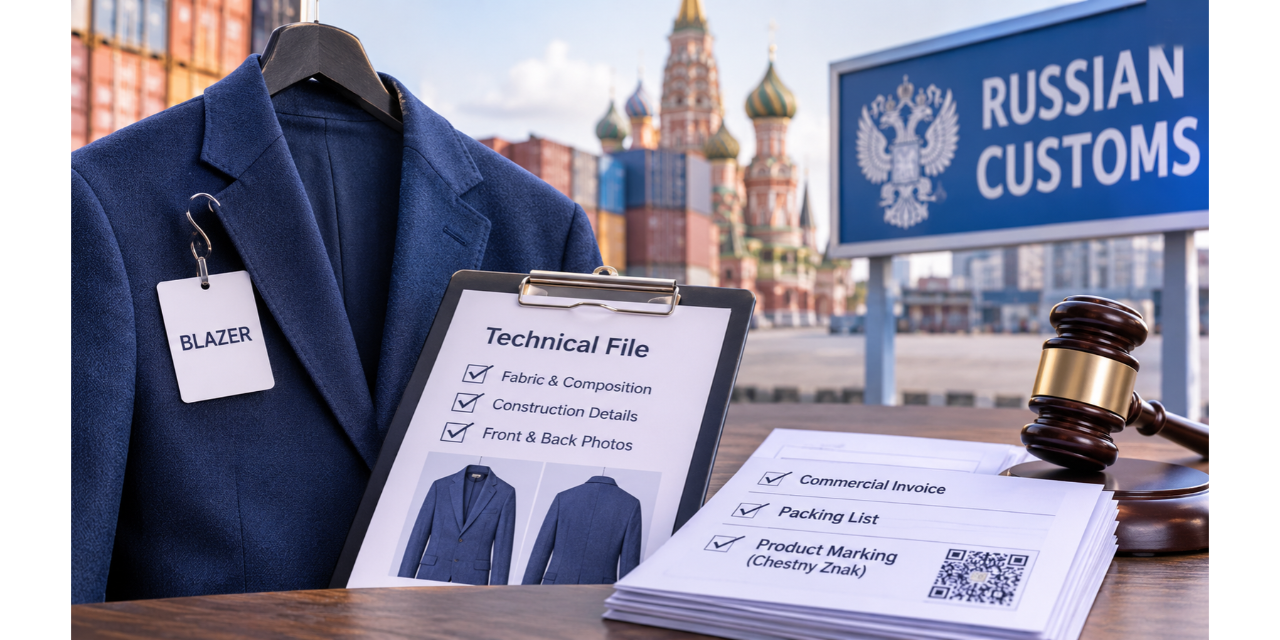
Importers should maintain a short technical file for each style. A factory specification should record key product details, including:
- Whether the main fabric is knitted or woven.
- Fibre composition.
- Fastening type and lining details.
- Features that distinguish tailored clothing from protective outerwear.
- Additional elements such as hoods, weather protection and adjustable cuffs.
Include clear front and back photographs of a production sample. These images can help establish the garment’s appearance and construction.
Style updates also require attention. A revised garment may look similar in a catalogue but use different fabric or construction. Therefore, retain separate specifications for each version. Confirm which version forms part of the order before shipment.
Match Product Specifications with Shipment Documents
Once the technical file is ready, connect it to the shipment paperwork. The supplier’s style code on the invoice and packing list should match the code on the factory specification. It should also correspond to any internal SKU used by the importer.
Where Russian product marking requirements apply, check that the marking record identifies the correct item. Its description should also be consistent with the information used in the customs declaration.
Marketing material can retain its retail terminology. However, the shipping file should contain enough technical detail to explain why different descriptions refer to the same garment.
Resolve Discrepancies Before Shipment
If a buyer or customs declarant identifies a discrepancy, ask the factory to confirm which garment version was packed. Correct the affected documents where necessary.
If customs questions the description later, present the exact declaration line alongside the goods and the records created at the time of shipment.
The reviewer should be able to trace the declared garment from the factory specification to the shipment documents and, where applicable, the product marking record.
Consistent product descriptions, style-level technical records and traceable shipment documentation can help importers explain their classification decisions and respond to customs queries.