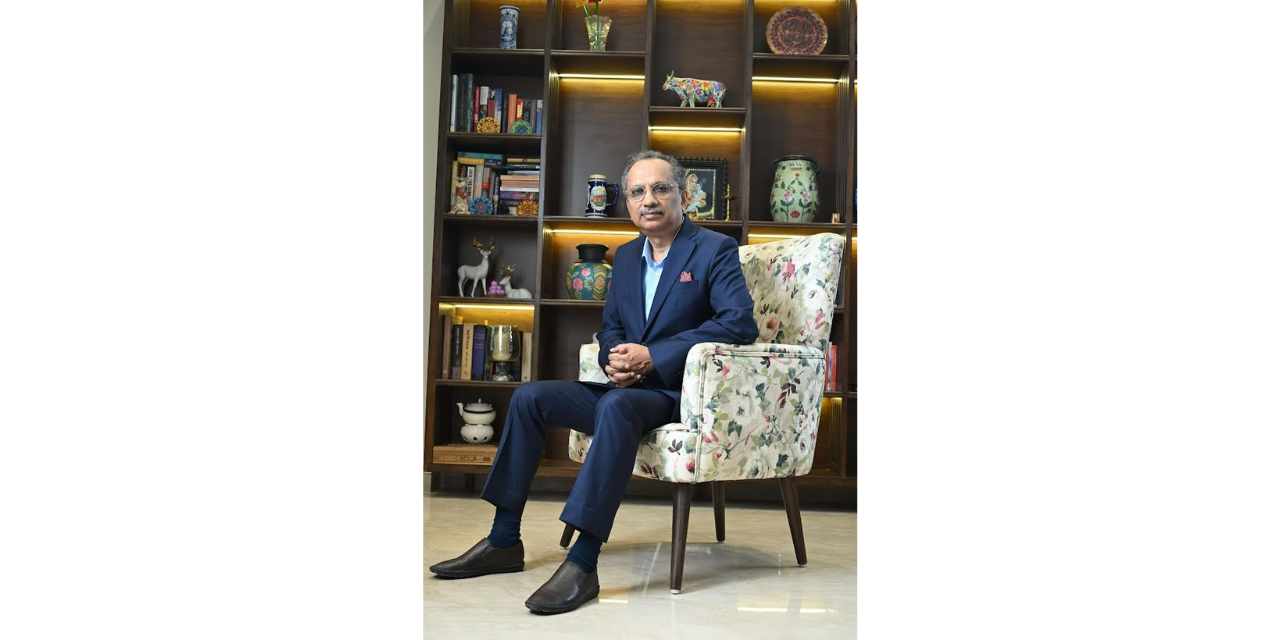
By Soumik Bandyopadhyay
Luxury brands occupy a unique position in the business ecosystem. Unlike mass-market businesses, they are built not only on products or services, but also on heritage, exclusivity, craftsmanship, and perception. The identity of the brand becomes closely linked to the identity of the family behind it.
As with most family-owned luxury enterprises, the founder’s personality, values, and aesthetic vision shape the brand over decades. Whether in fashion, jewelry, hospitality, lifestyle products, or premium retail, mostly luxury businesses grow through the personal aura of the founder and the brand of the business and that of the founder are often interchangeable and synonymous.
However, as these enterprises scale across generations, markets, and geographies, the business environment becomes significantly more complex. However, what distinguishes the governance requirements of luxury businesses from other industries is the primacy and need for preservation of the personal brand of the founder.
The challenge for many luxury businesses today is not growth alone. It is preserving identity while managing complexity.
The Risks of Founder-Centric Structures
Most family-owned luxury brands begin with strong founder-led control. The founder is instinctively involved in product design, customer relationships, sourcing, branding, and business strategy. In the early stages, this centralized approach often contributes to the uniqueness of the brand.
Customers associate the brand with authenticity because the founder’s presence is visible in every aspect of the business.
Over time, however, dependence on one individual creates the usual vulnerabilities. As the business expands into larger markets, adds product lines, or enters international territories, decision-making becomes more layered. What worked effectively at a smaller scale begin to slow down operations or create inconsistencies.
More importantly, when critical decisions remain concentrated with one individual, succession and continuity become difficult to manage.
Luxury businesses often underestimate this risk because the founder’s influence is seen as inseparable from the brand itself. But unless governance structures evolve, in this case protecting and securing the founder’s brand, the business struggle to sustain consistency across generations.
Brand Legacy Requires Institutional Continuity
One of the defining strengths of luxury brands is continuity. Customers return to luxury brands because they expect consistency in quality, experience, and identity over long periods of time.
For family-owned luxury enterprises, preserving this consistency requires more than creative excellence. It requires institutional stability.
Governance frameworks help create systems that protect the long-term stability of the business. While the founder remains the fountainhead of creativity, it is the governance systems around him/her that establish clarity around decision-making, succession, ownership, quality and operational efficiencies. This is important even more when multiple family members are involved in the business across generations.
Without structured governance, decisions may become personality-driven. Organizational efficiencies which are critical for longevity of the organization suffer at the hands of personality-driven organization. Over time, this dilutes the brand’s positioning and creates confusion both internally and externally.
The Complexity of Generational Transition
Luxury businesses often face a unique challenge during generational transition. The next generation may inherit a successful brand, but they also inherit the pressure of preserving and continuing its legacy while adapting it to changing consumer expectations.
This balance is not always easy.
The founding generation may prioritize heritage, exclusivity, and cautious expansion. The next generation may push for digital transformation, global collaborations, or new product categories. Both perspectives have value, but without structured forums for discussion, these differences can gradually become points of friction.
Governance mechanisms such as family councils, advisory boards, and clearly defined leadership structures help create alignment during such transitions. They allow businesses to evolve without losing their core identity.
In many cases, governance provides innovation with direction without damaging the brand’s legacy.
Separating Ownership From Management
Another major governance challenge in family-owned luxury brands is the overlap between ownership and management.
As businesses grow, the complexities of managing the business compound and not all family members may possess the expertise or interest required to manage them. However, ownership often is shared across family branches. Without clear structures, this creates confusion regarding authority and accountability.
Structured governance helps separate ownership rights from management responsibilities. This allows professional managers to operate effectively while ensuring that the family continues to provide strategic direction and protect the brand’s long-term vision.
Such clarity becomes increasingly important as luxury brands expand into larger markets, attract external investors, or enter partnerships.
The absence of these structures can slow down decision-making, create operational inefficiencies and even jeopardise existence of organizations .
Governance Protects Reputation
For luxury brands, reputation is one of the most valuable assets. Unlike businesses that compete primarily on price, luxury enterprises depend heavily on perception and trust.
Reputational damage in this segment can have long-term consequences.
Governance frameworks help reduce such risks by introducing consistency in quality, compliance, communication, and strategic decision-making. They also create accountability systems that become essential as organizations scale.
In today’s environment, where consumer scrutiny is higher and information spreads quickly, informal systems are often insufficient to manage reputational risk effectively.
Structured governance helps ensure that the brand’s external image remains aligned with its internal practices.
Professionalization Is Becoming Necessary
As luxury businesses scale, professionalization becomes inevitable. Areas such as capital structure, digital commerce, global supply chains, customer analytics, sustainability standards, and international expansion require specialized expertise.
Family leadership alone may not be sufficient to manage these evolving complexities.
However, professionalization does not mean reducing family involvement. It means creating an environment where professionals rally around the family leadership and strengthen the creative imperatives of the organization.
Governance frameworks support this balance. They define reporting structures, clarify responsibilities, and establish decision-making processes that reduce ambiguity.
This allows professional teams to contribute effectively without weakening the family’s long-term vision over the brand’s direction.
Decision-Making Must Become More Structured
Luxury businesses often rely heavily on instinct-driven decision-making. While instinct and creative intuition remain important, growing businesses also require structured management systems.
Decisions around financing, expansion, partnerships, investments, or brand diversification involve significant organizational implications. Governance structures help ensure that these decisions are evaluated systematically rather than emotionally.
This becomes particularly important in family-run businesses where personal preferences can sometimes influence strategic choices.
Structured governance introduces discipline without removing creativity.
Communication Within the Family Matters
One of the most overlooked governance issues in family-owned luxury brands is communication.
As businesses grow across generations, assumptions often replace structured conversations. Family members may believe they share the same vision for the business, even when their expectations differ significantly.
Without regular communication frameworks, disagreements may remain unspoken until they become difficult to manage.
Family governance structures create formal spaces for discussion. They help clarify expectations, align long-term goals, and reduce misunderstandings.
In many family businesses, governance is not about controlling conflict. It is about preventing avoidable confusion.
Looking Ahead
Family-owned luxury brands have a unique advantage. They carry authenticity, legacy, and emotional connection in ways that many institutional businesses cannot replicate.
However, preserving these strengths over generations requires more than creativity and entrepreneurship. It requires structure.
As luxury markets become more competitive and global, businesses will need governance systems that support continuity, clarity, and adaptability. Founder-led instincts may build a successful luxury brand, but long-term sustainability depends on institutional discipline.
Governance should therefore not be seen as bureaucracy or loss of family influence. It should be viewed as a framework that protects legacy while enabling future growth.
For family-owned luxury enterprises, the challenge is not simply remaining exclusive. It is remaining relevant, resilient, and aligned across generations.
What once functioned effectively through instinct and promoter-driven decisions gradually requires more formal systems and governance structures.