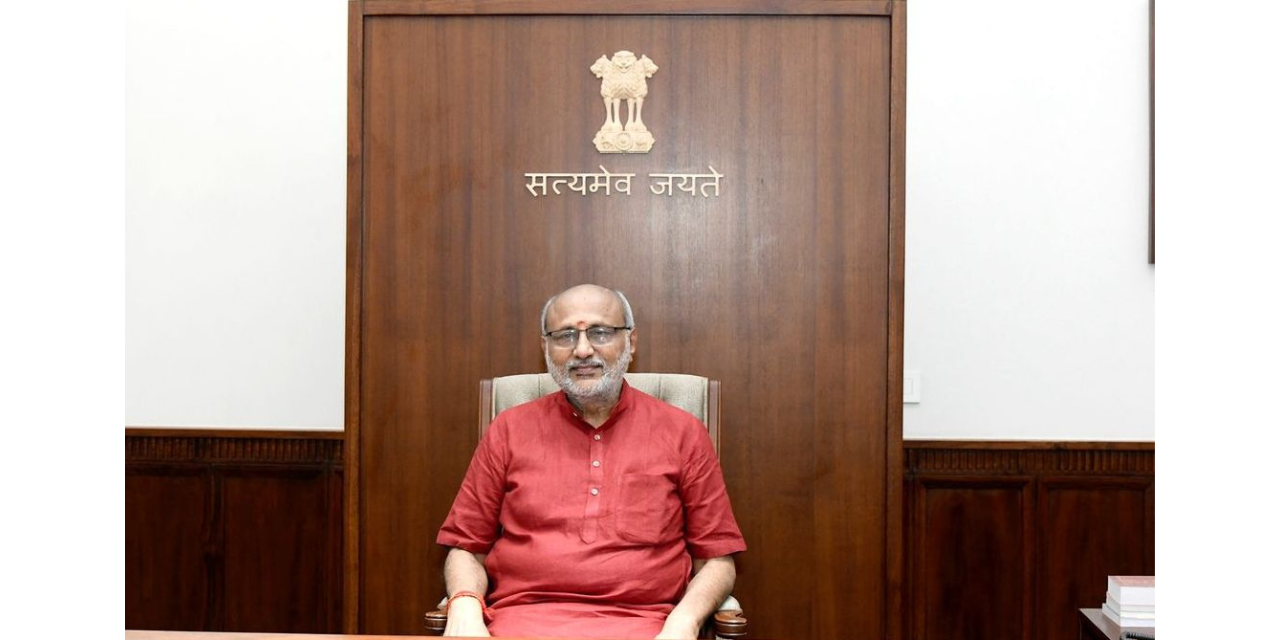
Vice President C.P. Radhakrishnan has expressed confidence that India’s textile and industrial sectors are poised for significant growth, supported by favourable international trade developments and continued government initiatives aimed at strengthening the industry.
Speaking at the inauguration of a new academic block at the Indian Institute of Handloom Technology in Salem, the Vice President highlighted the opportunities emerging from recent global trade developments, including reduced taxation in the United States and India’s free trade agreement with European countries.
According to Radhakrishnan, these developments are expected to create new opportunities for Indian textile exports and strengthen the country’s ability to compete with major textile-producing nations such as China and Bangladesh.
During his address, the Vice President praised Salem’s rich handloom heritage and acknowledged the contributions of the region’s weaving community. He emphasised the importance of preserving India’s traditional weaving practices while simultaneously equipping weavers with modern skills needed to meet global market requirements.
Radhakrishnan noted that the Central Government has been actively supporting the textile sector through various initiatives designed to improve competitiveness, enhance productivity and create better opportunities for textile workers and entrepreneurs.
He also highlighted the need for continuous skill development within the weaving community, stating that the government is taking several steps to help weavers upgrade their capabilities and adapt to international quality standards and changing consumer expectations.
Referring to broader development initiatives, the Vice President commended Prime Minister Narendra Modi’s efforts, including the Smart City Mission, and noted that several cities in Tamil Nadu have benefited from infrastructure and urban development projects.
Radhakrishnan urged the textile industry to make greater use of the facilities and resources available at the Indian Institute of Handloom Technology. He also suggested that efforts be made to seek further support from the Central Government to enhance educational and technical infrastructure in Salem.
Expressing optimism about the future of the sector, he stated that continued policy support, improved market access and skill development initiatives would contribute to substantial growth in India’s textile industry while improving the livelihoods of weavers and textile workers across the country.
The Vice President’s remarks come at a time when India’s textile industry is seeking to strengthen its global competitiveness through enhanced manufacturing capabilities, export expansion and greater integration with international markets.