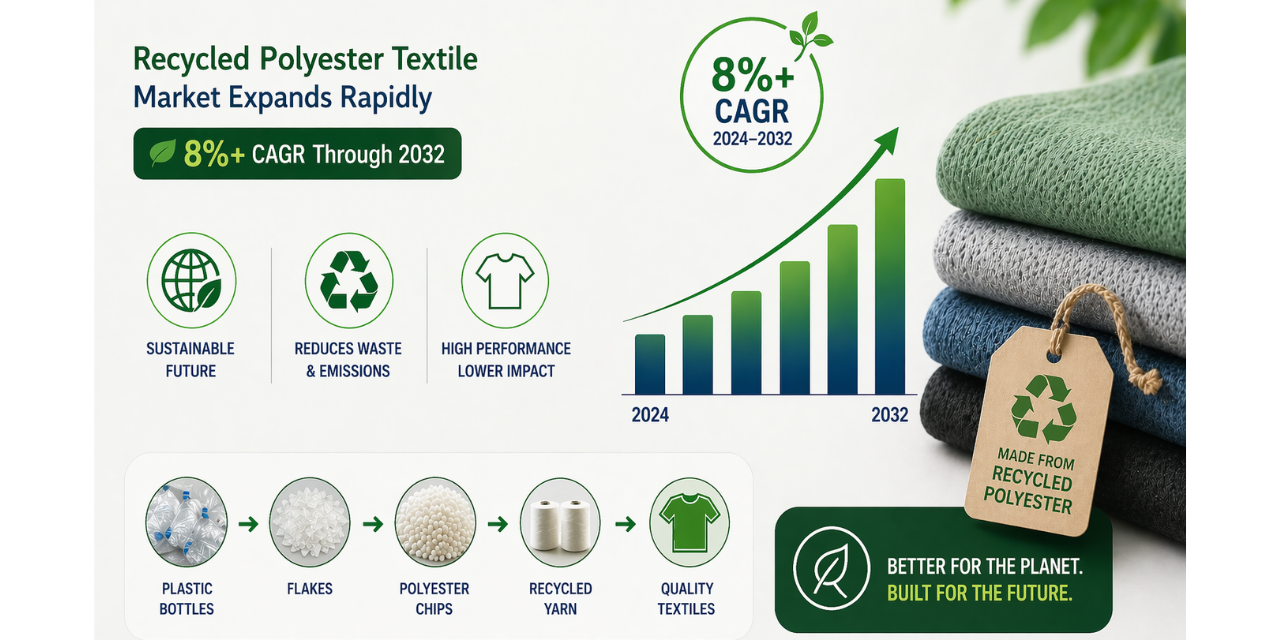
The Recycled Polyester Textile Market is experiencing robust expansion as sustainability transitions from a niche focus to a core industry standard. According to Marketintelo, the market was valued at approximately USD 28.6 billion in 2023 and is projected to reach close to USD 45 billion by 2032, growing at a CAGR of around 8–9%.
Recycled polyester, primarily derived from post-consumer PET bottles, has significantly increased its share in global polyester production, rising from nearly 8% in 2015 to over 15% in 2023. This reflects a clear shift towards circular textile solutions.
Market Evolution and Growth Trends
The market has shown consistent year-on-year growth despite global economic uncertainties. Between 2020 and 2023, it expanded from around USD 22.6 billion to USD 28.6 billion, signalling steady recovery after pandemic disruptions. Annual growth has remained within the 6–9% range, with a notable surge in 2021–2022 driven by increased adoption among global apparel brands, followed by stable growth in 2022–2023 as supply chains normalised. This steady trajectory indicates that demand is now structurally embedded within the textile ecosystem rather than cyclical.
Historical Growth (2015–2023)
Over the past decade, the market has nearly doubled in size, growing from approximately USD 15 billion in 2015 to USD 28.6 billion in 2023. This growth has been fuelled by rising environmental awareness, advancements in recycling technologies, and stronger regulatory frameworks. Momentum accelerated significantly after 2018, when major fashion brands began committing to sustainable sourcing targets.
Regional Market Insights
Asia-Pacific remains the dominant region, accounting for nearly half of global demand in 2023, led by major textile producers such as China and India. Europe continues to play a critical role due to stringent recycling regulations, with PET bottle recycling rates exceeding 70% in several countries. North America shows steady growth supported by corporate sustainability initiatives and investments in recycling infrastructure. Meanwhile, emerging regions such as Latin America and the Middle East are witnessing faster growth rates, albeit from smaller bases.
Applications Across Industries
The apparel sector leads the market, contributing over 50% of total demand, largely driven by sportswear and fast fashion brands incorporating recycled fibres. Home textiles and industrial uses are also gaining traction. In particular, automotive and upholstery applications are increasingly adopting recycled polyester due to its durability and cost efficiency. Consumer behaviour is also evolving, with a growing number of buyers prioritising sustainability in purchasing decisions.
Investment and Policy Landscape
Governments and private stakeholders are significantly increasing investments in recycling infrastructure. Substantial funding has been directed globally towards improving PET waste collection and processing systems. In Europe, mandates requiring minimum recycled content in packaging are indirectly boosting raw material supply for textiles. Similarly, countries like India are strengthening recycling ecosystems through policy support and targeted investments. At the same time, global brands are committing to achieving 100% sustainable or recycled materials by 2030.
Production and Supply Dynamics
Global recycled polyester production reached an estimated 10 million tonnes in 2023 and is expected to grow further with improved collection systems and advancements in recycling technologies. However, supply limitations persist due to gaps in PET waste collection. Despite this, recycled polyester offers cost and energy benefits compared to virgin polyester, making it increasingly attractive for manufacturers.
Market Snapshot
- 2019: ~USD 21 billion – Stable growth
- 2020: ~USD 22.6 billion – Moderate slowdown
- 2021: ~USD 24 billion – Recovery phase
- 2022: ~USD 26.7 billion – Accelerated demand
- 2023: ~USD 28.6 billion – Sustained expansion
- 2032: ~USD 45 billion – Strong long-term growth
Emerging Trends
Key developments shaping the market include the rising use of recycled fibres in premium and performance apparel, increasing adoption of advanced technologies such as chemical recycling, and a growing willingness among consumers to pay a premium for sustainable products. These trends highlight a shift from cost-driven adoption to value-driven demand.
Future Outlook
The market is expected to maintain strong momentum through 2032, supported by regulatory frameworks, corporate sustainability commitments, and technological innovation. It is projected to add over USD 15 billion in value during the forecast period. Asia-Pacific will likely continue to lead, while Europe will drive regulatory innovation and North America will steadily enhance its recycling capabilities.
Conclusion
The Recycled Polyester Textile Market is firmly on a growth path, evolving from an alternative option to a mainstream textile solution. With its value expected to rise from USD 28.6 billion in 2023 to nearly USD 45 billion by 2032, the sector reflects consistent expansion, strong regional demand, and increasing investment. Recycled polyester is set to play a central role in shaping the future of sustainable textiles.
Read A Full Report: https://marketintelo.com/report/recycled-polyester-textile-market