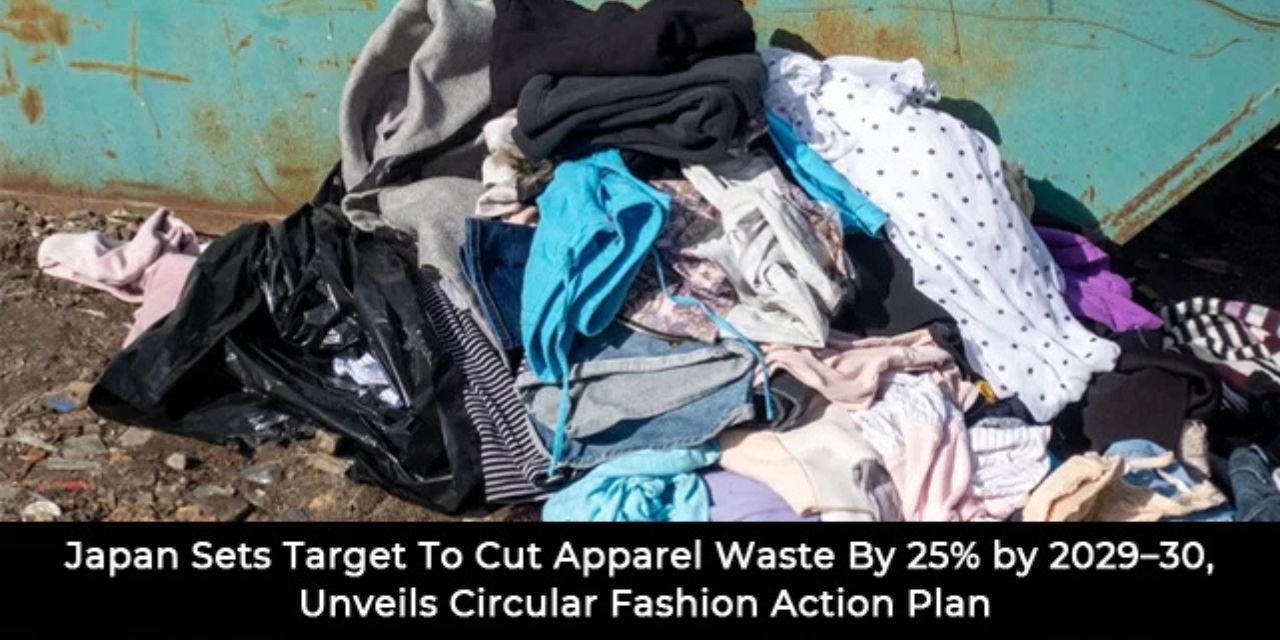
Japan has set a target to reduce apparel waste by 25 percent by fiscal 2029–30 compared with levels a decade ago. The move aims to cut carbon emissions and lower resource consumption linked to garment production and disposal.
Circular Fashion Action Plan Due by March 2026
The Japanese government plans to finalise a new circular fashion action plan by March 2026. The initiative will promote reuse, recycling, and sustainable clothing practices. It will require coordinated efforts from local governments, businesses, and households, according to domestic media reports.
Five Key Focus Areas Identified
The action plan will centre on five priority measures. These include strengthening used-clothing collection systems, expanding reuse channels, and extending the lifespan of apparel products. The government will clearly define responsibilities for national and local authorities, companies, and consumers.
Roles for Municipalities, Brands, and Consumers
Municipalities will work to improve garment collection rates and increase access to second-hand clothing, especially for people in need. Apparel brands will be encouraged to design clothing that is easier to repair, reuse, and recycle. Consumers will be urged to recycle garments and choose environmentally responsible products.
Environmental Impact Highlights Urgency
An Environment Ministry report underlined the scale of the challenge. It estimated that clothing dyeing and transport for garments supplied to Japan consumed 8.38 billion cubic metres of water in 2024. The apparel supply chain also generated 95 million tonnes of carbon dioxide emissions during the year.
Household Waste Remains a Major Concern
The report revealed that 560,000 tonnes of clothing were incinerated or landfilled in 2024. Nearly 90 percent of this waste came from households. Limited resale and recycling into repurposed textiles contributed to the high disposal rate.
Driving Sustainable Consumption
Through its circular fashion strategy, the government aims to reduce environmental damage, promote sustainable consumption, and encourage industry-wide and community-led action toward a greener textile ecosystem in Japan.