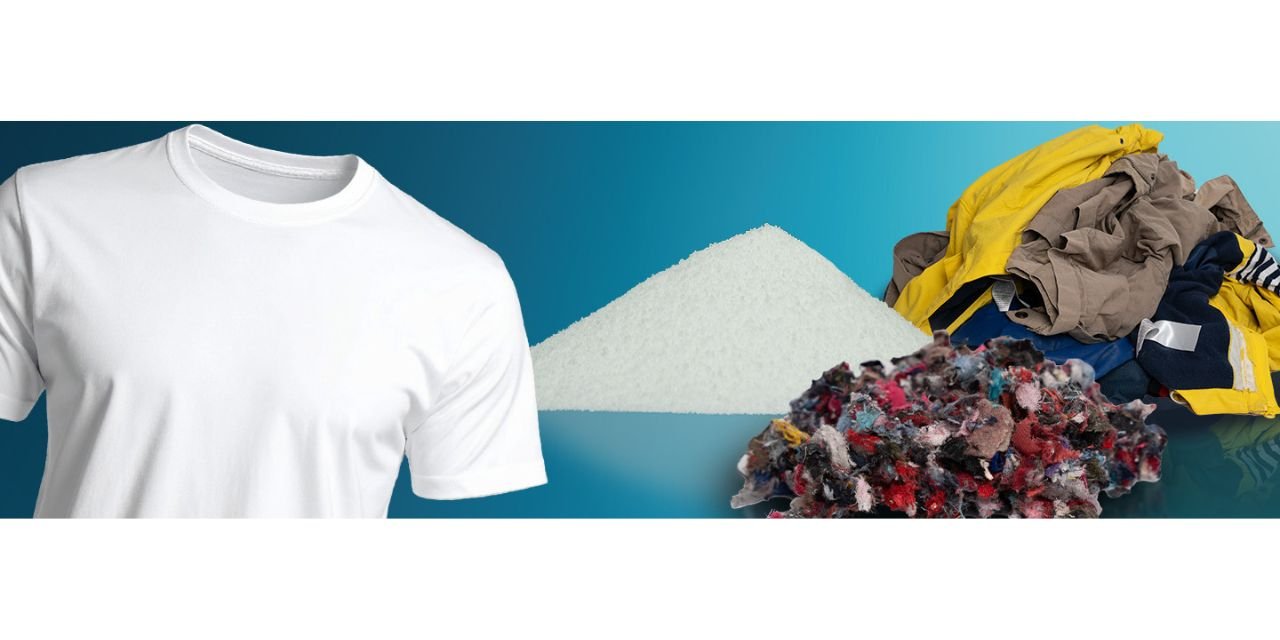
A New European Initiative for Textile Waste Management
Fraunhofer UMSICHT has launched AUTOLOOP, a major European research project focused on developing integrated solutions for textile waste recycling. The initiative aims to build a system capable of processing 1.24 million tonnes of textile waste annually by 2050. It also has the potential to create more than 130,000 green jobs across the EU.
The project focuses on automation, fibre tracing, and advanced closed-loop recycling technologies for polyester-based textiles, addressing the growing challenge of post-consumer textile waste.
Project Partners and Kick-Off
AUTOLOOP brings together research institutions, universities, and industrial companies from across Europe. The first project meeting took place in October 2025 at Fraunhofer UMSICHT in Sulzbach-Rosenberg.
During this meeting, partners highlighted the role of chemical recycling for synthetic fibres such as PET. Current research includes work with pyrolysis reactors that convert plastic-containing textiles into new chemical building blocks.
Why This Project Matters
Europe’s textile and clothing sector employs 1.3 million people and generates around 170 billion EUR each year. Despite this, it produces 10.9 million tonnes of post-consumer textile waste annually, and less than 1% is recycled back into new textiles.
Dr. Thomas Fehn, Coordinator of AUTOLOOP at Fraunhofer UMSICHT, emphasises the urgency of this transition:
“The textile industry is at a critical juncture. This project represents a shift from waste to resource, transforming discarded clothing into valuable raw materials for new garments.”
Key Technologies and Work Packages
AUTOLOOP integrates several innovative technologies that together enable full recycling of polyester-based textiles. These include:
AI-Based Sorting Systems
ZORITEX has developed an artificial intelligence system that identifies more than 15 fibre types using hyperspectral near-infrared technology. This automation can increase sorting throughput tenfold while reducing operational costs by 50 to 75 percent.
Chemical-Free Cellulose Recovery
AALTO University’s Ioncell® process uses ionic liquid solvents to extract cellulose fibres from blended textiles. It achieves recycling rates above 95 percent and avoids the use of harmful chemicals.
Advanced Polymer Recovery
Fraunhofer UMSICHT and SKZ are further developing ReSyn technology, which breaks down synthetic fibres into high-purity chemical building blocks. The method works even when textiles are contaminated.
Smart Fibre Tracking
TLX enables complete supply chain transparency through IntegriTEX®, a technology that embeds invisible identifiers in fibres for contactless detection.
Digital Integration and Data Management
TEXROAD’s cloud-based Data Hub standardises information across the recycling chain. It also supports compliance with upcoming regulations such as the Digital Product Passport.
Projected Impact by 2050
If fully implemented, AUTOLOOP could:
-
Recycle 1.24 million tonnes of textile waste each year
-
Achieve up to 96 percent material recovery
-
Create over 130,000 green jobs across Europe
-
Reduce municipal waste handling costs, currently 60 to 110 EUR per tonne
-
Lower the textile industry’s dependence on virgin raw materials
A Pan-European Collaboration
The project involves 14 partners from seven countries, combining academic expertise with industrial innovation. Key organisations include:
-
ZORITEX (UK)
-
AALTO University (Finland)
-
Fraunhofer UMSICHT (Germany)
-
TLX (Germany)
-
TEXROAD (Netherlands)
Additional partners include ELT (UK), TRASBORG (Denmark), VTT (Finland), SKZ (Germany), S4L (UK), LEEDS (UK), NORION (Denmark), TEMASOL (Switzerland), and LGI (France).
Looking Ahead
As Europe moves towards stricter waste-management regulations and increasing demand for sustainable textiles, AUTOLOOP offers a strong foundation for building a circular economy. The project shows how integrated recycling technologies can help the industry shift from linear consumption to circular production.
AUTOLOOP is funded by the European Union’s Horizon 2020 research and innovation programme under grant agreement No. 101181624.