
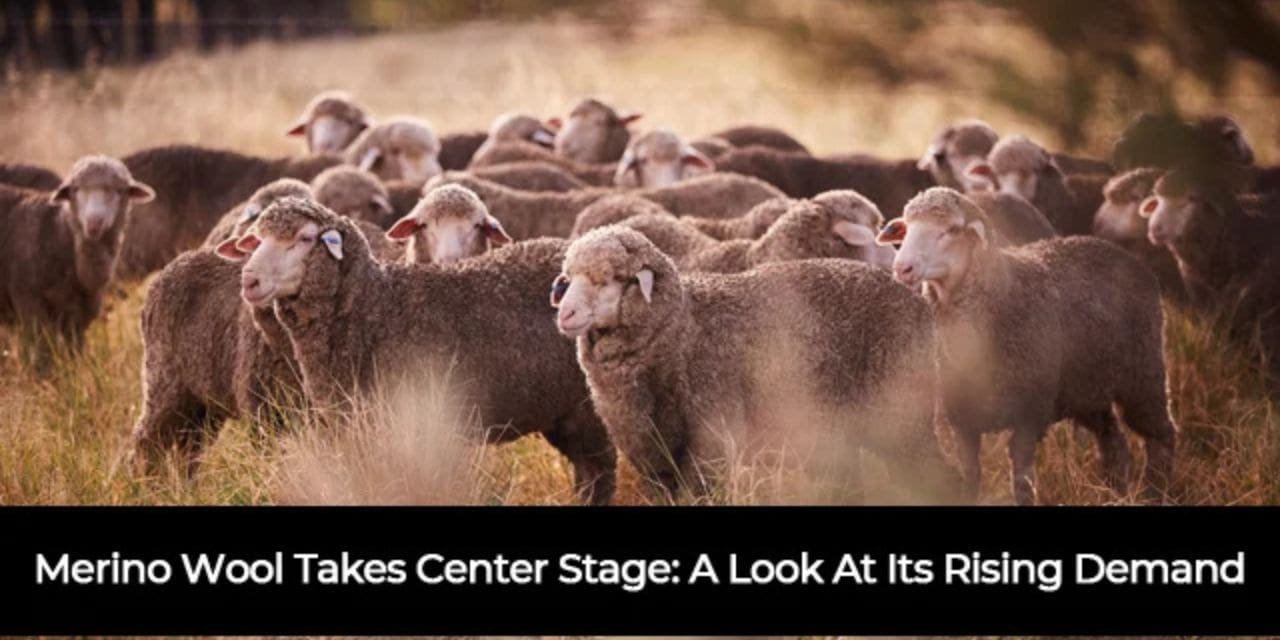
Merino wool is experiencing a major surge in global demand. From high fashion runways to everyday wear, more consumers are choosing natural fibres over synthetics. They want performance, comfort and sustainability in the same product.
In the past month, the Australian wool market recorded its biggest price jump in 30 years. Australia’s Eastern Market Indicator (EMI) increased by 109 cents to 1,453 cents per kilogram. It is the highest level since mid-2022 and reflects strong demand, not limited supply. Woolmark confirms that the growth is driven by genuine long-term interest.
A recent IPSOS survey ranked wool among the top three preferred fabrics for both fashion and sportswear. The market is projected to almost double from USD $34.9 billion in 2022 to $63.2 billion by 2033.
Shift Toward Quality and Sustainability
Woolmark is collaborating with leading voices from fashion, sport and wellness to strengthen Merino wool’s visibility. Style leaders are supporting the idea of “fewer, better pieces,” highlighting softness, durability and biodegradability.
Key insights include:
• In 1973, 75 percent of clothing used natural fibres. Today, nearly 70 percent is synthetic and fossil-fuel-based.
• 91 percent of consumers believe high-quality garments are made using natural fibres.
• Certified Merino wool earns a 15–30 percent global price premium.
• Wool clothing is donated three times more often than other fibres.
• Merino appeared in recent Spring/Summer collections from Chanel, Dior, Balenciaga, Celine, Givenchy, Victoria Beckham and Thom Browne.
Performance and Sportswear Growth
Demand is also accelerating in the sportswear category. Brands such as On, Salomon, Tracksmith, Ciele, Patagonia, Lululemon and The North Face have launched Merino-rich lines. Wool is now seen as a fibre suited for all seasons, not only winter.
• A 2024 IPSOS study shows consumers prioritise comfort, breathability, durability and lightweight performance.
• Research from North Carolina State University reveals that 100 percent Merino base layers provide 96 percent better thermal comfort than polyester.
• At the US Open, Venus Williams wore a Merino outfit by LUAR, proving its performance potential.
A Fibre for Future Consumers
Younger buyers, especially Gen Z and Millennials, are rejecting fast-fashion synthetics. Instead, they prefer natural, renewable and traceable materials. This trend continues to grow across social platforms, sustainability movements and circular fashion communities.
Additional indicators include:
• Merino is 100 percent natural, biodegradable and the most recycled apparel fibre.
• Premium wool product sales online grew 34 percent in 2023.
• At Future Fabrics Expo 2025, 43 percent of voters named circularity the biggest opportunity in the industry.
• A 2025 Norwegian study found that 72 percent of respondents preferred wool over synthetics.
Industry Outlook
“Consumers now demand comfort, performance, traceability and responsibility,” said Woolmark Managing Director John Roberts. “Merino wool delivers on all expectations. With strong support from designers and global brands, demand continues to grow across luxury fashion, sportswear and lifestyle.”


