
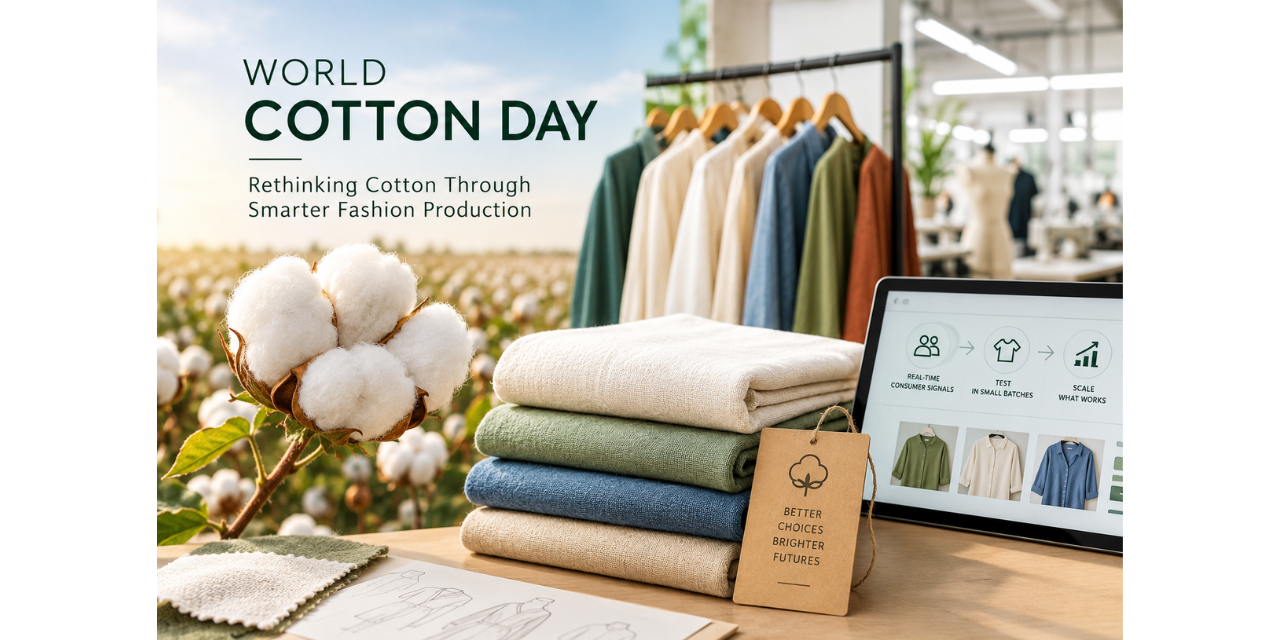
Cotton Remains Central to India’s Fashion Story
Cotton has long played an important role in India’s fashion and textile heritage. Its breathability, softness and versatility make it well suited to India’s climate.
At the same time, cotton continues to adapt to changing consumer preferences and contemporary fashion. However, the discussion around the fibre is now moving beyond its qualities.
The industry is increasingly considering how intelligently cotton is produced and consumed.

Amar Nagaram, Co-founder & CEO, VIRGIO
According to Amar Nagaram, Co-founder & CEO, VIRGIO, traditional forecast-led manufacturing can create challenges when brands produce large quantities before they fully understand consumer demand.
As a result, brands may hold excess inventory while committing resources to products that may not achieve the expected demand.
“Cotton has long been one of India’s most important fabrics, deeply woven into our fashion and textile heritage. Its breathability, softness and versatility make it especially suited to India’s climate, while its ability to adapt across everyday and contemporary fashion keeps it relevant year after year. But the conversation around cotton must also consider how intelligently we produce with it. When brands manufacture based on forecasts, they risk excess inventory and resources being tied up in products before demand is understood. At VIRGIO, our Made-On-Demand model uses real-time consumer signals to test styles in smaller quantities, learn from demand and scale what works. For us, better fashion starts with making better-informed production decisions.”
Amar Nagaram, Co-founder & CEO, VIRGIO
Cotton Heritage Meets Demand-Led Fashion
India’s long-standing connection with cotton continues to influence its fashion landscape. Meanwhile, changing consumer behaviour and advances in technology are encouraging brands to rethink traditional production models.
Demand-led approaches such as Made-On-Demand bring production closer to actual consumer demand. Brands can test styles in smaller quantities and use real-time consumer signals to understand what resonates.
They can then make more informed decisions about which products to produce and at what scale.
This approach represents a wider shift in fashion manufacturing. Instead of simply producing more, brands can focus on producing with greater intent and better information.
Smarter Production Can Shape Cotton’s Future
Cotton’s versatility and consumer appeal will continue to support its relevance in India’s fashion industry.
However, production decisions will also play an increasingly important role. By aligning manufacturing more closely with consumer demand, brands can rethink how they manage inventory and production resources.
Therefore, the future of cotton may depend not only on the qualities that have made the fibre an enduring favourite, but also on how thoughtfully the fashion industry produces with it.


