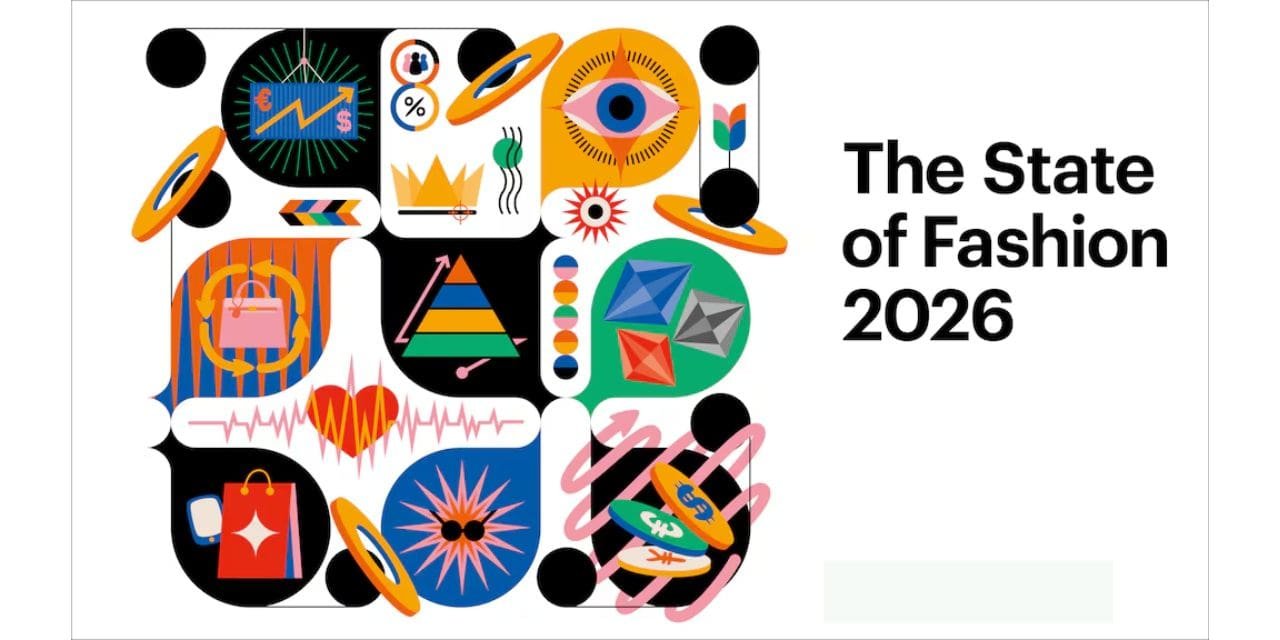
The 10th edition of the State of Fashion report by McKinsey & Company and BoF Insights outlines how trade shifts, rapid technological change and evolving consumer behaviour will reshape the fashion industry in 2026. The report identifies ten themes that will influence strategy, growth and competition in the year ahead.
Executive Overview
Nearly half of global fashion executives expect tougher industry conditions in 2026. Many leaders cite escalating trade disputes and new tariffs as their biggest challenges, while most see artificial intelligence as the industry’s greatest opportunity. These shifts are forcing brands to rethink their operations, customer strategies and long-term business models.
An Industry Facing Constant Change
US tariffs are pushing brands to reorganise supply chains and increase operational agility. At the same time, consumers are becoming more cautious, redirecting their budgets toward health, wellbeing and value-driven purchases. As AI adoption accelerates, fashion leaders must also adjust to a fast-changing technology landscape.
BoF and McKinsey have tracked these trends for a decade. From Brexit and the rise of populism to the pandemic and supply-chain shocks, the fashion system has been in near-constant disruption. What has changed is the mindset: leaders now view volatility as the new normal rather than a temporary phase.
Executive Sentiment for 2026
• 46 percent expect conditions to worsen in 2026.
• Tariffs are ranked as the biggest risk.
• AI beats all other business priorities as the top opportunity.
• North America is seen as less promising, while China shows signs of gradual recovery.
Despite the negativity, one in four leaders believes conditions will improve, suggesting opportunities for well-positioned brands.
Theme 1: Harnessing Artificial Intelligence
AI is moving from experimental use to core business infrastructure. As supply chains remain volatile and input costs fluctuate, companies need AI to boost productivity and streamline workflows. Roles across design, merchandising and operations are becoming increasingly AI-focused.
To unlock AI’s full potential, brands must:
-
redesign internal processes
-
invest in new talent
-
maintain strong creative capabilities
-
prepare for agentic AI tools that autonomously support work and decision-making
AI is also reshaping how consumers shop. Many customers now rely on large language models for product discovery, advice and personalised recommendations. As agentic commerce evolves, a brand’s presence in AI-generated suggestions will become the new version of SEO.
Theme 2: New Customer Expectations
Customer retention is becoming a priority. As consumers seek better value, mid-market brands that have improved design and in-store experience are growing faster than luxury labels, which previously relied on price hikes without boosting creativity or product quality.
Meanwhile, jewellery continues to outperform other categories, fuelled by demand for meaningful purchases and self-expression. Smart eyewear is also rising quickly as AI-enabled wearables become mainstream.
Luxury brands are entering a period of reinvention. New creative directors are refreshing major houses, but high prices still deter aspirational shoppers. Many consumers are also shifting their attention toward health and wellbeing rather than status-driven luxury.
Theme 3: What It Means for 2026
The year ahead will bring more disruption. In a slow-growth environment, only brands that strengthen customer relationships, embrace technology and respond quickly to market shifts will gain ground.
The 10 Themes Shaping Fashion in 2026
1. Tariff Turbulence
Rising US tariffs are increasing costs across the value chain. Brands are reassessing pricing, sourcing locations and efficiency measures, while suppliers invest in automation to stay competitive.
2. Workforce Rewired
AI adoption is transforming fashion’s workforce. New AI-driven roles are emerging, and companies must focus on upskilling and strong change management to stay ahead.
3. The AI Shopper
AI agents will increasingly handle product discovery and even make purchases on behalf of consumers. Brands must strengthen data quality and improve API accessibility to stay visible.
4. Jewellery Sparkles
Jewellery remains the fastest-growing category thanks to strong consumer demand, self-gifting trends and the appeal of long-term value products.
5. Smart Frames
Smart eyewear equipped with multimodal AI will accelerate the wearables market. With the category expected to exceed $30 billion by 2030, brands have an opportunity to collaborate with tech innovators.
6. The Wellbeing Era
Wellbeing is becoming central to consumer identity. Fashion brands will benefit by integrating wellbeing across product design, storytelling and customer experience.
7. Efficiency Unlocked
Traditional advantages such as scale and low-cost sourcing are no longer enough. New technology will be key to improving productivity and freeing up resources for innovation.
8. Resale Sprint
Secondhand fashion continues to grow as customers seek value. Brands must now design their own resale strategies to unlock new revenue and strengthen brand perception.
9. The Elevation Game
Brands across value, mid-market and affordable luxury are elevating their product quality and experiences to stand apart from low-cost competitors and capture displaced luxury shoppers.
10. Luxury Recalibrated
Luxury brands are shifting away from price-led growth toward creativity, craftsmanship and stronger customer connection. The challenge lies in balancing diverse customer segments while delivering a unified expression of brand value.