The global cosmetics industry is undergoing one of the most significant transformations in its history. Once driven primarily by branding, celebrity endorsements, and retail presence, the market is now being reshaped by technology, sustainability, personalization, and changing consumer expectations. From AI-powered skincare diagnostics to clean beauty formulations and eco-friendly packaging, the industry has evolved beyond aesthetics into a broader ecosystem focused on wellness, self-expression, and conscious consumption.
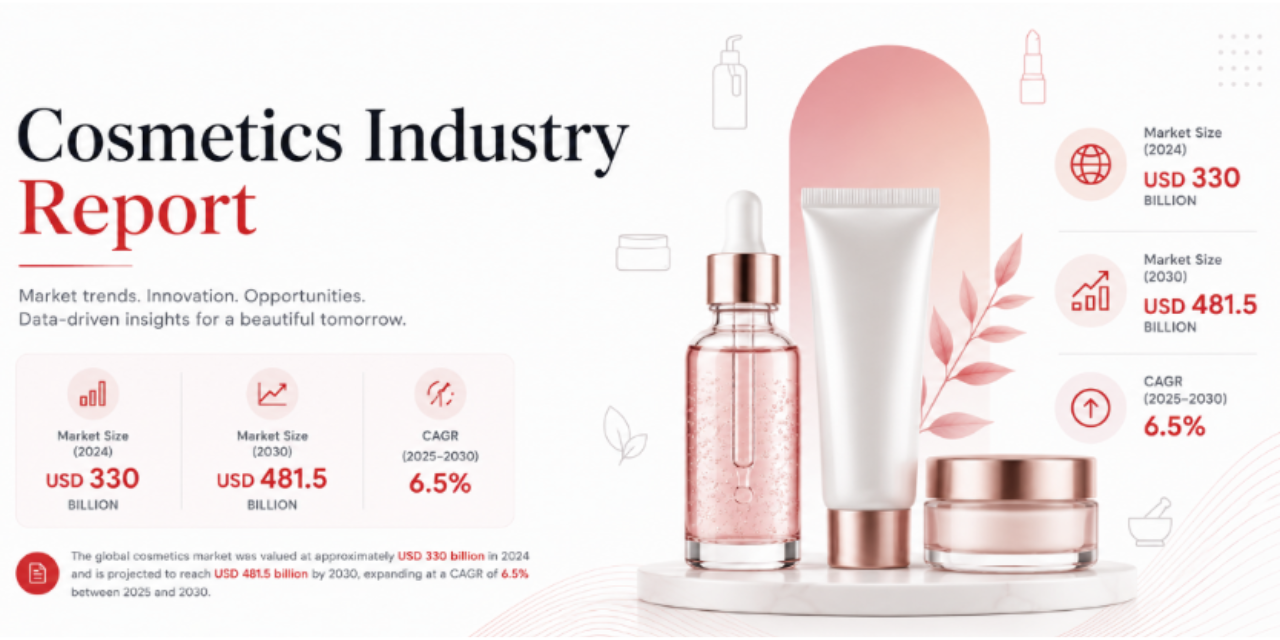
According to research by Wissen Research, the global cosmetics market was valued at approximately USD 330 billion in 2024 and is projected to reach USD 481.5 billion by 2030, expanding at a compound annual growth rate (CAGR) of 6.5% between 2025 and 2030. This sustained growth highlights the resilience of the beauty sector and its ability to adapt to rapidly changing consumer behaviors.
Beauty Becomes a Lifestyle Essential
The cosmetics industry is no longer limited to makeup and fragrances. Today’s consumers view beauty products as an integral part of self-care, health, wellness, and personal identity. Skincare regimens, haircare routines, sun protection products, and personalized beauty solutions have become part of daily life for millions of consumers worldwide.
Several factors are fueling this expansion:
- Rising disposable incomes across emerging economies.
- Increased awareness of skincare and preventive beauty.
- Strong influence of social media platforms and beauty influencers.
- Growth of direct-to-consumer and e-commerce channels.
- Demand for natural, organic, and ethically sourced ingredients.
- Greater focus on sustainability and transparency.
Request customization for more detailed market analysis and insights.
Consumers are increasingly seeking products that align with their values. As a result, beauty brands are investing heavily in ingredient transparency, cruelty-free testing practices, sustainable sourcing, and environmentally responsible packaging.
The Rise of Clean Beauty and Conscious Consumption
One of the most powerful trends shaping the cosmetics landscape is the clean beauty movement. Modern consumers are scrutinizing product labels more closely than ever before, demanding safer ingredients, transparency, and sustainability.
The industry is witnessing growing demand for:
- Clean-label formulations
- Organic and natural ingredients
- Cruelty-free products
- Vegan cosmetics
- Refillable packaging
- Low-waste and zero-waste beauty solutions
Industry interviews cited in the research indicate that consumer willingness to pay more for sustainable and clean beauty products is steadily increasing. Brands that successfully communicate authenticity and transparency are gaining a competitive advantage in both mature and emerging markets.
This shift is forcing established companies and emerging brands alike to rethink product development, supply chain management, and marketing strategies.
Technology Is Redefining the Beauty Experience
The cosmetics market is becoming increasingly technology-driven. Artificial intelligence, data analytics, augmented reality, and biotechnology are changing how products are developed, marketed, and consumed.
Beauty technology innovations now include:
- AI-powered skin analysis tools
- Personalized product recommendations
- Virtual makeup try-on applications
- Biotechnology-enabled cosmetic formulations
- Predictive consumer analytics
- Smart beauty devices
Major industry players are investing heavily in AI and advanced formulation technologies to create highly personalized beauty experiences. For example, collaborations between technology firms and cosmetics companies are accelerating innovation in sustainable ingredients and formulation science.
The convergence of beauty and technology is expected to become a defining characteristic of the next decade.
Asia-Pacific Emerges as the Industry’s Growth Engine
While beauty remains a global phenomenon, the center of growth is increasingly shifting toward the Asia-Pacific region.
Countries such as:
- China
- Japan
- South Korea
- India
are driving demand through rising incomes, rapid urbanization, expanding middle-class populations, and strong digital engagement. According to the research, Asia-Pacific has become a global powerhouse for cosmetics consumption and innovation, supported by extensive investments in research and development, manufacturing capabilities, and digital commerce infrastructure.
The region’s consumers are particularly receptive to:
- Premium skincare
- Personalized beauty products
- Multifunctional cosmetics
- Natural formulations
- K-beauty and J-beauty innovations
As a result, many multinational beauty companies are prioritizing Asia-Pacific in their growth and expansion strategies.
Skin and Sun Care Continue to Dominate
Among all product categories, skin and sun care remains the largest and fastest-growing segment of the cosmetics industry.
Consumers are increasingly prioritizing:
- UV protection
- Anti-aging solutions
- Hydration and barrier repair
- Preventive skincare
- Multifunctional formulations
Innovations such as invisible sunscreens, SPF-infused cosmetics, tinted sun protection products, and hybrid skincare solutions are driving category growth. Growing awareness of skin health, supported by healthcare professionals and public education campaigns, has elevated skincare from a cosmetic concern to a wellness priority.
As consumers become more educated about ingredient efficacy and dermatological science, brands are responding with clinically supported formulations and evidence-based product claims.
E-Commerce Becomes the New Beauty Counter
The rapid expansion of online shopping has fundamentally transformed how consumers discover and purchase beauty products.
Digital commerce now offers:
- Personalized recommendations
- Influencer-led product discovery
- Livestream shopping experiences
- Subscription models
- Direct-to-consumer purchasing
Social commerce and influencer marketing are especially influential among younger demographics, helping brands reach consumers more efficiently than traditional retail channels. The ability to combine digital engagement with seamless purchasing experiences has become a critical success factor for cosmetics companies.
The growth of online beauty retail is expected to continue accelerating, particularly in emerging markets where smartphone penetration and internet access are rapidly increasing.
Women’s Beauty Products Lead the Market
Women continue to represent the largest consumer segment in the cosmetics industry.
The dominance of women’s cosmetics is driven by:
- Wider product variety
- Greater category participation
- Higher frequency of purchases
- Targeted product innovation
- Inclusive shade ranges and formulations
Leading brands continue to invest heavily in products tailored to diverse skin tones, lifestyles, and beauty preferences. Inclusive marketing campaigns, celebrity partnerships, and influencer collaborations further strengthen consumer engagement within this segment.
However, the industry is also witnessing strong growth in men’s grooming and gender-neutral beauty products, creating new opportunities for future expansion.
North America Maintains Leadership in Innovation
Although Asia-Pacific is the fastest-growing region, North America remains a critical center of innovation and market leadership.
The region benefits from:
- High consumer spending power
- Strong beauty culture
- Advanced R&D infrastructure
- Rapid adoption of new trends
- Mature e-commerce ecosystems
Consumers in North America have been among the earliest adopters of clean beauty, cruelty-free products, and personalized skincare solutions. Brands operating in the region continue to invest heavily in research, product innovation, and sustainability initiatives to maintain competitiveness.
Competitive Landscape: Global Giants Face New Challengers
The cosmetics industry remains highly competitive, featuring a mix of multinational corporations and fast-growing independent brands.
Major companies shaping the global market include:
- L’Oréal
- Estée Lauder Companies
- Shiseido
- Revlon
- Avon Products
- Kao Corporation
- Unilever
- Coty
- Beiersdorf
- Henkel
However, independent and niche brands are increasingly capturing consumer attention through innovation, authenticity, sustainability, and digital-first business models.
The traditional advantages of scale and advertising budgets are no longer sufficient. Consumers are rewarding brands that demonstrate transparency, purpose, and genuine engagement.
Challenges Facing the Industry
Despite strong growth prospects, the cosmetics industry faces several challenges:
Regulatory Complexity
Different markets maintain varying standards for ingredients, labeling requirements, and product approvals, increasing compliance costs and operational complexity.
Intense Competition
Thousands of established and emerging brands compete for consumer attention, making differentiation increasingly difficult.
Supply Chain Pressures
Sourcing sustainable ingredients and maintaining ethical supply chains present ongoing challenges, particularly as demand for clean beauty products continues to rise.
Consumer Expectations
Today’s consumers expect transparency, sustainability, efficacy, personalization, and value simultaneously, raising the bar for product development and brand communication.
Looking Ahead: The Future of Beauty
By 2030, the cosmetics industry is expected to look dramatically different from today’s market. The next phase of growth will be defined by a convergence of science, technology, sustainability, and personalization.
Future market leaders will likely be those that can successfully combine:
- Advanced beauty technology
- Sustainable business practices
- Transparent ingredient sourcing
- Personalized consumer experiences
- Omnichannel retail strategies
- Inclusive product development
As the market approaches USD 481.5 billion globally, beauty will increasingly be viewed not merely as appearance enhancement but as an extension of wellness, identity, and lifestyle. The companies that recognize and adapt to this broader definition of beauty will be best positioned to capture the opportunities of the next decade.
Source: Analysis based on the Global Cosmetics Market Outlook 2030 published by Wissen Research.