Address at TEXPROCIL Export Awards Function
Ladies and Gentlemen, Namaskar,
A very warm welcome to all of you at the prestigious TEXPROCIL Export Awards Function.
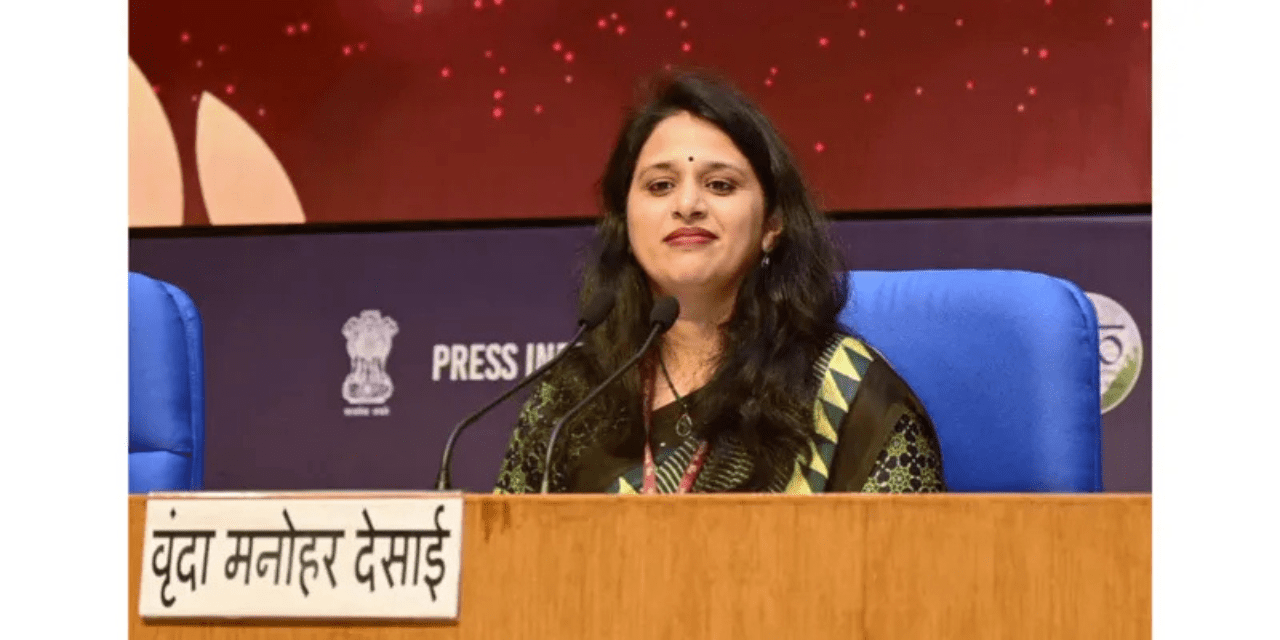
We are deeply honoured by the gracious presence of the Hon’ble Union Minister of Finance and Corporate Affairs, Smt. Nirmala Sitharaman ji. We also extend our sincere gratitude to the Textile Commissioner, Ms. Vrunda Desai, senior Government officials, industry leaders, exporters, and members of the textile fraternity present here today.
Madam, I would like to highlight that you are amongst the members of India’s oldest Export Promotion Council. TEXPROCIL was established in 1954 with the objective of promoting cotton textiles, primarily grey fabrics from India. Over time, the Council expanded its mandate to include yarn, processed fabrics, blends, and importantly, home textiles. There was a period when apparel was also part of its scope before it was moved to AEPC in 1978.
Guided by the Hon’ble Prime Minister Shri Narendra Modi’s 5F vision of “Farm to Fibre to Factory to Fashion to Foreign”, the Council today represents the entire cotton textile ecosystem. We have around 2,000 members, with exports valued at nearly USD 11 billion. The sector provides direct and indirect employment to around 35 million people and remains one of the strongest pillars of India’s export economy, supporting livelihoods across the farm-to-fashion value chain.
In addition, TEXPROCIL has been entrusted with promoting the Indian cotton brand, “Kasturi Cotton”. We are the implementing agency for branding, certification, and traceability of this premium homegrown cotton initiative.
Madam, we place on record our sincere appreciation to the Government of India, particularly the Ministry of Finance under your leadership, for the timely and proactive support extended to the industry through multiple phases of global disruption since 2019.
The industry has faced three major crises during this period: the COVID-19 pandemic, tariff escalations, and ongoing geopolitical tensions including the Middle East conflict. Despite these challenges, the Indian textile industry has demonstrated remarkable resilience, sustained its global presence, and continued growth, driven by the entrepreneurial spirit of exporters and visionary policy support from the Government.
During the COVID-19 crisis, landmark measures such as the Aatma Nirbhar Bharat package of ₹27.1 trillion and schemes like the Emergency Credit Line Guarantee Scheme (ECLGS), along with MSME support initiatives and credit reforms, played a critical role in protecting employment across the value chain.
Liquidity support measures, including targeted interventions for NBFCs, helped stabilise financial flows during a highly volatile period. Structural reforms such as the revised MSME definition, easing of corporate compliance norms, and enhanced borrowing limits for State Governments further supported recovery and trade revival.
During periods of tariff escalation and geopolitical conflict, the Government extended targeted support to exporters affected by insurance risks, raw material disruptions, and payment settlement challenges in impacted regions. The continuation and expansion of ECLGS support also assisted SMEs in managing supply chain pressures and rising input costs.
These proactive and timely interventions ensured that businesses and livelihoods remained protected from severe global economic shocks. The Government’s trade facilitation measures and export support initiatives have helped maintain industry confidence while easing supply chain disruptions and cost pressures.
The Export Promotion Mission (EPM), announced in the Union Budget 2025–26, represents a major structural reform by integrating multiple export support schemes into a unified, outcome-driven, and digitally enabled framework. With an outlay of ₹25,060 crore for FY 2025–26 to FY 2030–31, it aims to enhance export finance access, improve market readiness, and strengthen global competitiveness through its twin pillars of “Niryat Protsahan” and “Niryat Disha”.
Further, the Union Budget 2026–27 introduced two important initiatives, the Textile Expansion and Employment (TEEM) Scheme and the Tex Eco Initiative, aimed at enhancing competitiveness, modernisation, sustainability, and employment generation across the textile sector. The Budget has been widely appreciated for its strong textile-centric focus.
Madam, TEXPROCIL remains fully committed to supporting the Government’s vision for strengthening India’s export ecosystem and ensuring effective dissemination of policy initiatives, particularly among MSMEs in the cotton textile value chain.
In this direction, the Council has been actively conducting capacity-building programmes, webinars, stakeholder consultations, and outreach initiatives on GST, the Trade Connect e-Platform, logistics, export documentation, and digital trade facilitation.
Today, we are also honoured to inaugurate the Advanced Certificate Programme in International Trade at the hands of the Hon’ble Finance Minister. This initiative aims to build excellence in global trade through structured skill development and capacity building, equipping professionals in export and trading houses to meet emerging challenges in EXIM trade.
India today stands at the threshold of a significant growth opportunity. With landmark Free Trade Agreements being concluded with key global markets, Indian textiles and apparel are well positioned to emerge as reliable, sustainable, and competitive sourcing partners for the world.
Madam, we have three key requests to further unlock the sector’s potential and achieve a target market size of USD 350 billion, including exports of USD 100 billion by 2030.
First, ensuring availability of raw materials at international prices. Schemes such as Advance Authorisation should be made more exporter-friendly through updated SION norms, simplified procedures, seamless domestic sourcing mechanisms, and flexible export obligation timelines during global disruptions.
Second, it is essential that no embedded taxes and levies are exported. RoDTEP and RoSCTL rates should adequately reflect the actual incidence of unrebated taxes across the value chain.
Third, continued support is needed to enhance export competitiveness through affordable export finance, continuation of interest equalisation support, and improved logistics efficiency.
These measures will significantly strengthen India’s position as a trusted global textile sourcing destination.
Before I conclude, I extend my heartiest congratulations to all the award winners being honoured today. Your achievements, innovation, and commitment to excellence continue to inspire the entire industry.
I once again express my sincere gratitude to the Hon’ble Finance Minister, Smt. Nirmala Sitharaman ji, for taking time from her busy schedule to be with us and encourage our exporters in these challenging times. Your presence today is truly inspiring.
I also thank Textile Commissioner Ms. Vrunda Desai, distinguished guests, exporters, members, media friends, and all participants for making this occasion memorable.
Thank you very much.