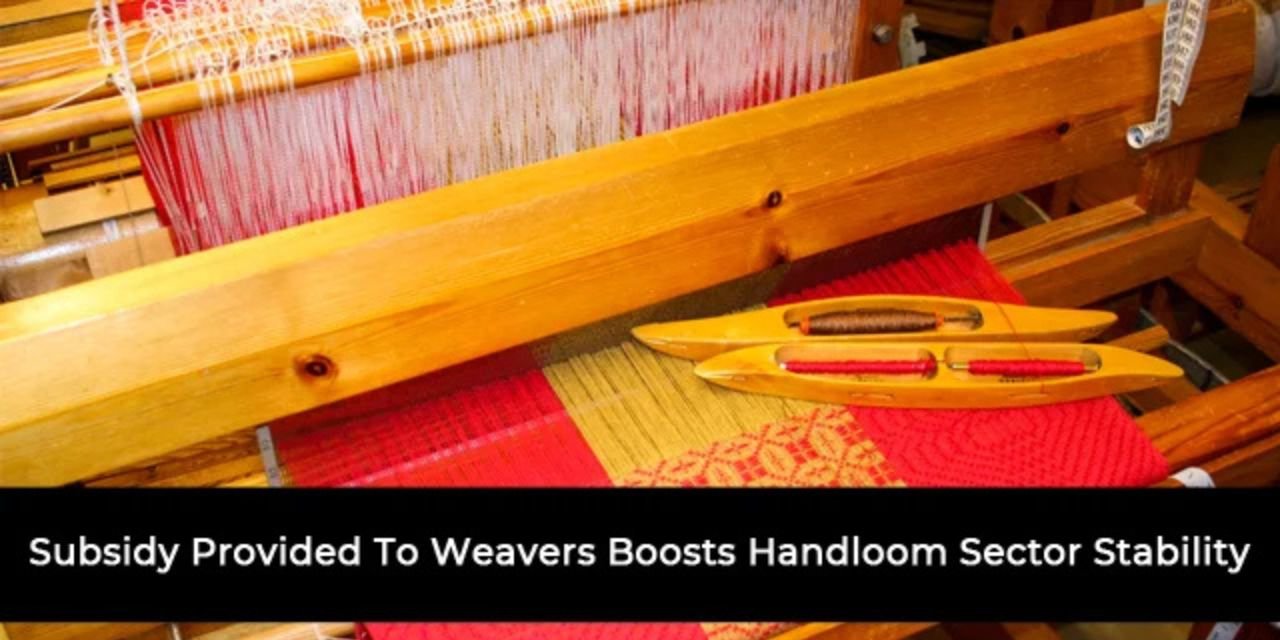
The Raw Material Supply Scheme (RMSS) is being implemented nationwide to ensure the consistent availability of yarn to handloom weavers. Under the scheme, freight charges are reimbursed for all types of yarn, while a 15% price subsidy is offered on cotton hank yarn, domestic silk, wool, linen yarn, and blended yarns made from natural fibres, subject to quantity limits.
For the financial year 2025–26, the total budget estimate for RMSS was ₹190.99 crore, with ₹170.74 crore released as of December 8, 2025.
The Government has also introduced measures to counter U.S. tariffs and boost export competitiveness, including:
-
Full exemption of customs duty on cotton imports until December 2025 to manage input costs.
-
Extension of the Remission of Duties and Taxes on Exported Products (RoDTEP) scheme until March 2026.
-
GST reforms simplifying taxation, ensuring fibre neutrality, and lowering rates on handloom products, garments, and logistics vehicles.
These interventions aim to enhance cost efficiency and domestic demand in the textile and handloom sectors. The RBI further supported exporters with extended export realization and shipment periods, loan moratoriums, and longer credit durations to ease liquidity pressures. The Ministry of Textiles, through HEPC, promoted market diversification by facilitating exporter participation in international fairs.
Despite global challenges, handloom exports grew from ₹101.46 crore in September 2024 to ₹110.29 crore in September 2025, reflecting sector resilience.
This update was provided by THE MINISTER OF STATE FOR TEXTILES PABITRA MARGHERITA in a written reply to a question in Rajya Sabha.