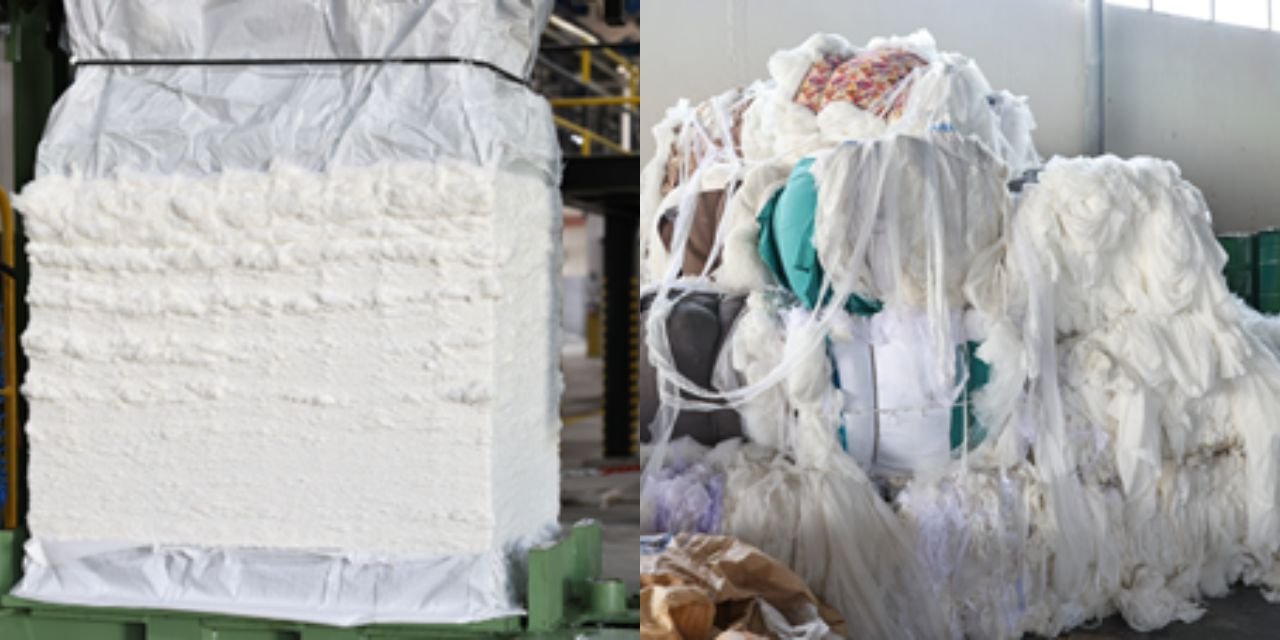
In partnership with the Maharashtra government, Primus Partners has published a thought leadership paper that lays out a clear and doable roadmap for India’s textile sector to become waste-free by 2047. At Bharat Tex 2025, the report was given by Mr. Sanjay Savkare, the Honourable Minister of Textiles, with Maharashtra acting as the Knowledge Partner.
The research, titled “Making India a Zero-Waste Fashion Country,” offers a strategy framework for integrating resource efficiency, sustainability, and circular economy concepts throughout the textile value chain, from the farm to the international market. Over the next five years, there will be a $3.5 billion potential to solve textile waste, which calls for strong legislative backing, industry cooperation, and proactive consumer involvement.
Deputy Chief Ministers Shri. Eknath Shinde and Shri. Ajit Pawar, Industry Minister Shri. Udit Samant, Textile Minister Shri. Sanjay Savkare, Chief Minister Shri. Devendra Fadnavis, and the Principal Secretary of Textiles, Cooperation, Marketing, and Textiles Department Smt. Anshu Sinha were among the dignitaries and leaders from Maharashtra who provided invaluable insights to the report. They underlined the government’s continued dedication to using sustainability and circular economy strategies to modernize India’s textile industry. Input from academics, business executives, and government representatives also helped to clarify the prospects and difficulties in establishing India as a global center for zero-waste fashion.
Mr Virendra Singh, the former secretary of textiles and now the secretary of public health, highlighted Maharashtra’s proactive attitude by outlining the state’s efforts to encourage sustainable practices. He emphasized important actions like fiscal incentives, research initiatives, and skill development, encouraging the sector to adopt these advancements for a greener and more competitive future.
The report presents a comprehensive analysis identifying key barriers to the adoption of sustainable practices, based on a survey conducted among industries and citizens. These challenges include financial constraints, limited adoption of green technologies, skill gaps, low awareness and demand for sustainable products, and fragmented policies. Additionally, the growing influence of ultra-fast fashion, driven by social media trends, has further exacerbated the issue of textile waste.
The report integrates the 5F approach—Farm, Fiber, Factory, Fashion, and Foreign—to ensure sustainable practices are embedded at every stage of the textile value chain. By addressing key sustainability challenges, it promotes organic farming, eco-friendly fiber production, waste-reducing manufacturing techniques, circular fashion principles, and alignment with global sustainability standards. This holistic strategy not only minimizes environmental impact but also strengthens India’s position as a leader in sustainable textiles.
The report outlines key recommendations to drive sustainability in India’s textile industry. It emphasizes financial incentives and support, including subsidies for green initiatives and the establishment of a dedicated fund for circular economy projects. To enhance textile-waste infrastructure and market development, it proposes setting up Textile Waste Collection Centres. Strengthening the policy and regulatory framework, the report calls for a National Policy for Sustainable Textiles and an Extended Producer Responsibility (EPR) Scheme for the sector. Additionally, it highlights the need for transparency and awareness through revised textile labelling regulations, public education campaigns on eco-friendly fashion, and skill development initiatives to position Inida to lead globally in zero-waste fashion, setting a benchmark for the world.
Kanishk Maheshwari, Co-Founder & Managing Director of Primus Partners, expressed his optimism and commitment to a sustainable future while also expressing his gratitude, stating,” We are incredibly optimistic about the future of India’s textile industry and deeply grateful for the invaluable support of Shri. Devendra Fadnavis, Shri. Eknath Shinde, Shri. Ajit Pawar and the highly accomplished industrial leaders and academicians. With their backing, we are not just envisioning a zero-waste future – we are making it a reality. To tackle India’s textile waste issue, a comprehensive approach is essential, including a unified B2B digital marketplace for pre-consumer waste, consumer education, revised textile labelling, and skill development. The introduction of an Extended Producer Responsibility scheme will also be transformative, holding producers accountable for the lifecycle of their products and positioning us at the forefront of a sustainable, circular economy.”