
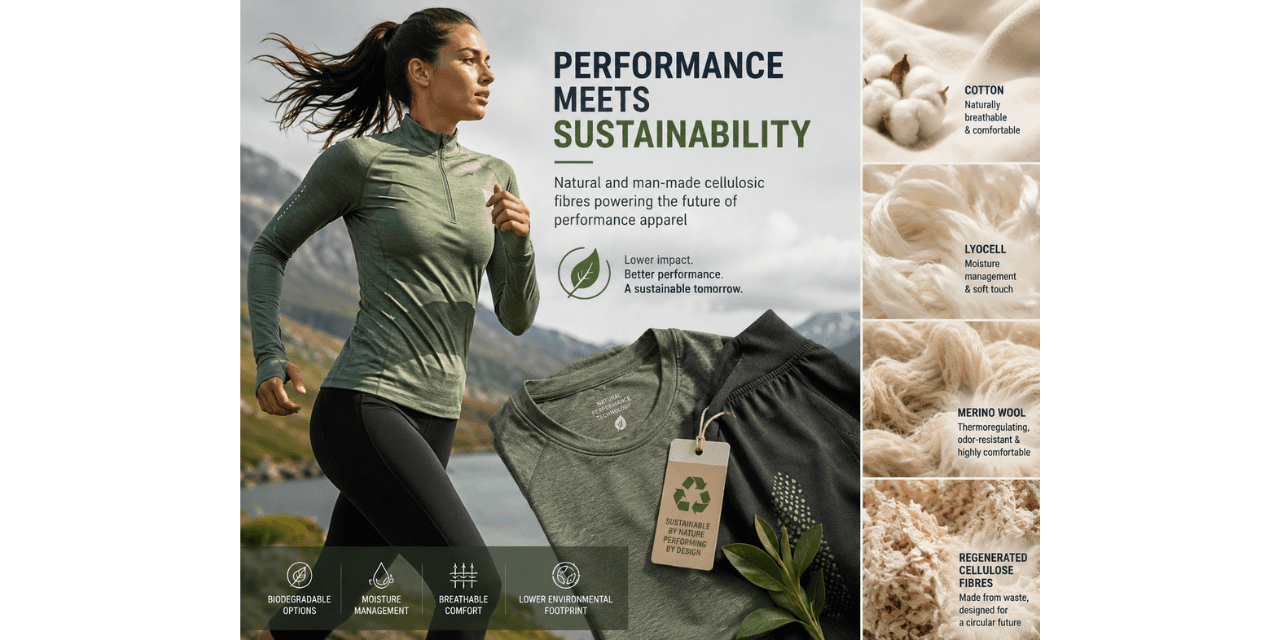
The performance apparel industry is increasingly exploring natural and man-made cellulosic fibres as sustainable alternatives to conventional synthetic materials, according to a recent report by Textiles Intelligence titled Natural and Man-made Cellulosic Fibre Alternatives to Synthetic Fibres for Performance Apparel.
Traditionally, synthetic fibres have dominated the performance wear segment due to their durability, moisture management capabilities, cost-effectiveness, and adaptability for technological advancements. However, rising concerns over environmental sustainability and microplastic pollution are prompting brands and manufacturers to seek more eco-friendly material solutions.
At the same time, consumer expectations are evolving. Performance is no longer defined solely by technical functionality but also by factors such as comfort, softness, odour control, and environmental responsibility. This shift is creating new opportunities for natural fibres, regenerated materials, and wool within the performance apparel sector.
Cotton is emerging as a stronger contender thanks to advancements in yarn engineering, fabric construction, and fibre-blending technologies. Modern moisture-management treatments now allow cotton fabrics to wick moisture more effectively, overcoming one of the fibre’s traditional limitations. Leading brands such as Under Armour, Nike, and Polartec have developed technologies that enhance cotton’s suitability for activewear and performance applications.
Merino wool has also strengthened its presence in outdoor and activewear markets due to its natural thermoregulation, moisture management, and odour-resistant properties. Brands including icebreaker, Ortovox, and Smartwool continue to integrate the fibre into performance-oriented apparel systems.
Man-made cellulosic fibres (MMCFs), including lyocell, modal, and viscose, are also gaining momentum. Their softness, breathability, and moisture-management characteristics make them increasingly suitable for sportswear, outdoor clothing, and next-to-skin performance garments. Their biodegradability under suitable conditions further enhances their appeal amid growing environmental concerns.
Major fibre manufacturers are investing in advanced MMCF development. Notably, Lenzing has positioned its Tencel fibre range as a performance-oriented solution for sportswear and outdoor apparel markets.
Innovation is also accelerating in regenerated cellulose fibres derived from textile waste and agricultural residues. Companies such as Circulose, Infinited Fiber Company, Spinnova, and Evrnu are developing technologies capable of transforming waste materials into high-performance textile fibres.
Despite these advances, natural and regenerated fibres still face challenges in demanding performance applications. Compared with synthetic fibres, they often offer lower durability, slower drying times, reduced elasticity, and scalability constraints. Consequently, many product innovations currently focus on fibre blends that combine the sustainability and comfort benefits of natural and regenerated fibres with the technical advantages of synthetic materials.
As sustainability becomes a strategic priority for the apparel industry, the growing adoption of cotton, wool, MMCFs, and regenerated fibres reflects a broader transformation in performance wear. These materials are increasingly being recognised not merely as alternatives to synthetics, but as important components of a more diversified and environmentally responsible future for performance apparel.


