The National Institute of Fashion Technology successfully opened the NIFT International Conference 2026 at its Mumbai campus on 22 January 2026. Titled “Design for Inclusive Futures”, the event marked a significant milestone. Notably, it coincided with four decades of NIFT’s contribution to fashion education, sustainability, and industry engagement in India.
Established in 1986 and granted statutory status in 2006, NIFT has played a central role in shaping leadership for the textile, apparel, and fashion sectors. Moreover, it has consistently supported Central and State Government initiatives. The conference reaffirmed NIFT’s commitment to innovation, sustainability, and the promotion of Indian handlooms and crafts.
High-Level Plenary and Key Announcements
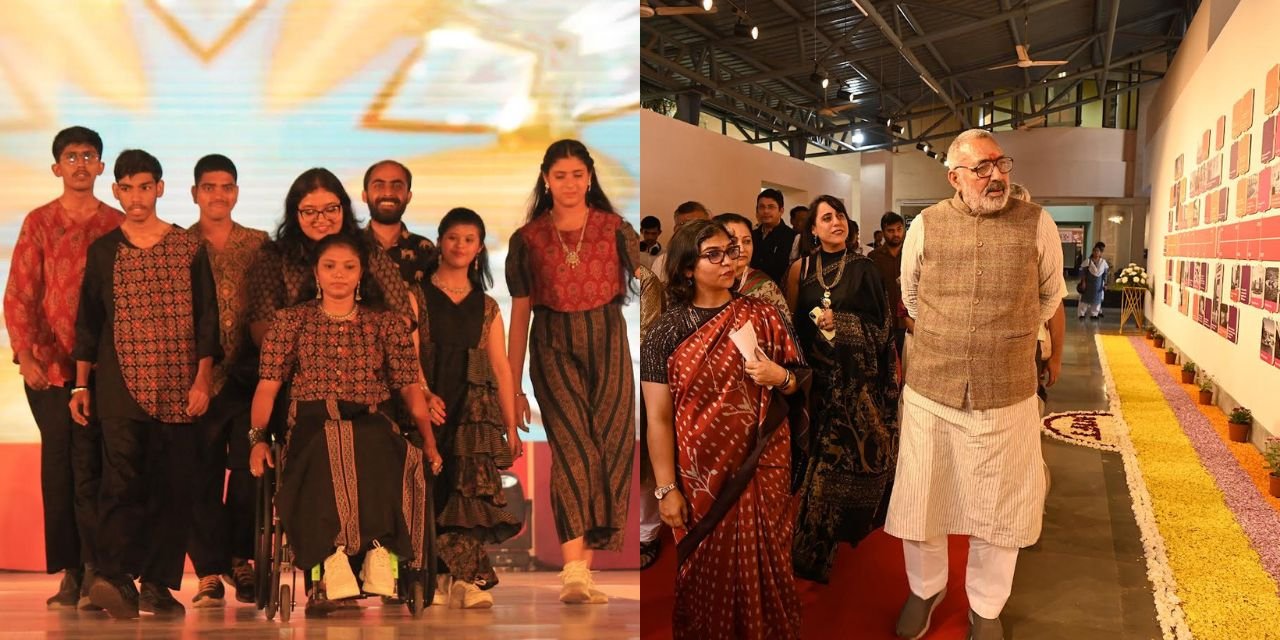
The conference commenced with a plenary session addressed by Shri Giriraj Singh, Hon’ble Union Minister of Textiles, Government of India, and Smt. Tanu Kashyap, IAS, Director General, NIFT. During the session, the NIFT Wall, a timeline mural, was unveiled. Subsequently, the Hon’ble Minister visited the Craft Bazaar and formally inaugurated Samvaad 2026.
An interactive dialogue followed with senior NIFT leadership. Participants and alumni discussed institutional vision, industry partnerships, and future opportunities. Later in the day, an Industry Meet further strengthened academia–industry engagement.
Foundation Day and Legacy Celebrations
Importantly, the conference coincided with NIFT Foundation Day. This marked the conclusion of a year-long celebration of four decades of excellence. Hosting Samvaad 2026 on this occasion paid tribute to NIFT’s legacy and its transformative role in India’s fashion ecosystem.
Government Perspective on Design and Growth
Addressing the gathering, Shri Giriraj Singh highlighted NIFT’s economic impact on India’s textile and craft sectors. He noted that each NIFT graduate supports an estimated 8,000 to 10,000 jobs over their lifetime. Furthermore, he emphasised India’s shift towards indigenous benchmarks through initiatives such as IndiaSize and VisioNxt.
Additionally, he referred to policy support including reduced GST on affordable clothing and the removal of cotton import duties. These measures, he stated, have strengthened industry growth. He also observed that NIFT’s design expertise now extends to sectors such as automobiles and logistics.
Leadership Insights from the Ministry of Textiles
Smt. Neelam Shami Rao, IAS, Secretary, Ministry of Textiles, underscored the role of design in national development. She appreciated initiatives such as VisioNxt, IndiaSize, and curriculum restructuring. Moreover, she linked NIFT’s work to the Prime Minister’s 5F Vision, from Farm to Foreign.
Drawing from India’s tradition of circularity, she cited practices such as Gudri quilting. She also acknowledged the growing shift towards gender-agnostic design. Finally, she encouraged documentation and standardisation of traditional practices to support inclusive futures.
Keynote Addresses on Sustainability and Ethics
The programme featured keynote addresses by Smt. Jette Ladiges, Chief Executive, EI Puente GmbH, and Dr. Naresh Tyagi, Chief Sustainability Officer, ABFRL. Both speakers highlighted the urgency of ethical and inclusive design in the global fashion ecosystem.
Smt. Ladiges emphasised the need to rethink business models through frameworks such as the Doughnut Economy. In contrast, Dr. Tyagi stressed that sustainability is now a core business imperative. He highlighted ABFRL’s progress under ReEarth initiatives and aligned sustainability with India’s Viksit Bharat 2047 vision.
Research, Workshops, and Knowledge Exchange
The first day featured parallel technical sessions across four thematic tracks: Equity, Accessibility, Ethics, and Usability. In total, 23 peer-reviewed research papers were presented. In addition, four invited papers offered global and policy-driven perspectives.
Workshops further enriched the discourse. These included sessions on breed-specific wool in knitwear, fashion in the metaverse, half-scale prototyping, and credit guarantee frameworks for MSE finance. Meanwhile, a VisioNxt Master Class provided insights into future consumer behaviour and trend forecasting.
Exhibitions and Inclusive Fashion Showcase
Throughout the day, curated exhibitions and craft bazaars ran in parallel. These included the New Landscapes exhibition, Handicraft and Handloom Bazaars, and live demonstrations. Participation from the Centre of Excellence for Khadi highlighted sustainable and indigenous textile practices.
The day concluded with a fashion showcase titled “समंवय”. Presented in multiple thematic sequences, it highlighted inclusive design across gender, age, ability, and socio-economic contexts. Collections focused on adaptive clothing, size inclusivity, and craft-led sustainability.
Looking Ahead
The successful conclusion of Day One set a strong foundation for continued dialogue on inclusive, design-led futures. It reinforced NIFT’s leadership in education, research, and societal impact. Finally, the responsibility of hosting the NIFT@41 celebrations was formally passed to NIFT Bengaluru for 2027.