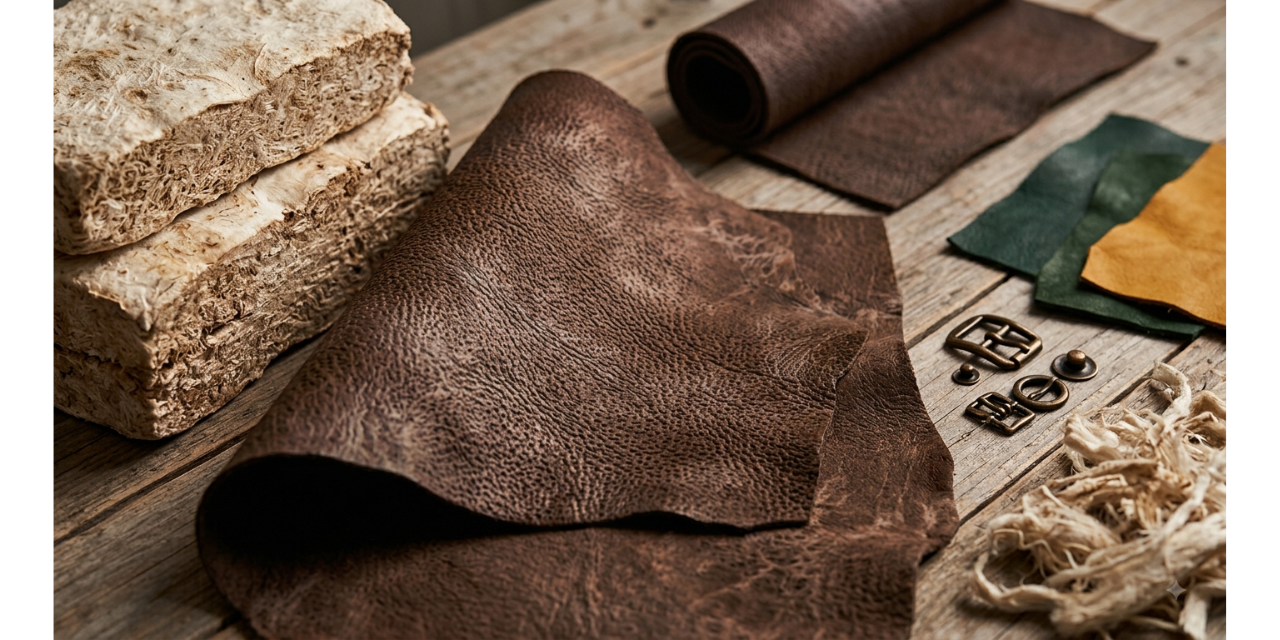
Mycelium Leather Fashion Market to Reach $6.71 Billion by 2034
The global mycelium leather fashion market is gaining momentum as fashion brands, designers and material innovators look for alternatives to conventional animal leather and petroleum-based synthetics. According to the latest research by Growth Market Reports, the market was valued at US$1.51 billion in 2025 and is projected to grow at a CAGR of 18.2% between 2026 and 2034, reaching approximately US$6.71 billion by 2034.
The growth reflects rising interest in bio-based materials, animal-free fashion and sustainable material innovation, alongside advances in biotechnology and bio fabrication.
Mycelium Leather Gains Ground in Fashion
Mycelium leather is produced using the root-like fungal network known as mycelium. Through controlled cultivation and material-processing techniques, mycelium can be developed into leather-like materials with textures and characteristics suitable for fashion applications.
As the industry explores alternatives to traditional leather, mycelium-based materials are attracting attention for their potential combination of design flexibility, biological origins and animal-free production. Their growing adoption also reflects the wider movement towards next-generation materials within the fashion value chain.
Key Factors Driving Market Growth
Rising Demand for Sustainable Materials
Increasing environmental awareness is encouraging consumers and fashion companies to explore alternatives to conventional leather. Mycelium-based materials offer a bio-based option with the potential to support more resource-conscious approaches to material production.
Growing Interest in Animal-Free Fashion
The shift towards vegan and cruelty-free products is creating opportunities for leather alternatives that do not rely on animal hides. Mycelium leather can reproduce several of the visual and tactile qualities associated with traditional leather while offering an alternative material platform.
Advances in Biotechnology
Developments in fungal cultivation, fermentation, processing and material engineering are helping improve the flexibility, strength, texture and consistency of mycelium-based materials. These advances could support wider commercial applications as production processes mature.
Increasing Investment in Bio-Based Materials
Growing investment in biotechnology and sustainable materials is supporting research into fungal-based materials. Improved infrastructure and technological development could help the industry address challenges related to scalability, durability, consistency and production costs.
Challenges Facing Mycelium Leather
Despite its potential, mycelium leather continues to face several barriers to mainstream adoption.
High production costs: Specialized cultivation, processing, finishing and quality-control systems can make mycelium leather more expensive than established leather and synthetic alternatives.
Competition from other materials: Mycelium leather competes with synthetic leather, plant-based alternatives, recycled materials and other emerging biomaterials, many of which already benefit from established supply chains.
Consumer awareness: While interest in sustainable fashion is increasing, mycelium leather remains unfamiliar to many consumers. Brands will need to communicate its performance, durability, appearance and environmental characteristics effectively.
Opportunities Across the Fashion Value Chain
The expanding market presents opportunities for material developers, biotechnology companies, manufacturers, designers and fashion brands. Greater collaboration between these stakeholders could accelerate the development of mycelium materials tailored to different applications, performance requirements and price segments.
Potential applications could extend beyond luxury fashion accessories into footwear, travel goods, furniture, automotive interiors and other lifestyle products. As manufacturing technologies develop, controlled biological processes could also enable new textures, structures and finishes that are difficult to achieve with conventional materials.
Competitive Landscape
Key companies identified in the market include Bolt Threads, MycoWorks, Ecovative Design, Mycotech Lab (Mycl), Mogu S.r.l., MycoTex, Biomyc, Grown.bio, Mylium, Polybion and Biohm.
Future Outlook
The future growth of the mycelium leather fashion market will depend on the industry’s ability to balance sustainability, performance, affordability, scalability and durability.
Continued investment in biotechnology, material engineering and manufacturing infrastructure could help overcome existing limitations and support broader adoption. As fashion companies and consumers increasingly explore alternatives to animal-derived and fossil-based materials, mycelium leather has the potential to become an important part of the industry’s next-generation material portfolio.
With its combination of biological origins, design flexibility and innovative production possibilities, mycelium leather represents a promising direction for the development of more resource-conscious fashion materials.
Source: Growth Market Reports