Strategic Investment Aims to Accelerate Innovation Across LG’s Commercial, Home and Industrial Robot Solutions
By acquiring a controlling investment in Bear Robotics, a well-known Silicon Valley business that specializes in AI-driven autonomous service robots, LG Electronics has made a huge advancement in its robotics capabilities. This purchase supports LG’s plan to increase its market share in the robotics industry, which is one of the company’s main development areas.
The board of directors of LG executed a call option to purchase a further 30% of Bear Robotics on January 22. This comes after a $60 million initial investment in March 2024 that gave LG a 21 percent share and a call option agreement for a further 30 percent stake. After the call option exercise is finished, LG will own a 51 percent share in Bear Robotics, therefore integrating it as a subsidiary.
Bear Robotics and LG’s commercial robot division, which is mostly focused on “LG CLOi Robots,” will be combined as part of this calculated move. To maintain steady business continuity, Bear Robotics’ key management team, including CEO John Ha, will stay on board and continue to concentrate on developing synergies inside LG’s commercial robot division.
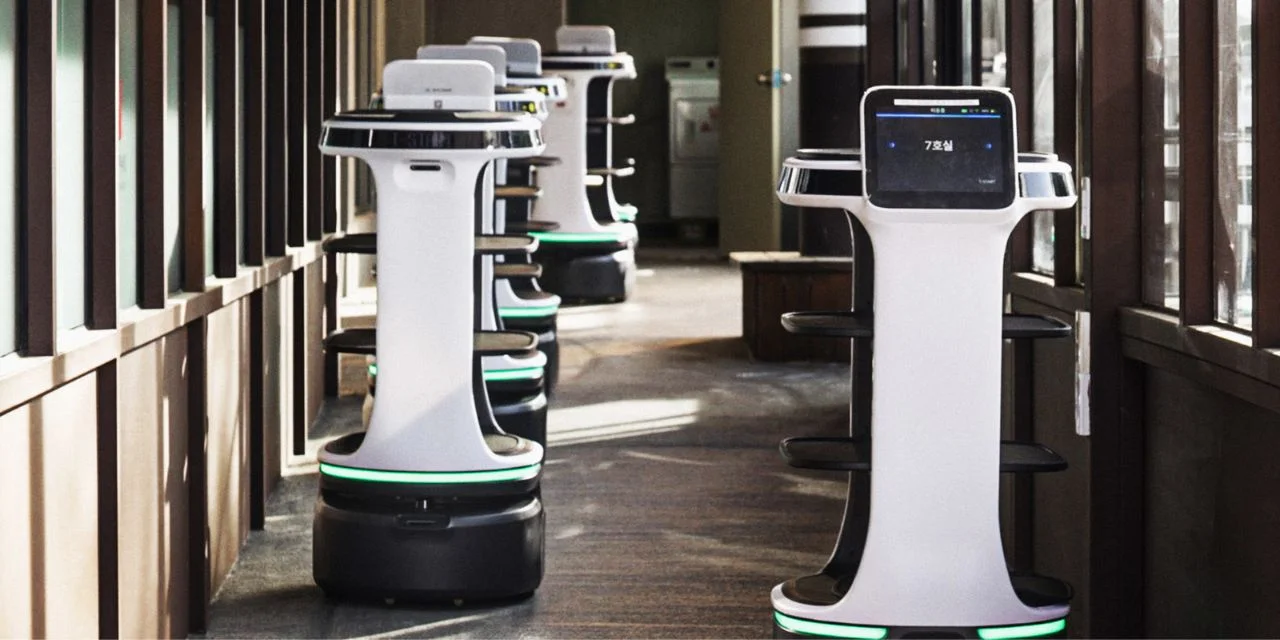
Bear Robotics was established in 2017 and has become well-known for its AI-powered interior delivery robots, which are sold in South Korea, Japan, and the United States. The business is renowned for its proficiency with AI-powered robot platforms, remote fleet management systems, and distributed multi-robot control.
With Bear Robotics, LG hopes to increase its market share in the commercial robot industry. At the same time, LG plans to use its manufacturing and AI skills to strengthenits home and industrial robot businesses.
The well-known industry leader LG Home Appliance Solution Company will lead the home robot segment. With the use of LG’s Affectionate Intelligence, the firm will concentrate on providing a comprehensive experience where home robots can intelligently assess family members’ well-being and easily interface with household products and services.
The Self-driving AI Home Hub (project name: Q9), which is expected to be released this year, is a perfect example of this idea. The Q9 combines autonomous driving technology with multimodal sensing capabilities, including voice, sound, and image recognition. This makes it possible for it to connect and control household appliances and Internet of Things devices with ease, roam the house with ease, accurately determine users’ status, and efficiently respond to their requirements. The Q9 skillfully handles challenges likesuch as carpets and uneven surfaces, while its expressive display conveys emotions, fostering enhanced interaction and engagement.
Additionally, the Q9 has Microsoft’s voice synthesis and recognition technology, which allows for dialog with users that is intuitive and natural. Attendees at CES 2025 were drawn to its capacity to comprehend a wide range of dialects, pronunciations, and slang terms. LG has also released a software development kit for the Q9 to encourage developers to further enhance its capabilities and promote an open development ecosystem.
By combining AI and digital transformation, LG’s Production Engineering Research Institute is driving significant revenue growth in the field of industrial robotics, which is a key component of the company’s Smart Factory business. One notable example is the “Autonomous Vertical Articulated Robot,” which uses sensors like cameras, radar, and LiDAR to sense its environment, maneuver effectively, provide resources, and use its robotic arm to do activities like assembly and defect inspection. This invention makes it possible to automate a variety of tasks with ease.
Speaking this month at CES® 2025 in Las Vegas, LG Electronics CEO William Cho underlined the significance of this investment by saying, “Robots are a certain future.” He also alluded to plans to move beyond the company’s current focus on logistics and hospitality delivery robots to include the Self-driving AI Home Hub and other home robots in order to realize LG’s vision of the “Zero-labor Home.”
Synergies throughout LG’s whole robotics business, including commercial robots, are anticipated as a result of the management control acquisition of Bear Robotics. This partnership has the potential to greatly expand LG’s entire robotics software capabilities as the robotics sector moves more and more toward AI-centric solutions.
LG plans to use Bear Robotics’ technology to develop an integrated software platform for industrial, commercial, and residential robots. The goal of this platform is to provide a uniform, excellent user experience across a range of apps. LG anticipates reducing development cycles by using this integrated platform generally for the creation of various robot types.
LG is well-positioned to improve the robotics company’s operational effectiveness and market responsiveness because to its sophisticated manufacturing capabilities and supply chain management know-how. Additionally, wider product distribution will be made possible by the vast worldwide sales network that its business-to-business activities have built. Through a turnkey order approach, LG may gain a competitive edge by combining commercial robots with a variety of B2B solutions, such as hotel TVs, digital signage, and IT equipment, and providing customized goods that are suited to the unique requirements of corporate clients.
Sam-soo Lee, chief strategy officer at LG Electronics, stated, “This additional investment reflects our belief in the inevitable role of robots in the future and underscores our dedication to positioning them as a pivotal growth engine for the company.” “We will continue to promote innovation in all robotics-related fields, encompassing commercial, industrial and home applications.”