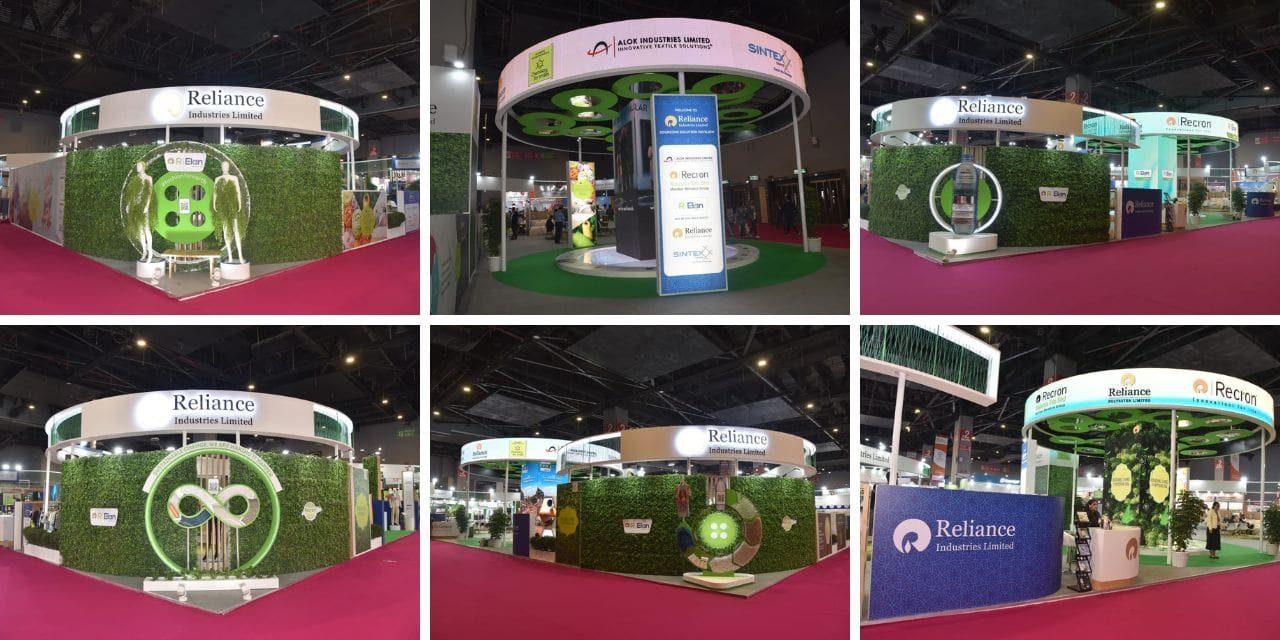
The upcoming Bharat Recycling Show (BRS) 2025, co-located with the Plastics Recycling Show (PRS) India, is set to be India’s largest platform dedicated to recycling and sustainability.
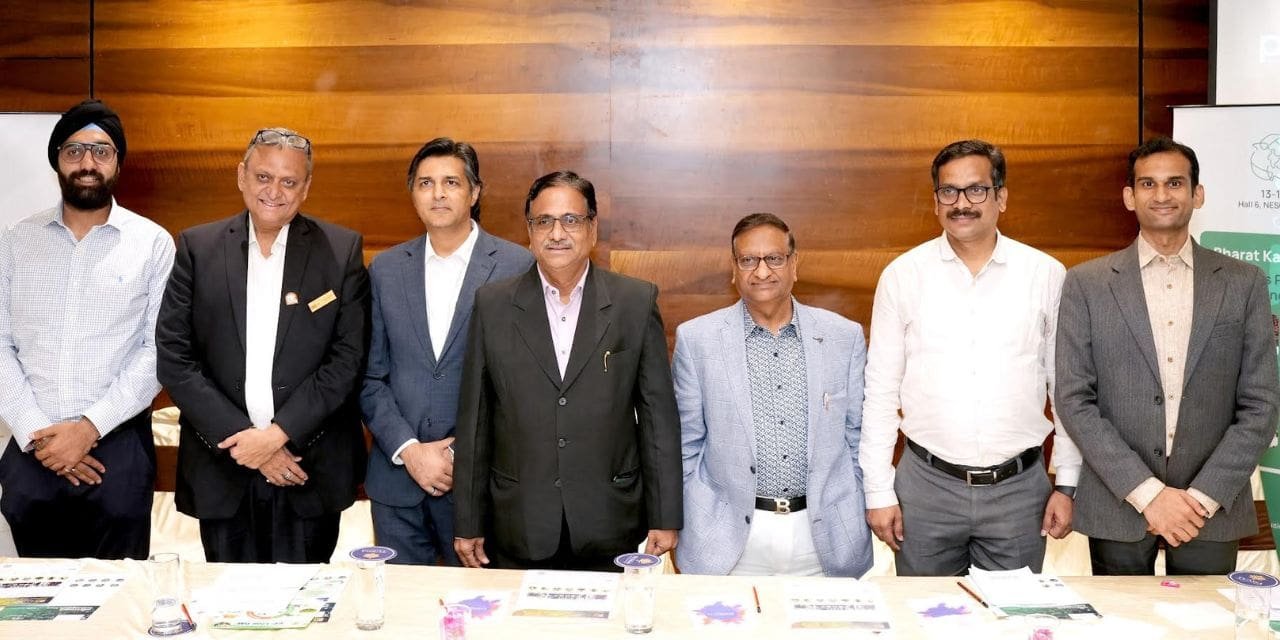
Ahead of the event, a panel discussion in Mumbai on “Unlocking Circular Value: Regulatory and Market Trends in Recycling” urged the government to strengthen regulatory frameworks, boost innovation, and formally include India’s informal recycling network.
Organised by Media Fusion and Crain Communications, the joint shows will host 150 exhibitors and welcome over 8,000 visitors from more than 10 countries. The exhibition will run at the Bombay Exhibition Centre from November 13–15, 2025.
Addressing Plastics: Informal Sector and Tax Barriers
Experts discussed the unique challenges slowing India’s move toward circularity, especially in plastics.
Gurashish Sahni, Co-Founder & COO, ReCircle, noted that while India’s Extended Producer Responsibility (EPR) policy borrows from European models, it must reflect India’s local realities. The informal sector, which drives India’s recycling rates, needs formal recognition and support.
He emphasised the potential of AI, IoT, and robotic sorting to improve efficiency and traceability. However, he said that the 18% GST on recycled raw materials discourages progress. “If circularity is our goal, we must reduce or eliminate taxes on recycled materials,” Sahni added.
Taher Patrawala, Managing Director, Media Fusion, agreed that high GST rates and fragmented compliance systems remain key issues. “Through BRS and PRSI, we’re creating a space where policymakers and industry players can align and build solutions,” he said.
Integrating India’s Metal Recycling Economy
The discussion also explored the role of metals in India’s circular journey.
Sandeep Vakharia, Honorary Secretary, Bombay Non-Ferrous Metal Association (BNMA), shared that India has long functioned as a circular economy, ensuring that no valuable metal goes to waste. He explained that copper recycling is essential for supporting renewable energy, reducing imports, and cutting carbon emissions—helping India meet its Nationally Determined Contributions (NDC).
He also revealed that India’s informal metal economy contributes significantly to national output. “Officially, India’s GDP is $4.3 trillion, but it crosses $5 trillion when we include the unrecorded sector,” he said. Bringing this parallel economy into the formal system and promoting ESG education could unlock massive growth opportunities.
Building India-Specific Regulatory Capacity
Panelists agreed that India’s recycling regulations must evolve faster and fit local contexts.
Anuj Maheshwari, Co-Founder, Trace Resource, observed that while new policies cover plastics, electronics, and batteries, the gap between waste generation and recycling capacity remains wide. He explained that imported regulations, when not adapted to Indian realities, slow progress and increase costs.
“Cascading taxes and the dominance of non-compliant operators discourage legitimate players,” Maheshwari said. “We need stronger regulatory capacity and incentives that reward compliance and innovation.”
Local Governments Driving Circular Success
Ajit Salvi, Director, Regional Centre for Urban and Environmental Studies (RCUES), AIILSG, emphasized that urban local bodies are crucial to India’s waste management strategy. He pointed to Indore’s seven-category segregation system as a model that other cities—like Surat, Panaji, and Navi Mumbai—are beginning to follow.
“Segregation is the foundation of a circular economy,” Salvi stated. He added that while national guidelines require 20% wastewater recycling and reuse, public hesitation still limits adoption. “With rising population and climate pressure, recycling and reuse must become everyday practices to secure our water future,” he said.