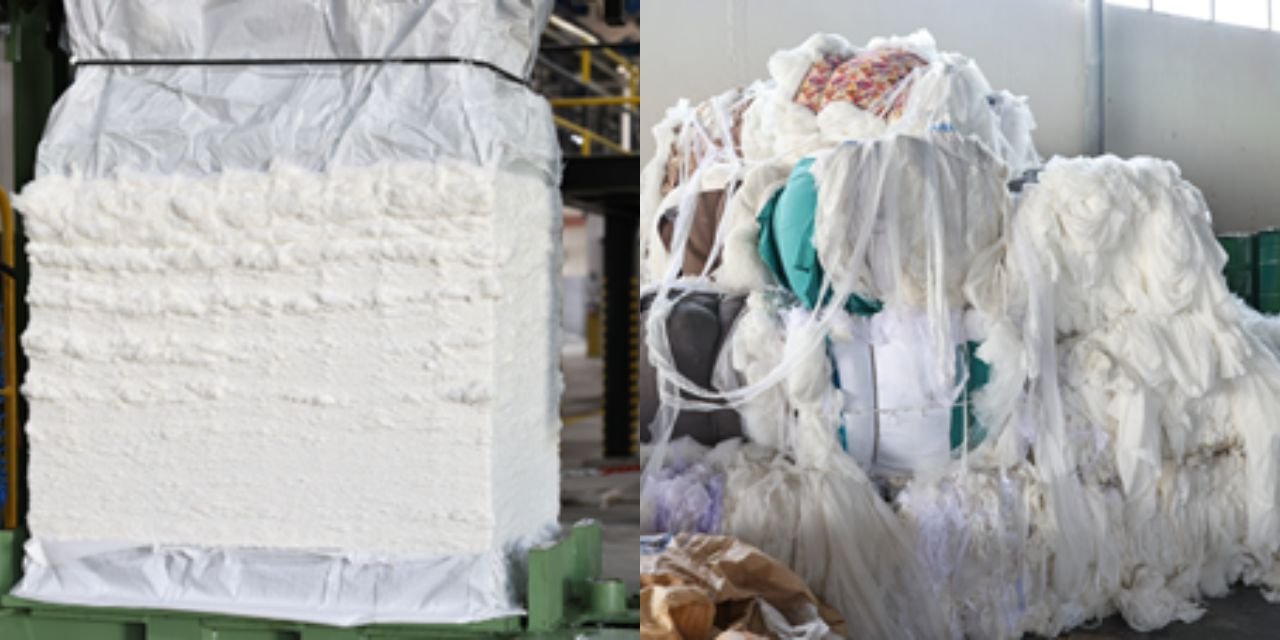
KIPAS Textiles, Europe’s largest fully integrated textile manufacturer, has launched fibR-e, a new recycling platform designed to overcome long-standing barriers in polyester recycling. The initiative aims to move polyester circularity from pilot projects to industrial-scale reality.
Each year, the fashion industry produces millions of tonnes of polyester garments. However, less than one percent returns to the system as new clothing. As a result, most polyester waste ends up in landfills or incinerators, intensifying the industry’s environmental burden.
At the same time, rising consumer scrutiny and tightening regulations are forcing brands to rethink product lifecycles and material choices.
How fibR-e Works
fibR-e combines Meltem Kimya’s patented molecular recycling technology with KIPAS’ thermomechanical recycling expertise to process complex polyester waste streams.
Meltem Kimya converts post-consumer garments containing 70 percent or more polyester, including polyester-elastane blends and mixed-fibre textiles. The process accepts items with trims, accessories, and mixed colours intact. These materials are transformed into GRS-certified rTEX Chips.
KIPAS then converts these chips into high-quality filament yarns and staple fibres, ready for use in new collections.
Eliminating Sorting and Colour Limitations
Unlike conventional recycling systems, fibR-e removes accessories during processing rather than through manual sorting. This approach reduces labour, accelerates throughput, and removes a major operational bottleneck.
Additionally, the platform decolourises blended fabrics. As a result, it delivers cleaner and more consistent recycled outputs, even from mixed-colour feedstocks.
At the core of fibR-e lies Meltem Kimya’s molecular recycling technology, which breaks polyester down to its basic components and rebuilds it without generating microplastics. This enables repeated recycling cycles without compromising material quality.
Significant Emissions Reduction
Early assessments show that producing polyester entirely from textile waste through fibR-e reduces emissions by nearly 74 percent compared to virgin polyester production.
Commenting on the launch, Halit Gümüser, CEO of KIPAS Textiles, said that recycling has so far failed to address the scale and complexity of polyester waste. He added that fibR-e allows real post-consumer garments to return to the market as certified, high-quality fibres, enabling a shift from linear to circular production at commercial scale.
Integration Into Industrial Supply Chains
fibR-e builds on a multi-year collaboration between KIPAS and specialist partners, with Meltem Kimya providing the molecular recycling foundation. As a global yarn and fabric producer, KIPAS will integrate fibR-e materials directly into its own supply chain.
This integration supports bulk production at competitive pricing. The recycled outputs remain traceable, performance-tested, and compliant with commercial quality standards. At the same time, the platform helps brands reduce dependence on virgin polyester and prepare for stricter sustainability regulations.
From Concept to Commercial Reality
fibR-e represents a decisive step forward for polyester circularity. It demonstrates that closing the loop on textile waste is no longer an aspiration, but an achievable industrial solution.