
Arya Prameh, Fashion Management Scholar, National Institute of Fashion Technology, Daman
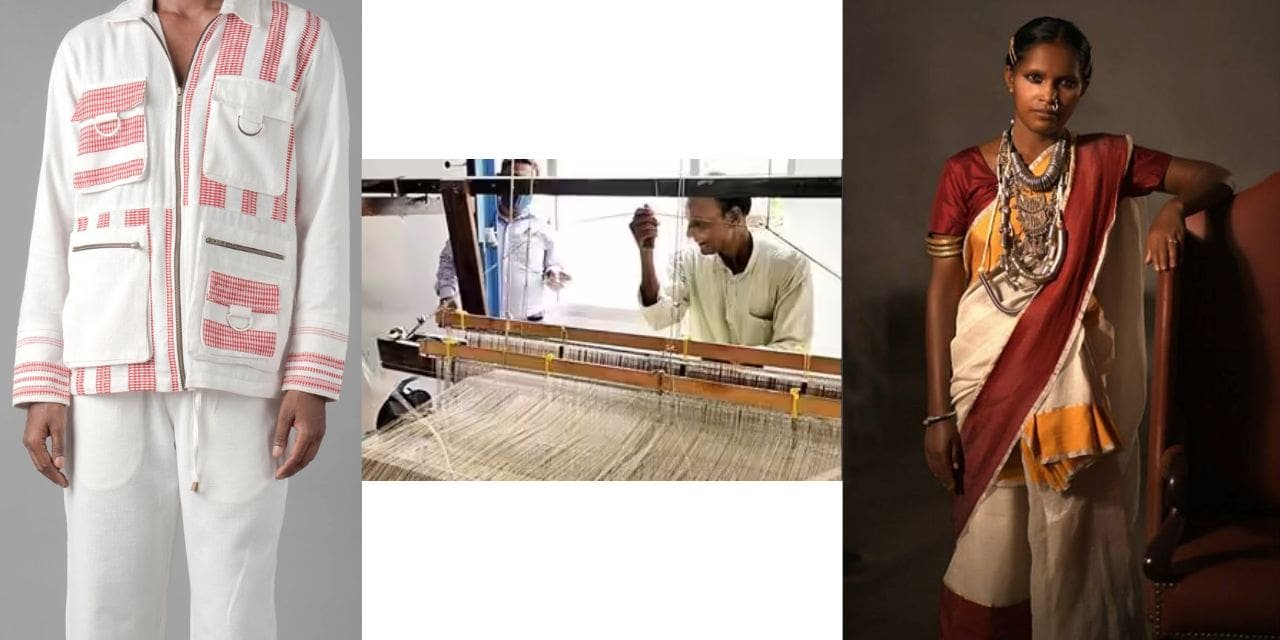
Jharkhand’s handloom art vividly showcases the state’s deep tribal heritage and cultural traditions. The craft is mainly performed by women from different communities and functions to maintain cultural identity while also offering means of livelihood. The fabrics are recognized for their natural colors and complex geometric and floral designs, frequently influenced by tribal art styles such as Sohrai and Kohvar. Among the esteemed fabrics, Tussar silk, praised for its golden luster and unique texture, shines brightly, while traditional tribal attire such as Parhan and Panchi is characterized by vivid stripes or checks colored with natural dyes.
The handloom industry in Jharkhand, particularly in areas such as Bhagaiya, exemplifies a combination of heritage and modernity. In this setting, families participate in weaving Tussar silk with locally obtained materials, where women are key contributors in different phases of the production process. Over time, designs have progressed to include fresh patterns and embroidery, moving beyond basic sarees to a wider range of intricately made items. Even with obstacles from mechanized looms and market demands, government programs like those from Jharcraft assist artisans through training, design improvements, and access to markets, aiding in the preservation and promotion of this native craft.
Women play a vital role in the handloom sector of Jharkhand, engaged in tasks like weaving, spinning, dyeing, and finishing. Their involvement, frequently coordinated via self-help groups, promotes rural empowerment and social advancement. The craft has started to draw interest beyond local markets, receiving recognition for its sustainability and cultural distinctiveness on both national and international levels. Ongoing support, awareness, and preservation initiatives are crucial for guaranteeing that Jharkhand’s handloom heritage thrives in today’s world, maintaining its cultural essence while evolving to suit modern preferences.