Jeanologia Reports Progress in Textile Sustainability
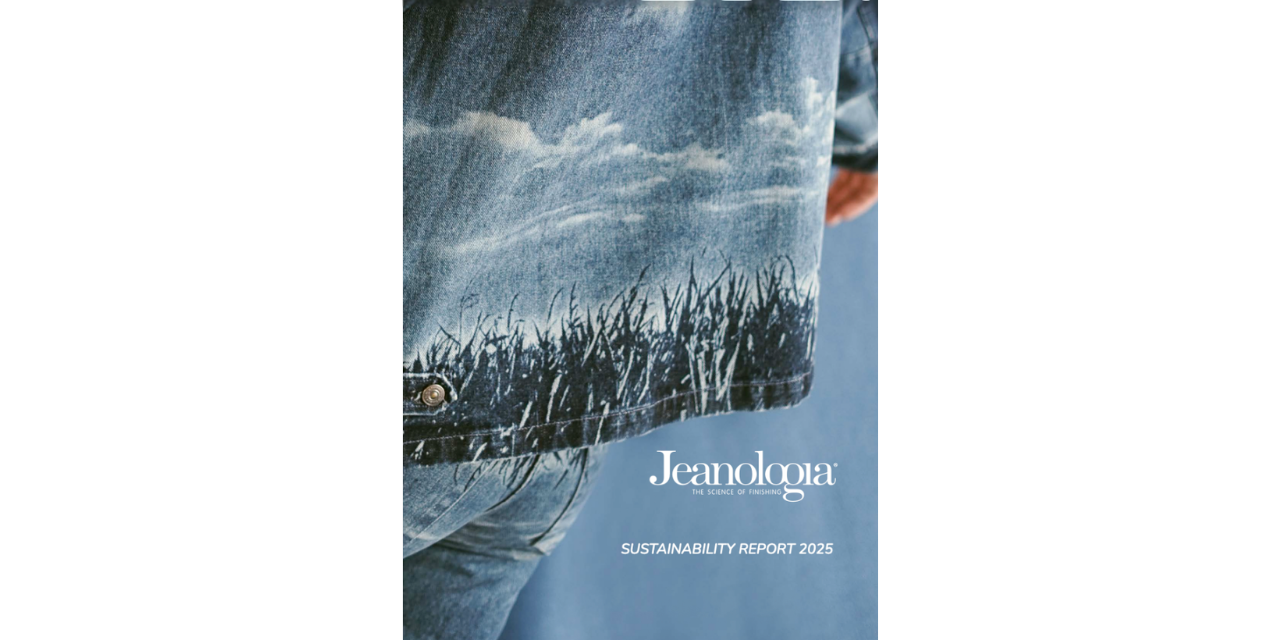
Jeanologia has released its Sustainability Report 2025, highlighting progress across its business and environmental strategy.
The report shows how the company’s technologies can help textile manufacturers reduce resource use and environmental impact.
In 2025, Jeanologia’s technologies helped prevent 21.52 million m³ of water from being polluted. They also helped avoid 103.53 million kg of CO₂ emissions compared with traditional textile finishing processes.
Meanwhile, 96.37% of Jeanologia’s turnover was linked to activities aligned with the EU Taxonomy. The company also reduced its own carbon footprint by 13.64% during the year.
“Sustainability is not a destination or a department. It is a way of thinking, creating and acting. Real transformation only happens when sustainability and business progress together,” says Enrique Silla, founder and CEO of Jeanologia.
People and Planet Remain a Priority
Jeanologia’s sustainability strategy follows the principle “People and planet come first”. The approach combines lower operational impact with technologies that can transform resource-intensive textile production.
In 2025, Jeanologia cut its carbon footprint from 895.79 tonnes to 773.57 tonnes of CO₂ equivalent. This represents a 13.64% reduction.
The environmental impact of its technologies reached a much larger scale. Their use across factories worldwide helped prevent 21.52 million m³ of water pollution and 103.53 million kg of CO₂ emissions compared with conventional textile finishing.
Jeanologia also completed its first voluntary assessment against the EU Taxonomy. The report states that 96.37% of turnover, 84.43% of CapEx and 34.96% of OpEx relate to activities aligned with the framework.
These activities mainly support climate change mitigation, climate change adaptation and the transition towards a circular economy.
Long-Term Social Responsibility
Jeanologia also focuses on people and local communities.
The company supports social projects over the long term rather than focusing only on short-term initiatives. It also aims to build lasting relationships with partner organisations.
Since 2019, Jeanologia has been a signatory of the United Nations Global Compact. Through this commitment, the company supports principles covering human rights, labour, environmental responsibility and anti-corruption.
It also contributes to the Sustainable Development Goals (SDGs).
Measurement Supports Continuous Improvement
Jeanologia considers measurement an important part of its sustainability strategy.
The company published its first Sustainability Report in 2017. It also introduced an Environmental Profit and Loss Account to measure water savings and CO₂ reductions generated through its technologies.
In 2019, Jeanologia created a cross-functional Sustainability Committee. Then, in 2022, it strengthened its reporting process in line with United Nations principles and GRI Standards.
The 2025 report sets out the company’s next priorities. These include improving the quality and traceability of emissions data, reducing operational impacts and increasing visibility across the value chain.
Jeanologia also plans to strengthen its resilience to climate change.
EIM Expands Environmental Measurement in Denim
Jeanologia is also expanding environmental measurement across the textile industry through EIM (Environmental Impact Measuring).
The methodology provides an objective and consistent way to assess the environmental impact of textile processing.
In 2025, Jeanologia published its second EIM report. The study analysed more than 100,000 real-world processes from 359 manufacturers across more than 40 countries.
This large dataset provides a data-driven view of environmental performance across the global denim industry.
Jeanologia continues to develop EIM as an independent unit. The company is increasing resources for the methodology as it works towards establishing EIM as a global benchmark for textile environmental performance.
Jeanologia Sets Priorities for Future Growth
The Sustainability Report 2025 goes beyond measuring past performance. It also establishes priorities for the next stage of Jeanologia’s sustainability strategy.
The company will focus on stronger measurement, lower operational impact, greater value-chain visibility and improved climate resilience.
Overall, Jeanologia’s approach connects commercial performance with social responsibility and environmental impact. The company sees these areas as interconnected parts of its long-term business strategy.