Ms. Janvi Kumari, Post Graduate Research Scholar, Department of Fashion Management Studies, National Institute of Fashion Technology, Ministry of Textiles, Govt. of India, Daman Campus
Mr. Deepak Dewasi, Post Graduate Research Scholar, Department of Fashion Management Studies, National Institute of Fashion Technology, Ministry of Textiles, Govt. of India, Daman Campus
Dr Vidhu Sekhar P, Assistant Professor, Dept. of Fashion Management Studies, National Institute of Fashion Technology, Ministry of Textiles, Govt. Of India, Daman Campus.
- INTRODUCTION
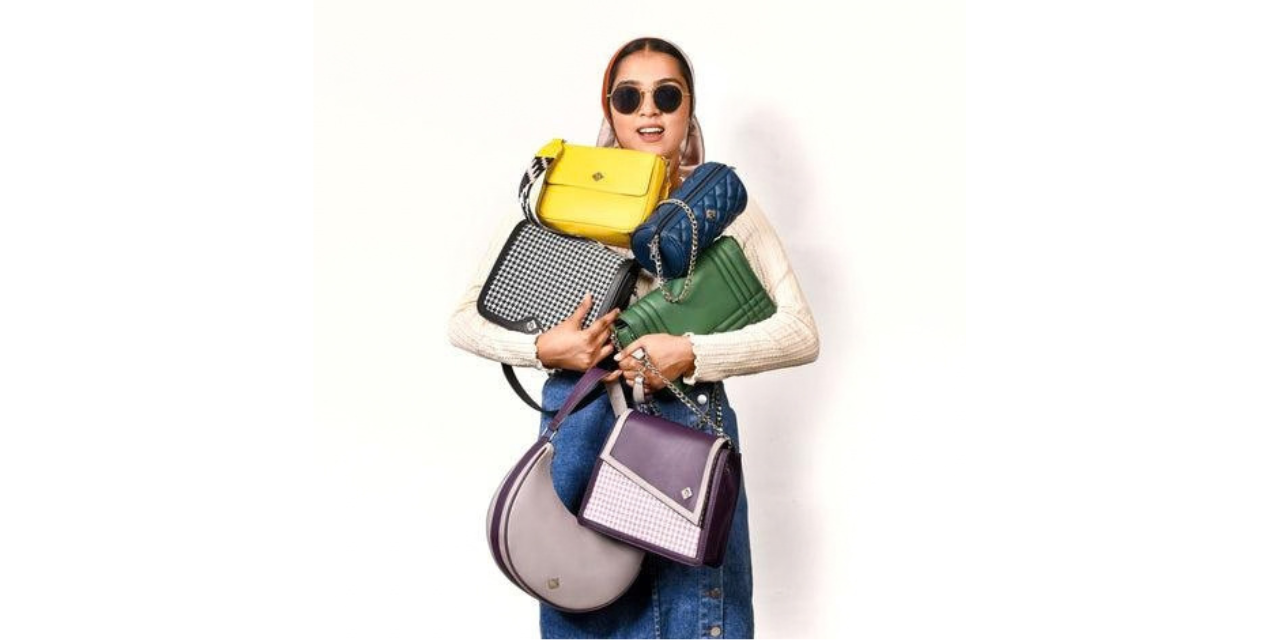
Fashion accessories not only function as functional goods but also signify consumers personality, lifestyle, identity and social image. Handbags play an important role in the respect since they serve both functional and aesthetic purposes. The consumer’s color perception may affect the consumer’s evaluation and perception of a handbag, whereas identity determines the products that reflect their personality and lifestyle. In the same way, self-expression helps the consumer to project their own identity and desired social image using fashion products.
Thus, this research aims to investigate the impact of color perception, identity and self-expression on handbag purchase behavior.
- RESEARCH OBJECTIVES
To investigate how color perception, consumer identity, and self-expression influence the purchase behavior of consumers towards handbags.
You can also use these specific objectives:
- To examine the influence of color perception on consumers’ handbag purchase decisions. 2. To understand how consumer identity affects handbag selection and purchase behavior. 3. To study the role of self-expression in consumers’ handbag choices.
- To analyze the relationship between these factors and handbag purchase behavior. 3. LITERATURE REVIEW
3.1 Color Perception
Color perception involves how consumers see, understand and react to color. In fashion, colors influence consumer attraction to products, meaning associated with them, reactions to them and intentions to purchase the product. Given the visibility of the handbag as a fashion accessory, color could be very influential in its evaluation and selection process.
Liang et al. (2024) This study examines how color influences consumers’ purchase intention by reviewing research published between 2014 and 2024. Out of 228 articles analyzed from Web of Science and Scopus, 37 relevant studies were selected for detailed review. The findings identify five major factors through which color affects purchase intention: brand image, brand attitude, consumer perception, color preference, and combinations of visual elements such as traffic-light labels. Overall, the study shows that color can shape how consumers perceive and respond to a brand, which can ultimately influence their purchasing decisions. The findings are useful for brand managers and designers in selecting effective colors for packaging, advertising, and visual identity.
Zhang & Jiang (2024) The study examines how clothing brand logo colors influence consumers’ green consumption and purchase intention. Using different colored clothing brand logos as stimuli, the findings show that logo color significantly affects purchase intention. Green logos generate the strongest purchase intention, while red and purple generate the weakest. The study also finds that dark-colored logos create stronger purchase intentions than light-colored logos. Overall, the research suggests that brand logo color acts as an important visual symbol that can influence consumers’ perceptions and green purchasing intentions.
Jonauskaite et al. (2025) The study reviewed 132 peer-reviewed articles involving 42,266 participants from 64 countries to examine the relationship between colour and emotions. The findings showed that people consistently associate different colours with particular emotional responses. Light colours were generally linked with positive emotions, while dark colours were associated with negative emotions. Red was connected with powerful and high-arousal emotions, yellow and orange with positive and energetic emotions, and blue, green, and white with calm and positive emotions. Pink was associated with positive emotions, purple with empowering emotions, grey with negative and low-arousal emotions, and black with negative and high-arousal emotions. Overall, the study suggests that colour can be an effective medium for communicating emotions, although more research is needed to understand how these colour associations influence actual emotions in specific contexts.
Ge & Shin (2025) The study examines the gap between consumer and designer preferences in sustainable fashion, focusing on eco-friendly paper handbags. Using survey data from 444 consumers and 417 designers in China, the researchers applied Importance–Performance Analysis, Conjoint Analysis, and Fuzzy Comprehensive Evaluation to compare their preferences. The findings show that consumers place greater importance on style and price, while designers focus more on cost efficiency and functionality. However, both groups value the environmental and practical benefits of sustainable handbags. Overall, the study suggests that differences between consumers and designers are mainly due to different priorities rather than opposing values, highlighting the need for sustainable handbag designs that balance aesthetics, functionality, cost, and environmental responsibility.
Color of status (2025) The study examines how colour saturation influences consumers’ perception of luxury brand status. It found that products using less saturated colours can make a luxury brand appear more prestigious because consumers associate muted colours with age, history, and a strong sense of brand heritage. This perception of continuity heritage increases the perceived status of the brand and can also influence consumers’ willingness to pay and product choices. However, the effect is weaker when a brand emphasizes being newly established and can reverse when the brand focuses on being innovative. Overall, the study shows that colour saturation can influence luxury brand perception, consumer choices, and willingness to pay.
The literature indicates that color is an important visual and psychological element in fashion products. Color can influence emotions, product perception, brand meaning, perceived status and purchase intention. In handbags, color may therefore become an important factor in consumer evaluation and selection.
3.2 Color Identity
Identity is the perception of oneself. Fashion products may form part of such an identity since people usually choose products that reflect their personalities or lifestyle.
Dasgupta & Alimen (2024) The article examines how fashion and clothing contribute to identity and community among South Asian diasporic communities in Glasgow. Based on ten months of ethnographic research, it shows that clothing is not only a form of personal expression but also a way for British South Asians to maintain cultural traditions, negotiate multiple and hybrid identities, and strengthen community connections. The study highlights how factors such as migration, gender, religion, and cultural background influence sartorial practices. Overall, it suggests that fashion plays an important role in cultural identity, community solidarity, and the preservation and blending of traditions, while also calling for more ethical and sustainable approaches to diverse fashion systems.
Carfora, Buscicchio & Catellani (2024) The study examined how proenvironmental self-identity influences sustainable clothing purchasing intentions and behaviour. Using a longitudinal study of 250 participants, the researchers found that social and moral norms strongly influenced intentions to buy sustainable clothing, while affective attitudes positively influenced actual purchasing behaviour and cognitive attitudes had a negative effect. Proenvironmental self-identity also created different effects across genders. Overall, the study suggests that sustainable clothing purchases are influenced not only by attitudes and social norms but also by how strongly consumers identify themselves as environmentally responsible.
Asrini & Pratisti (2024) Asrini and Pratisti (2024) studied how customer perceived value and fashion involvement influence purchasing decisions among Generation Z consumers of H&M in Indonesia, with brand personal identity playing an important mediating role. The researchers used data from 119 H&M consumers aged 16–27 and analyzed it using SEM-PLS. The findings showed that customer perceived value and fashion involvement positively influenced brand personal identity, while brand personal identity also influenced consumers’ purchasing decisions. The study further found that perceived value and fashion involvement could influence purchase decisions through brand personal identity. Overall, the research suggests that consumers are more likely to consider fashion products when they feel that the products provide value and fit their personal identity and fashion interests.
Meng et al. (2026) Meng, Xu and Tian (2024) examined consumer behaviour toward Neo-Chinese fashion from the perspectives of cultural identity and emotional responses. The study explored how perceived value, cultural pride, and anxiety influence consumers’ cultural identity. Based on questionnaire responses from 253 participants, the findings showed that perceived value and cultural pride were positively associated with cultural identity, while anxiety had a negative relationship with cultural identity. The study also found that emotional responses can influence the relationship between perceived value and cultural identity. The research highlights that fashion consumption is not only related to functional or aesthetic preferences but can also help consumers express and connect with their cultural identity. This is relevant to handbag research because colours, designs, and styles of handbags may also be associated with consumers’ cultural background, personal identity, and self-expression.
Abid et al. (2026) The study examines how young consumers in socially restrictive societies use fashion as a means of self-expression while managing social risks and cultural expectations. Based on interviews with 40 consumers and open-ended surveys from 150 consumers aged 18–35, the study found that people creatively combine available clothing and cultural resources to express their identities. Five practices were identified: ideational bricolage, accessorising, customisation, hybrid styling, and assembling. Factors such as cultural and religious identity, fashion innovativeness, and the desire for identity distinctiveness influence these practices. Overall, the study shows that fashion allows consumers to negotiate personal identity while adapting to social and cultural restrictions.
It is clear that identity is directly associated with fashion consumption. The consumers can select fashion products which portray their identity.
3.3 Self-Expression
Self-Expression refers to the use of products, appearance and consumption choices to communicate personality, individuality, values and desired image. Fashion products provide a visible way for consumers to express themselves.
Effendi & Kim (2024) The study examines slogan apparel as a form of self-expression and communication among Gen Z and millennial consumers. Using an online quantitative survey across several countries, it found that consumers who wear slogan clothing are aware that it can express their identity, but their actual intention to use slogan apparel for self-expression is relatively low. The study also found that comfort levels vary depending on the type of slogan displayed on the clothing. Overall, the research suggests that slogan apparel can communicate identity, but consumers’ willingness to use it for self-expression depends on the message and its social acceptability.
Thakur & Bansal (2024) The study examines the role of luxury fashion brands in consumer self-expression and compares perceptions between male and female consumers. Based on a survey of 217 university students in Northern India, the study found that both genders consider luxury fashion important for expressing themselves, although they emphasize different aspects. Male consumers valued the inner self, social role, social perception, and personal connection, while female consumers placed greater importance on personality, social status, social image, and the inner self. Overall, the study found that the perceived importance of self-expression through luxury fashion is similar for both genders, while the specific dimensions of self-expression differ.
Song & Wu (2024) The study examines how material and experiential framing influence consumer happiness and word-of-mouth (WOM) intentions in online clothing rental services. Across three studies, the findings showed that material framing makes rented fashion products feel more connected to consumers’ self-identity, increasing happiness and willingness to recommend the service. However, experiential framing was more effective for instrumental products. Overall, the study suggests that fashion rental businesses can improve consumer responses by choosing communication strategies based on the type of product and how consumers relate it to their identity.
Upadhyaya & Kamble (2025) The study examines how environmental concerns and self-expressive benefits influence consumers’ intentions to purchase ethical fashion products in India. Based on a survey of 422 consumers, the findings show that both environmental concerns and the desire for self-expression positively influence functional, social, and emotional values associated with ethical fashion. These consumption values significantly mediate the relationship between these factors and purchase intentions. Overall, the study suggests that consumers are more likely to consider ethical fashion when it provides environmental benefits as well as functional, social, emotional, and self-expressive value.
The review of literature shows that fashion products can be regarded as devices for self-expression. Consumers are able to convey their personalities, individually, social image and values by their fashion choices.
3.4 Purchase Behavior
The term purchase behavior denotes the entire process involved in how consumers access products, form purchasing intentions and finally reach the stage of decision-making. When it comes to fashion, there are various factors that may affect the purchase behavior of an individual.
Magwegwe & Shaik (2024) The study examines the factors influencing sustainable fast fashion purchasing behaviour among consumers in South Africa. Using survey data from 123 consumers, the researchers extended the Theory of Planned Behavior by adding sustainability awareness. The findings showed that sustainability awareness significantly influences perceived behavioral control, which in turn affects sustainable purchasing behaviour. Perceived behavioral control and its interaction with attitude were important predictors of sustainable fast fashion purchasing. Overall, the study suggests that awareness alone may not be enough; consumers’ confidence and perceived ability to make sustainable choices also play an important role in encouraging sustainable fashion purchasing.
Pham et al. (2024) Thi et al. (2024) examined the factors influencing Vietnamese university students’ intention to purchase recycled fashion accessories. Using responses from 254 students, the study found that attitude, personal identity, perceived financial risk, and perceived quality risk directly influenced purchase intention. The study also showed that environmental concern, uniqueness value, perceived hygiene risk, and perceived aesthetic risk influenced consumers’ attitudes toward recycled fashion accessories. The findings suggest that consumers’ personal identity and perceptions of product quality, risk, and environmental benefits can play an important role in their intention to purchase fashion accessories. This is relevant to handbag research because handbags are also fashion accessories, and consumers’ identity, perceived quality, aesthetics, and personal preferences may influence their purchase decisions.
Sikakana, Cunningham & Lubbe (2025/2026) Sikakana, Cunningham and Lubbe (2026) examined the factors influencing millennials’ purchase intention toward second-hand luxury goods. The study analyzed 353 responses and focused on perceived value, pleasure, materialism, brand consciousness, perceived risk, face-saving and group conformity. The findings showed that pleasure was the strongest determinant of purchase intention, followed by brand consciousness, while perceived risk had a significant negative effect. Perceived price did not have a significant effect on purchase intention. The study highlights that consumers’ emotional responses, brand consciousness and perceptions of risk can influence their intention to purchase luxury fashion products. This is relevant to handbag research because handbags are an important category within luxury fashion, and factors such as brand image, emotional value and perceived risk may influence consumers’ purchase decisions.
Benhissi & Hamouda (2025) Benhissi and Hamouda (2025) investigated how lack of information and consumer confusion influence decisions to purchase slow-fashion products. The study used data from 323 customers and examined perceived value, product attributes, lack of information, confusion, purchase intention, purchase deferral and purchase abandonment. The findings showed that perceived value positively influenced purchase intention, while lack of information negatively affected perceived value and increased consumer confusion. Consumer confusion could subsequently lead consumers to delay or abandon their purchase. The study highlights the importance of clear information and perceived value in fashion purchasing decisions. This is relevant to handbag research because consumers may also depend on clear information about a handbag’s quality, materials, design, sustainability and other product characteristics when making purchase decisions.
Kapoor Maurya & Bhandari (2025) The study examines the buying behaviour of Indian youth toward masstige brands, which offer luxury-like prestige at more affordable prices. It explains that masstige consumption is influenced by factors such as prestige, social status, conspicuous consumption, self-identity, brand preference, and purchasing power. The study focuses on emerging Indian consumers who aspire to luxury brands but may not be willing to pay premium prices. Using Structural Equation Modelling (SEM), the research aims to identify the factors influencing their attitudes, perceptions, and final purchase decisions. Overall, the study highlights the importance of understanding Indian youth preferences to help masstige brands develop effective marketing and consumer-targeting strategies.
From the literature review, it is found out that there are many factors that affect fashion purchasing behavior. These factors include attitudes, value, quality, risk perception, social influence, identity and brand based factors. Handbag purchase behavior should be considered as multi-dimensional consumers decision-making process, rather than focusing on just price and utility.
- RESEARCH METHADOLOGY
4.1.Research Design
Quantitative, descriptive and analytical research designs were employed in the study. Quantitative design was employed in collecting numeric data from the respondents and statistically testing the relationships between consumer perception, brand identity, self-expression and purchase behavior. Descriptive design is involved in understanding the attributes of the respondents whereas analytical design helps in studying relationships between and predictions among the selected variables.
4.2. Research Approach
The study followed a deductive research approach. The study was based on the concept of consumer perception, brand identity, self-expression and purchase behavior. These concepts were operationalized into testable variables and subjected to statistical tests so that the relationships hypothesized between the variables could be confirmed.
4.3. Data Collection
Primary data were collected through a systematically designed questionnaire. The structured questionnaire had questions about consumers’ perception, brand identity, self-expression and purchase behavior. Responses were collected using structured response scales making it possible to convert the responses into numeric form for statistical analysis. Total of 123 responses were analyzed.
4.4. Sampling Method
Non-probability convenient sampling was adopted in the study. Respondents that were readily accessible and willing to respond to the survey were selected for the study.
4.5. Research Instrument
A questionnaire was formulated on the basis of the aims of the study and it contained questions concerning the respondents’ demographic information, their habits when buying handbags, and their perceptions about handbag colors.
The main constructs measured in the questionnaire were:
4.5.1. Color perception – the way respondents perceived different colors of handbags and the emotional reactions they experienced to these colors.
4.5.2. Identity – the degree to which the colors of handbags are linked with an individual’s identity or personality.
4.5.3. Self-expression – the degree to which consumers use the colors of their handbags to express their personality, mood, or individuality.
4.5.4. Purchase behavior – the degree to which color-related factors affect consumers’ decisions when buying a handbag.
The questionnaire also included details about age group, how often people purchased the product, and their preferred price range.
- DATA ANALYSIS & INTERPRETATION
The primary data collected was analyzed by using JASP statistical software. The total number of valid answers analyzed is 123. This research is based on four key variables: color perception, identity, self-expression, and purchase behavior. Various statistical methods were employed to test the reliability of the questionnaire and correlation among these variables.
5.1. RELIABILITY
Purpose of the Test : Reliability analysis was conducted to determine whether the questionnaire items consistently measured the concepts included in the study. Cronbach’s Alpha was used to assess the internal consistency of the scale.
Result : The analysis produced a Cronbach’s Alpha value of 0.890.
Frequentist Scale Reliability Statistics
95% CI
Coefficient EstimateStd.
ErrorLower Upper
Cronbach’s α 0.8904 0.02122 0.8488 0.9320
Cronbach’s Alpha score from the above table is 0.8904 reveals very high internal consistency of the questions in the questionnaire.
5.2. CORRELATION
5.2.1. Ho : There is no relation between Color perception & Identity
H1 : There is relation between Color perception & Identity
| Variables | Spearman’s ρ | p-value |
| Color Perception – Identity | 0.412 | < 0.001 |
Interpretation : From the above table the p value is less than 0.05. we reject null hypothesis & accept alternative hypothesis i,e there is moderate positive relationship between color perception & Identity
5.2.2. Ho : There is no relation between Color perception & Self-expression H1 : There is relation between Color perception & Self-expression
| Variables | Spearman’s ρ | p-value |
| Color Perception – Self-expression | 0.354 | < 0.001 |
Interpretation : From the above table the p value is less than 0.05. we reject null hypoythesis & Accept alternative hypothesis i,e there is moderate positive relationship between color perception & Self-expression
5.2.3. Ho : There is no relation between Color perception & – Purchase Behavior H1 : There is relation between Color perception & – Purchase Behavior
| Variables | Spearman’s ρ | p-value |
| Color Perception – Purchase Behavior | 0.468 | < 0.001 |
Interpretation : From the above table the p value is less than 0.05. we reject null hypoythesis & Accept alternative hypothesis i,e there is moderate positive relationship between color perception & Purchase Behavior
5.2.4. . Ho : There is no relation between Identity – Self-expression
H1 : There is relation between Identity – Self-expression
| Variables | Spearman’s ρ | p-value |
| Identity – Self-expression | 0.600 | < 0.001 |
Interpretation : From the above table the p value is less than 0.05. we reject null hypothesis & Accept alternative hypothesis i,e there is Strong positive relationship between Identity – Self-expression
5.2.5. . Ho : There is no relation between Identity – Purchase Behavior
H1 : There is relation between Identity – Purchase Behavior
| Variables | Spearman’s ρ | p-value |
| Identity – Purchase Behavior | 0.502 | < 0.001 |
Interpretation : From the above table the p value is less than 0.05. we reject null hypoythesis & Accept alternative hypothesis i,e there is Strong positive relationship between Identity – Purchase Behavior
5.2.6. . Ho : There is no relation between Self-expression – Purchase Behavior
H1 : There is relation between Self-expression – Purchase Behavior
| Variables | Spearman’s ρ | p-value |
| Self-expression – Purchase Behavior | 0.499 | < 0.001 |
Interpretation : From the above table the p value is less than 0.05. we reject null hypothesis & Accept alternative hypothesis i,e there is Strong positive relationship between Self-expression – Purchase Behavior
5.3. CONTINGENCY TABLE
Purpose of the Test : A contingency table was used to examine the relationship between Purchase Frequency and Color Perception.
The Chi-square test was used to determine whether the distribution of Color Perception responses differs across different Purchase Frequency categories.
Result : The Chi-square test produced the following result:
χ²(16) = 28.559, p = 0.027
The analysis was based on 123 respondents.
Chi-Squared Tests
Value df p
Χ² 28.56 16 .027
N 123
Note. Continuity correction is available only for 2×2
tables.
As the p-value (0.027) is less than 0.05, the findings are statistically significant. Thus, a significant relationship exists between Purchase Frequency and Color Perception.
To put it simply, there is no uniformity in Color Perception response patterns for different Purchase Frequency categories.
5.4. ANOVA
Purpose of the Test : One-way ANOVA was conducted to determine whether Color Perception differs significantly across different Purchase Frequency groups.
Result : The analysis produced:
5.4.1. Perception and Purchase Frequency
ANOVA – 15. Perception
Cases Sum of
Squares df Mean Square F p
- Purchase Frequency 9.245 4 2.311 3.067 .019 Residuals 88.92 118 0.7535
Note. Type III Sum of Squares
Kruskal-Wallis
Kruskal-Wallis Test
Factor Statisti c
d
fp
- Purchase Frequency 13.96 4 .007
There is a significant relationship between purchase frequency and perception because both tests have p < 0.05 (ANOVA: .019; Kruskal-Wallis: .007).
This is also statistically significant.
The Kruskal-Wallis test result corroborates the ANOVA result of Color Perception. 5.4.2. Self-Expression and Purchase Frequency
ANOVA – 11. Self-Expression
Cases Sum of
Squares df Mean Square F p
- Purchase Frequency 10.87 4 2.717 3.395 .011
ANOVA – 11. Self-Expression
Cases Sum of
Squares df Mean Square F p
Residuals 94.45 118 0.8004
Note. Type III Sum of Squares
Kruskal – Wallis
Kruskal-Wallis Test
Factor Statisti c
d
fp
- Purchase Frequency 12.52 4 .014
There is a significant relationship between purchase frequency and self-expression, as ANOVA shows p = .011 and Kruskal-Wallis shows p = .014.
Since both are below 0.05, purchase frequency significantly differs across levels of self-expression.
CONCLUSION
The research has shown that Color Perception, Identity, Self-expression and Purchase Behavior have meaningful relationships. Color Perception and Self-expression affect Purchase Behavior significantly, whereas Identity has significant relations with the other three, but is not an independent variable in the regression analysis. Also, Purchase Frequency is found to be significantly related to Color Perception. This study illustrates the significance of color and psychology on consumer behavior.
REFERENCES
Liang, L., Abidin, S. B. Z., Shaari, N. B., Yahaya, M. F. Bin, & Jing, L. (2024). A 10 Years Systematic Review on Corporate Visual Identity Element Color Impact on Purchase Intention. International Journal of Academic Research in Business and Social Sciences, 14(8), 3295–3344.
Zhang, Y. D., & Jiang, X. F. (2024). The Influence of Clothing Logo Color on Consumers’ Green Purchase Intention. Journal of Fiber Bioengineering and Informatics, 17(3), 151-162. https://doi.org/10.3993/jfbim03062
Jonauskaite, D., Mohr, C. Do we feel colors? A systematic review of 128 years of psychological research linking colors and emotions. Psychon Bull Rev 32, 1457–1486 (2025). https://doi.org/10.3758/s13423-024-02615-z
Ge, H., & Shin, J. (2025). Bridging Consumer–Designer Gaps in Sustainable Fashion: A Framework for Eco-Friendly Product Design. Sage Open, 15(4). https://doi.org/10.1177/21582440251405333
Xinyue Zhou, Chunqu Xiao, Sunyee Yoon, Hong Zhu, The Color of Status: Color Saturation, Brand Heritage, and Perceived Status of Luxury Brands, Journal of Consumer Research, Volume 52, Issue 6, April 2026, Pages 1232–1252, https://doi.org/10.1093/jcr/ucaf029
Alimen, N., & Dasgupta, R. K. (2024). Consuming and retailing fashion: South Asian diaspora negotiating clothing practices, identities and community making in Glasgow. Social Identities, 30(4), 306–330. https://doi.org/10.1080/13504630.2024.2382865
Carfora, V., Buscicchio, G., & Catellani, P. (2024). Proenvironmental self identity as a moderator of psychosocial predictors in the purchase of sustainable clothing. Scientific Reports, 14, 23968. https://doi.org/10.1038/s41598-024-74234-6
Asrini, W., & Pratisti, C. (2024). Potensi brand personal identity dalam keputusan pembelian konsumen generasi Z pada produk H&M di Indonesia. Management and Business Review, 8(1), 74–88. https://doi.org/10.21067/mbr.v8i1.10005
Meng, H., Xu, X., & Tian, T. (2024). Empirical study of Neo-Chinese fashion consumer behavior from the perspectives of cultural identity and emotional self-regulation mechanism. Asia Pacific Journal of Marketing and Logistics, 37(6), 1591–1607. https://doi.org/10.1108/APJML-07-2024-1004
Abid, M., O’Cass, A., Ahmadi, H., & Siahtiri, V. (2026). Exploring how young consumers construct identities in socially restrictive societies: Managing impressions through fashion clothing. Australasian Marketing Journal. Advance online publication. https://doi.org/10.1177/14413582261423008
Effendi, R. A., & Kim, B. (2024). The relationship between slogan prints on apparel and consumer self-expression. VCD: Journal of Visual Communication Design, 9(1), 116–126. https://doi.org/10.37715/vcd.v9i1.4420
Anand Thakur, & Ishita Bansal. (2024). Does Self-Expression Really Matter? Investigating Gender Perspective in Global Luxury Fashion Purchase. MANAGEMENT INSIGHT, 20(01), 1-9. https://doi.org/10.21844/mijia.20.1.1
Eva Cerio, Tiphaine Chautard-Dardé & Elodie Juge. (2026) Beyond utility: emotional resistance and symbolic barriers to toy rental services. Journal of Marketing Management 42:11-12, pages 1489-1518.
Upadhyay, N., & Kamble, A. (2025). The role of environmental concerns and self-expression in ethical fashion consumption: A mediated model of consumer values. Journal of Global Marketing, 38(5), 487–509. https://doi.org/10.1080/08911762.2025.2472776
Magwegwe, F.M., Shaik, A. Theory of planned behavior and fast fashion purchasing: an analysis of interaction effects. Curr Psychol 43, 28868–28885 (2024). https://doi.org/10.1007/s12144-024-06465-9
Thi, H.P., Thai, HA.P., Thi, H.N., Nguyen, MH., Nguyen, QT. (2024). Green Consumption: The Case Study of Purchase Intention Towards Recycled Fashion Accessories Among Vietnamese Students. In: Tran, H.V.T., Shioji, H., Le, H.L.T., Hayashi, T. (eds) Knowledge Transformation and Innovation in Global Society. Springer, Singapore. https://doi.org/10.1007/978-981-99-7301-9_18
Sikakana, A. D., Cunningham, N., & Lubbe, I. (2026). Second-hand luxury goods purchase intention among millennials: A perspective on value. Journal of Fashion Marketing and Management, 30(2), 275–298. https://doi.org/10.1108/JFMM-08-2024-0306
Benhissi, M., & Hamouda, M. (2025). Investigating consumers’ slow fashion purchase decision: Role of lack of information and confusion. European Business Review, 37(3), 575–595. https://doi.org/10.1108/EBR-02-2024-0079
Kapoor, K., Maurya, M., & Bhandari, R. S. (2025). Factors impacting purchase intention towards masstige brands: A SEM based analysis of young consumers in India. International Journal of System Assurance Engineering and Management, 16(5), 1875–1884. https://doi.org/10.1007/s13198-025-02739-y