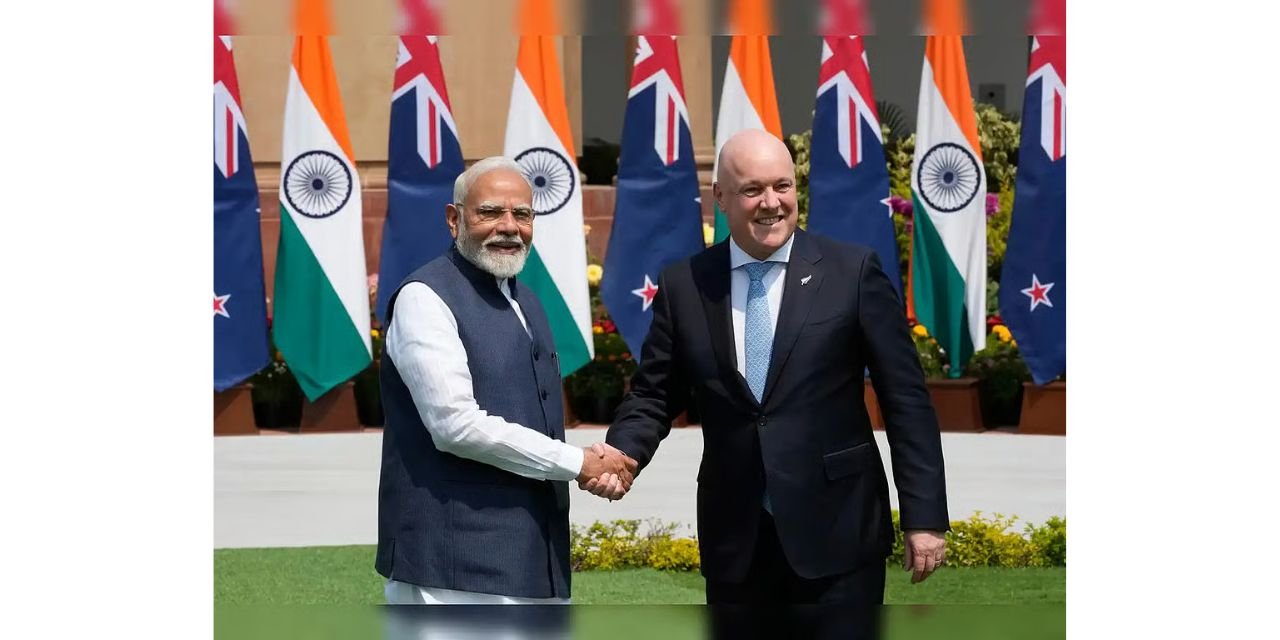
World Trade Centre Mumbai and the All India Association of Industries (AIAI) have welcomed the conclusion of the landmark India–New Zealand Free Trade Agreement (FTA), announced on December 22, 2025, by Prime Minister Narendra Modi and New Zealand Prime Minister Christopher Luxon.
Notably, the negotiations concluded in just nine months, marking a significant milestone in India’s Indo-Pacific trade engagement. The agreement reflects the shared intent of both nations to strengthen economic integration, improve market access, and promote long-term, sustainable growth.
Strengthening Indo-Pacific Economic Ties
According to industry leaders, the FTA reinforces India’s strategic trade positioning in the Asia-Pacific region. It also supports deeper cooperation across goods, services, investment, and people-to-people engagement.
Welcoming the development, Dr. Vijay Kalantri, Chairman, World Trade Centre Mumbai and President, All India Association of Industries, said the agreement creates a comprehensive framework to unlock new economic opportunities. He added that the pact aligns closely with India’s Viksit Bharat 2047 vision and strengthens India’s role as a reliable economic partner in the region.
Focus on Investment, Mobility and Long-Term Gains
Furthermore, Dr. Kalantri highlighted that although tariff rates have reduced from an average of two percent to zero, the agreement’s real strength lies beyond tariffs. He emphasised commitments related to investment flows, student and professional mobility, and regulatory recognition, which are expected to generate long-term benefits.
At the same time, he noted that restricted market access for dairy and select agricultural products will help safeguard Indian farmers, ensuring balanced growth.
Expanding Trade, Investment and Visa Opportunities
Looking ahead, Dr. Kalantri stated that such agreements signal India’s readiness to play a proactive role in accelerating global trade and diversifying export destinations. He described the FTA not merely as a trade pact, but as a blueprint for deeper economic and civilisational partnership between the two democracies.
Under the agreement, New Zealand will provide duty-free access across 100 percent of its tariff lines, while India will open 70 percent of its tariff lines. In addition, New Zealand has committed to investing USD 20 billion in India over the next 15 years.
Importantly, both sides also reached consensus on student mobility and post-study work visas for STEM graduates and skilled professionals, creating new visa pathways across nearly 5,000 skilled occupations.