Case Study – at Society for Vocational Rehabilitation of the Retarded

Dr Ela Manoj Dedhia,
PhD Guide,
University of Mumbai
Director,
Anveshanam Foundation
SDC Trustee UK (Society of Dyers & Colorists)
In June 1965, Late Nandiniben Divatia, a qualified, trained social worker, laid the foundation of Society for the Vocational Rehabilitation of the Retarded (SVRR)- who don’t have a disability, but have a different ability, along with her other dedicated friends and supporters.
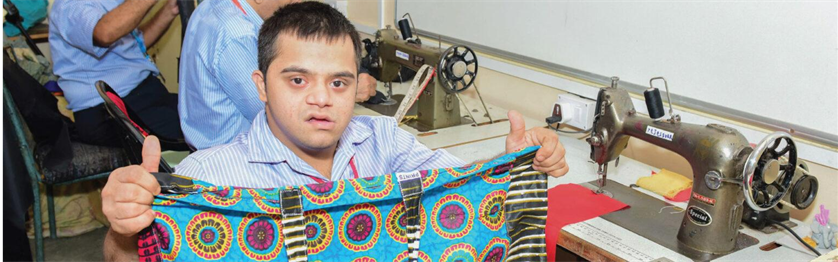
Starting with only five trainees & two borrowed sewing machines in a small balcony of a flat near the Congress House in Mumbai.
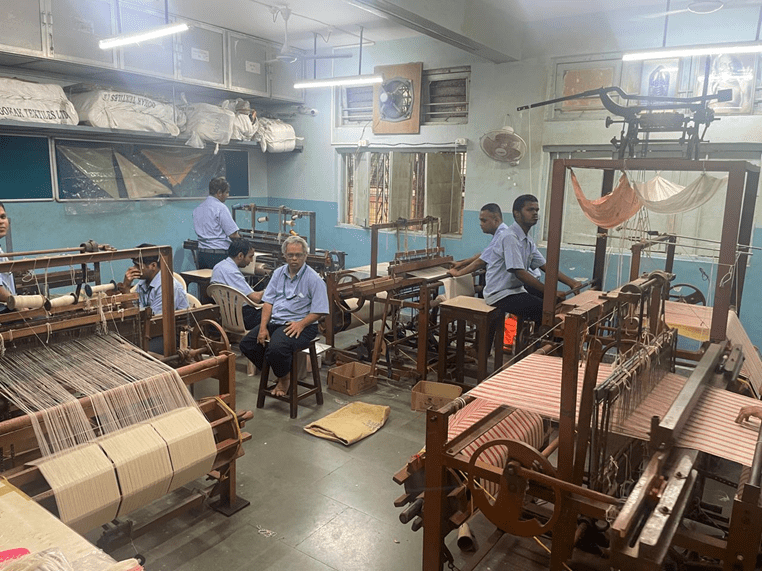
Pedle looms where Trainees find it a meditative process
Current status
SVRR has since then spread its activities to three centres, one urban at Tardeo Municipal School Building, Mumbai, where approximately 75 students are being trained and two centres at Virar, one at residential home, Nirdhar Pratisthan who have provided a hall where 38 students are being trained and second at Sativali 12 kms from Virar at Shankar Mandir Trust who have given three to four rooms, where 13 students are being trained. Weaving was there in all centres, but now, except Nirdhar Pratisthan, it is there in the other two centres.
Vision
To create an environment where the trainees (differently abled), irrespective of their background and level of competence, can grow, be valued, become independent and stand on their own feet, thus increasing their self-esteem.
Mission
To create opportunities for growth and meaningful life choices so that all intellectually differently abled individuals can be valued, become self-sufficient and contributing members of society.
Process & Training
With the help of experienced teaching staff, SVRR trains persons with limited intellectual ability in various vocational fields such as Weaving, Tailoring, Handicrafts and Making of Cardboard products.
Bobbin filling is done by hand on hand charkha where big cotton bobbins weighing 3 kgs are converted to small lighter bobbins for weft. Warp is set manually on the looms. For weaving, Skill training is provided for 3 to 6 months on a pedal loom operated manually with legs. Shuttles are not passed by hand, but looms are adapted accordingly. Such looms have to be free of the use of any electricity or automation to prevent any risk to the beneficiaries.
The beneficiaries are trained by a Weaving Master who is always around to help them. Raw materials like wool for asanas are purchased from the market. Cotton yarns, both dyed and grey, are procured from Gokak Mills since last 50 years for weaving.
Experience of the Beneficiaries: They really enjoy every bit of the process of spinning, rewinding and weaving and find it a meditative process.
Products and Their Marketing
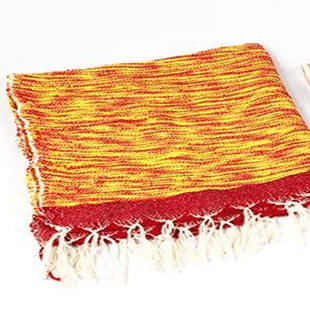
Woolen Aasana

Napkins / Towels
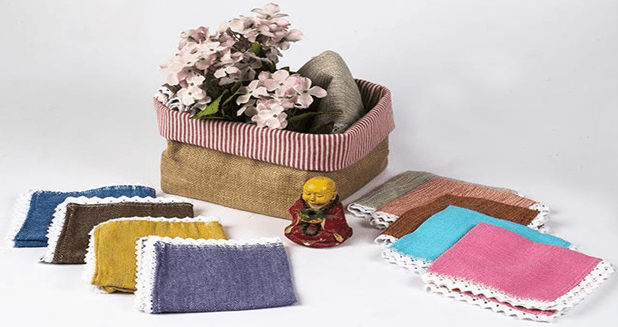
Handwoven Cocktail Napkins/ Handkerchiefs
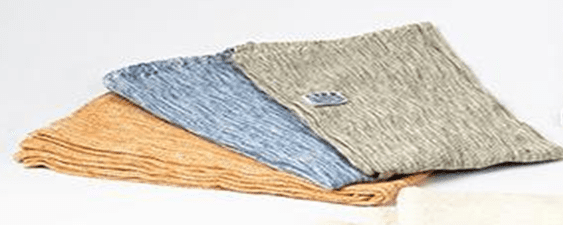
Dusters
The articles prepared by the trainees are of very good quality, and the woven products are regular products needed in every home, like dusters, napkins, mats, etc. They are sold along with other products made by the trainees, at various exhibitions as well as to the visitors, friends and well-wishers of SVRR. Some of the trainees are trained for marketing, accounting, etc.
Regular clientele list includes SBI, Shah Bros Ispat Ltd., Dr Chilay, Ginitex, Ohm Stock Brokers, N. M. Patwa, SKM Steel Ltd, R. P. Shah & Company, Jewelex Foundation, amongst others.
Acknowledgements:
Management of SVRR, Master Trainers, Social Workers, Parents & the thousands of Beneficiaries through the last 60 years including all other stakeholders.