
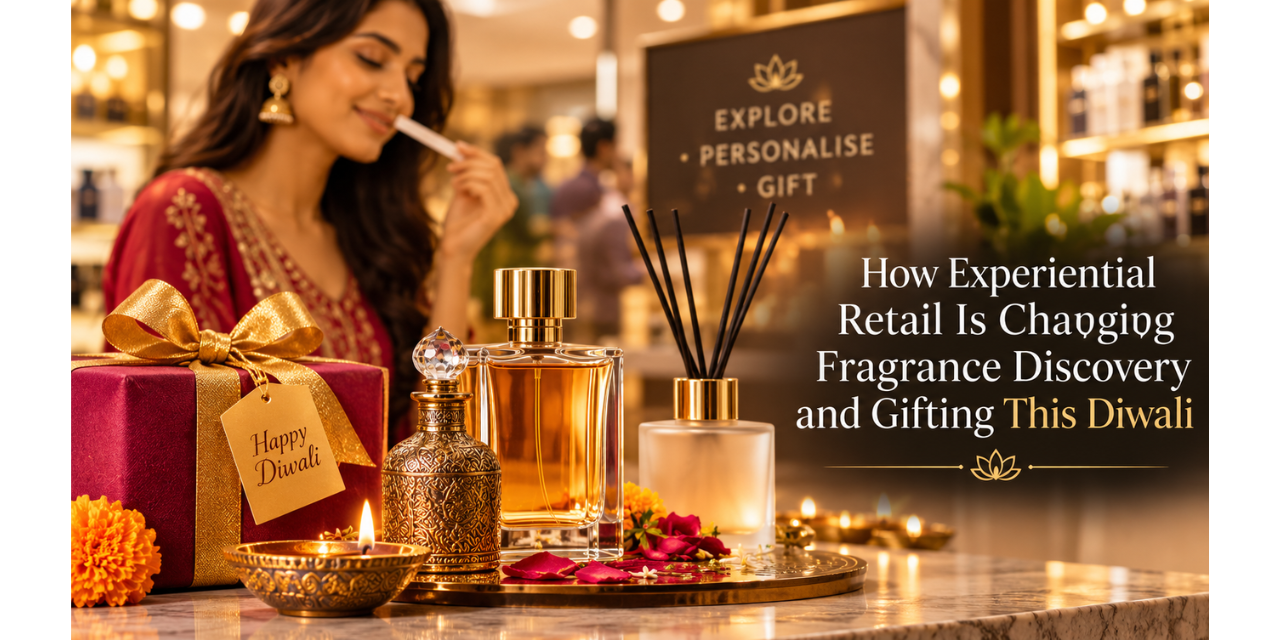
How Experiential Retail Is Transforming Fragrance Discovery and Gifting This Diwali
Diwali shopping has always been about more than buying things. It is a time to prepare homes, welcome guests, exchange gifts and make celebrations memorable. While sweets, clothing and decorative items remain popular choices, fragrance is becoming an important part of the festive experience.
From personal perfumes and traditional attars to home fragrances and diffusers, consumers now have more ways to bring scent into their celebrations.
However, the change is not limited to what people buy. It also extends to how they discover products. Fragrance shopping is moving beyond picking a familiar bottle from a shelf. Consumers are becoming more interested in exploring scent profiles, understanding ingredients and finding fragrances that reflect their preferences or the personality of the person receiving the gift.
This is where experiential retail is making a difference.
Fragrance Is Becoming a More Personal Choice
The Indian fragrance market is witnessing a shift in consumer preferences. According to Euromonitor International’s Fragrances in India report, the category recorded 15% value growth in 2025, with retail sales reaching approximately ₹6,640 crore. The report also highlights how fragrances are becoming more closely linked to everyday lifestyle choices, particularly among Gen Z and younger millennials.
This shift creates new opportunities for brands to engage consumers beyond conventional product promotion.
Fragrance is a personal purchase. Two people can experience the same scent differently, and a fragrance that appeals to one person may not suit another. Notes such as woody, floral, citrus, aquatic and oriental also create different associations.
As a result, consumers increasingly value opportunities to explore fragrances before making a purchase. Brands can respond by creating discovery-led experiences that help shoppers understand their preferences and make more informed choices.
Personalisation Is Influencing Festive Gifting
Choosing a fragrance for someone else can be challenging. Unlike many conventional gifts, perfumes are closely connected to individual preferences. A scent that feels refreshing to one person might seem too strong to another.
Personalised discovery is therefore becoming relevant to festive gifting. Instead of selecting a single fragrance without knowing the recipient’s preferences, shoppers can explore discovery packs, smaller perfume formats and curated gift combinations. These options offer greater variety and allow recipients to experience different fragrances at their own pace.
There is also a commercial reason for brands to focus on this opportunity. Godrej Consumer Products Limited, in its FY2024-25 Annual and Integrated Report, notes that nearly one-third of perfume demand is driven by gifting intent. The report also highlights how curated gift packs and festive visibility can encourage product discovery and conversions.
For Diwali, fragrance gifting does not have to mean choosing an expensive perfume bottle. A thoughtfully selected attar, a combination of miniature perfumes or a home fragrance set can make a gift feel personal without making the purchase complicated.
When Fragrance Becomes Part of the Celebration
The appeal of fragrance during Diwali extends beyond personal grooming. The festival is closely associated with cleaning, decorating and preparing homes for family gatherings. Fragrance can become part of this preparation by helping create a warm and welcoming atmosphere.
Home fragrances, reed diffusers, diffuser oils and room fragrances offer another dimension to the category. Floral and woody notes, for instance, can complement different spaces and personal preferences. These products also provide alternatives for consumers who want to gift something beyond conventional personal-care products.
For brands, this creates a broader opportunity to engage with consumers. Rather than focusing only on perfumes, they can show how fragrance fits into different parts of everyday life, from getting ready for a celebration to creating a comfortable atmosphere at home.
Connecting Digital Discovery with Physical Retail
Online shopping has made fragrance collections more accessible. However, it cannot completely replace the experience of smelling a perfume before buying it. This gives brands an opportunity to connect digital convenience with physical discovery.
Digital platforms can help consumers understand scent families, compare collections, explore recommendations and shortlist products before visiting a store. Physical retail, meanwhile, allows shoppers to experience the actual fragrance.
Discovery kits and smaller formats can also bridge this gap. They give consumers who prefer shopping online an opportunity to explore products at home.
The objective is not to make one channel replace the other. Instead, brands need to create a consistent experience that allows consumers to move between online research and in-store discovery without losing the personal element of fragrance shopping.
Bringing India’s Perfumery Heritage into Modern Retail
As consumers become more interested in discovering fragrances, brands also have an opportunity to highlight India’s rich perfumery heritage. Traditional attars, natural ingredients and age-old distillation techniques have a long history in the country. However, their stories are not always familiar to modern shoppers.
For fragrance houses with a history in this craft, sharing this knowledge can make product discovery more meaningful. Understanding where a fragrance comes from, how its ingredients are sourced and the process behind its creation adds depth to the shopping experience.
ISAK Fragrances is one example of how this legacy continues to find relevance in contemporary perfumery. Its history dates back to the 1850s in Lucknow, when the family’s association with fragrance creation and distribution began. What started as a family tradition has continued through six generations, with each generation contributing to the family’s knowledge and experience.
Over the years, the family has remained connected to India’s traditional fragrance-making practices while adapting to changing consumer preferences and the evolving market.
Today, ISAK brings this heritage into niche Indian artisanal fragrances. The brand combines traditional perfumery knowledge with contemporary interpretations of scent. Its approach reflects the idea that fragrance is not simply about creating a pleasant aroma. It can also preserve memories, cultural associations and stories connected to particular ingredients.
Its signature First Rain fragrance illustrates this connection. Inspired by the familiar earthy scent that rises when the first monsoon showers meet dry soil, the fragrance draws on the traditional Deg and Bhapka distillation technique.
The concept connects an everyday Indian sensory experience with a centuries-old approach to perfumery. It allows consumers to experience a familiar memory through fragrance.
This connection between heritage and modern preferences is particularly relevant as younger consumers explore artisanal perfumes and become curious about the stories behind them. For fragrance houses such as ISAK, generations of experience offer more than a legacy. They provide a foundation for introducing traditional Indian perfumery to new audiences while keeping its craft alive.
A More Thoughtful Way to Gift
Experiential retail is changing the consumer’s role in fragrance shopping. Rather than simply choosing from the products available, shoppers are becoming more involved in understanding, exploring and selecting what they buy.
For Diwali, this shift has particular relevance. A fragrance gift can evoke a memory, reflect someone’s personality or become part of a home’s festive atmosphere. When consumers have the opportunity to discover these connections themselves, the act of gifting becomes more meaningful.
For the fragrance industry, the opportunity lies in bringing together quality products, accessible discovery, thoughtful personalisation and the stories behind each composition.
As Indian perfumery continues to evolve, brands that balance craftsmanship with consumer curiosity can play an important role in shaping how people discover, experience and gift fragrances in the years ahead.


