
Dr Vidhu Sekhar P,
Assistant Professor,
Department of Fashion Management Studies,
National Institute of Fashion Technology,
Ministry of Textiles, Government of India
From the celebration of the first National Handloom Day in 2015 by the Prime Minister Shri Narendra Modi to global collaborations in 2025, Indian handloom has experienced a remarkable transformation. This decade has seen government policy initiatives, technological integration, new markets, and community engagement for a sustainable handloom journey.
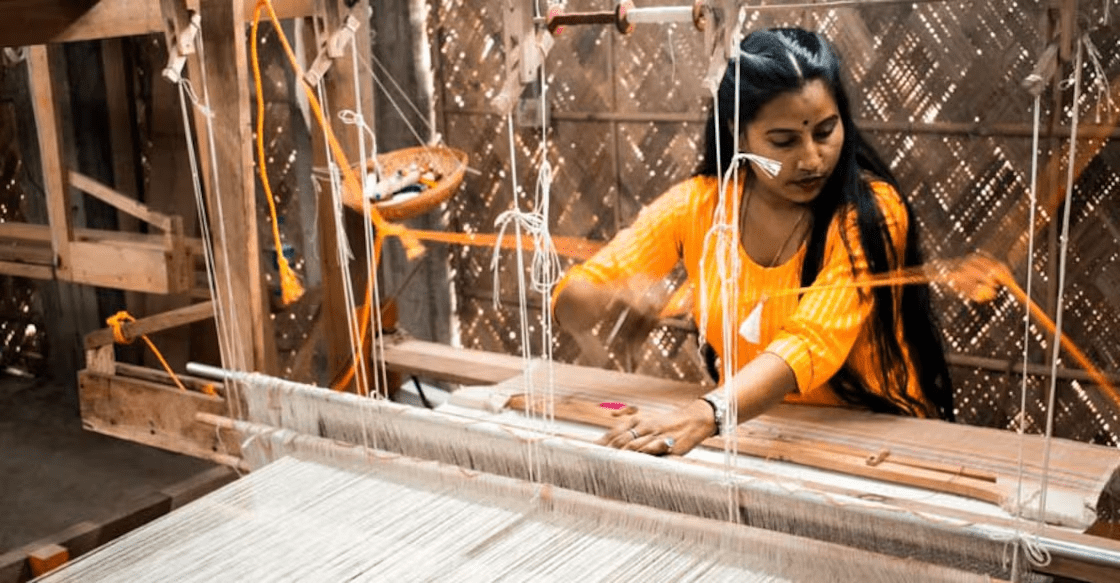
Handloom, an ancient craft of woven fabric, continues to draw audiences with its intricate designs, vibrant textures, and elegance. Right from the traditional Kasavu saris of Kerala in the south to the vibrant Banarasi fabrics of Uttar Pradesh or the Pashmina textiles of Kashmir, handloom has a pan-Indian presence in shaping the country’s rich textile heritage.

The history of handlooms in India dates back centuries to the Indus Valley Civilisation, with archaeological evidence of sophisticated textile production, showcasing the country’s ancient expertise in weaving and fabric craftsmanship. Over time, the glimpses of the past handloom tradition have evolved into a vibrant and diverse textile heritage, reflecting India’s regional uniqueness, craftsmanship, and timeless beauty. Skilled weavers crafted exquisite fabrics for royalty, nobility, and everyday people, showcasing their mastery in the craft, showcasing luxurious textures that reflected the country’s rich cultural diversity.
Colonialism led to significant shifts in the handloom industry. As described in “Weaving Histories: A Study of South India’s Handloom Industry (1800-1960),” British rule disrupted the traditional connection between cotton cultivation, spinning, and weaving, impacting weavers who produced everyday fabrics. Until the 1980s, historians widely believed that the advent of power looms and British colonial policies led to a decline in India’s handloom industry.
The introduction of mechanised spinning and weaving technologies seemed to make traditional handloom practices obsolete. However, Morris D. Morris in 1963 challenged this narrative. Citing the 1951 census, which recorded ten million people employed in traditional industries, Morris argued that craft skills had remained resilient in South Asia.
Contrary to expectations, the handloom industry thrived between 1900 and 1940, with handmade cloth and artisanal wages on the rise. This challenges the conventional narrative of decline and raises questions about the industry’s resilience. Weaving as a livelihood remained anchored in the economic base of many small towns and contributed to the economic and social processes that formed modern India. This was the case especially for many regions in the country, including Kerala, Tamil Nadu, coastal Andhra Pradesh, eastern Uttar Pradesh, West Bengal, and western Maharashtra.
The above propositions highlight the complexity of India’s handloom history and the need to reevaluate the impact of technological innovation on traditional industries like handloom and Khadi weaving. The handloom industry’s cultural importance persists, even when it navigates difficulties. Undoubtedly, handloom is an integral part of India’s economic and social landscape, supporting rural livelihoods and preserving textile traditions.
The Modi government has initiated programs to revive and promote India’s handloom sector, which supports the country’s cultural and rural economy. Declaring August 7 as National Handloom Day in 2015 commemorates every year the Swadeshi Movement to honour weavers’ craftsmanship while promoting handloom products across the country.

Through schemes like the National Handloom Development Programme, Raw Material Supply Scheme, and Comprehensive Handloom Cluster Development Scheme, the government provides financial assistance, technical support, and infrastructure development to boost weavers’ competitiveness and sustainability.
Initiatives like Vocal for Local and #MyProductMyPride campaigns promoted Indian handloom and Khadi products, while geo-tagging, GI tags, and onboarding weavers on the Government e-Marketplace (GeM) platform enhanced market access. With over 25 lakh women employed in the sector, the government has always emphasised women’s empowerment through self-help groups and cooperatives. Recognition via Design Resource Centres and Handloom Awards encouraged innovation and excellence among weavers.
Despite these transformative shifts, this sector faces skilled worker attrition, inter-generational migration, and challenges in scaling up amidst competition and changing market trends. The quantitative achievements from rising exports, increased employment, and reasonable income are the motivating factors for the government to pursue new policy initiatives for the handloom to position itself as a global leader.