
Ms. Sayali Sanjay Bhamare,
Assistant Professor,
Department of Fashion Designing,
K.V.N. Naik College, Canada Corner, Nashik
Introduction :
Indian Culture is very rich in traditions. Handloom weaving is a vigorous part of India’s cultural and economic heritage. It carries India’s diverse traditions, beliefs, artistic expressions and sustainability. It has been practised since old age, even before the invention of textile mills. It is a part of Indian tradition contributing to rural livelihood. Artisans who work on handlooms used to make fabrics using natural dyes and natural fibres. Before independence, textiles from England replaced handloom materials in India. But it regained its popularity during post-independence. Mahatma Gandhi promoted handloom textiles as they were cheaper than machine-made textiles. People in India started using it again as it supported the economic well-being of a large number of artisans. Modern-day technology and industrial pressure are affecting the survival of the handloom sector. It becomes a necessity to preserve this sector to support the Indian tradition and economic status of the huge amount of artisan community.

Historical Significance Of Handlooms In India
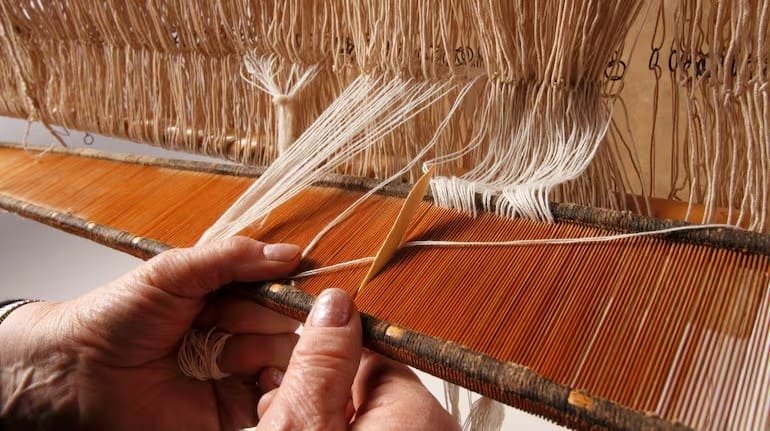
Handloom weaving the the oldest form of fabric production, dating back thousands of years. These were used in Central Asia around 5000 BC. The invention of the handloom cotton was widely used around 3000 BC. Cotton was easier to weave on a handloom and was more versatile than any other fabric. Handlooms were made of wooden and bamboo frames on which the weaver would sit while working. The warp threads were stretched across two lengths of wood, with one end secured to the ground and the other attached to a peg at the top of each frame. The weaver then pushes weft threads back and forth between two lengths of wood using a stick. Weaver was allowed to sit down by the use of beater bars and treadlers instead of standing. This significantly improved the process, but it still took a long time to weave the cloth.
Over time, handloom weaving became a vital part of Indian tradition. Its usage expanded rapidly.
The Decline of the Handloom Sector
Industrial textile looms were introduced in the early 19th century. It affected the Indian handloom sector widely as weaving was an economic livelihood for many Indian artisans. Mechanised textiles were cheaper than handloom textiles because of the modern equipment’s cheaper rates.
Mostly, artisans lost their traditional weaving jobs as weaving became more mechanised. Some of them could still afford handloom weaving, so they continued it.
During the independence era, Mahatma Gandhi reversed this situation by promoting the Khadi Campaign. Khadi is a type of handloom textile. He thought it was the way to promote Indian goods and self-reliance. This campaign was successful, and it led to an increasing demand for handlooms across India. This led handloom weavers of India to continue to weave fabrics even during the Industrial Revolution.
The handloom sector became a symbol of Indian tradition and culture during the 20th century. Handloom fabrics are still widely used in India and are imported worldwide as well
Handlooms In The Post-Independence Era
After the Khadi campaign, the handloom industry became an important source of rural employment in the sector post-independence. But the government support for this industry was crucial for the growth. Globalisation led to the emergence of modern power looms as an alternative to handlooms. As a result, handloom production slowly declined due to the cheap rates of power looms. The share of Handloom production steadily declined. This resulted in a fall in the number of weavers as they were forced into other occupations. This reduced the demand for handwoven fabrics.
The handloom industry still has the potential if supported properly, and it helps India earn foreign exchange through exports. It can create better job opportunities for people.
Many people in India and from other countries are interested in learning the traditional method of the handloom weaving process. Despite facing many challenges, this industry is thriving because of artisans, designers and some government initiatives.

Cultural Significance of Handloom in India
Indian handloom tradition is not only a process; It is a cultural symbol.
Rich handloom textiles vary in weaving techniques, designs and patterns that are unique in all different regions. Each handloom textile signifies the culture of its particular region through its weave and motifs. The motifs of each textile represent its local elements featuring cultural religious symbols, mythological stories, the nature, creating a visual language that connects generations directly to hearts. For instance, the Banarasi silk from Uttar Pradesh, the elegant Kanchipuram sarees of Tamil Nadu, and vibrant Bandhani from Rajasthan all represent India’s diversity and tell a story of centuries of craftsmanship and artistry.


Breakdown of the Cultural Significance
- Regional Representation: Each region of India represents a handloom textile of its unique weave, motifs, material and design, making it a symbol of its local identity and cultural pride.
- Preservation of Tradition: Handlooms link to old age techniques and designs, which are passed down through all generations.
- Artistry: Each handloom tells a story through its patterns and designs. It reflects the weaver’s skills and creativity.
- Sustainability: Handloom weaving is an eco-friendly technique. It involves the use of natural fibres and dyes. It is aligned with sustainable fashion.
- Economic Status: Handloom is a generational livelihood in rural areas, making it a source of income. It significantly contributes to India’s economic growth
Importance of Handloom in Indian Traditional Attires
Traditional Indian outfits like saree, shawls, and dhotis are mostly crafted on handlooms. Natural fibres, vibrant colours and authentic motifs make it glamorous. These outfits are not just a garment, but they are deeply rooted in our Indian culture. These are worn especially on traditional ceremonies and occasions, making them classical and timeless.
Indian Festivals and Handlooms
Indian festivals are never complete without handloom textiles. Both complement each other. Celebration of festivals in handloom-woven outfits connects people to their cultural roots. Flaunting silk sarees and handwoven kurtas makes every celebration worth the hype.
Handloom Textiles in Indian Weddings
Indian weddings are grand events where handloom attires are always chosen for the ceremony. It reflects a cultural significance and adds authenticity and grace to the couple’s big day. Each region of India represents its special traditional textile for the bride and groom, making their look graceful.
Different Regional Handloom Textiles
- Paithani of Maharashtra: Woven in pure silk. Renowned for peacock motifs and munia borders. Original golden or silver zari is used.
- Kanjeevaram Silk: Known for temple motifs, made in pure silk. Contrast borders and vibrant colours.
- Ikat of Orissa: It uses a yarn tie-dye technique to create blurred designs and some geometrical vertical patterns
- Banarasi Silk: Renowned for intricate golden and silver brocade patterns and beautiful motifs.
- Baluchari of West Bengal: Mythological scenes are depicted through designs. Woven in silk
- Bandhani of Gujarat and Rajasthan: Famous for the tie-dye technique on cotton. Intricate patterns and vibrant colours.
- Tussar Silk: Naturally available in a golden hue. Often used for dhotis for religious ceremonies.
- There are many more handloom textiles representing different parts of India. Each textile carries a story and tradition.

Conclusion
Handloom is not just a weaving technique or a piece of textiles; it is a symbol of Indian cultural and historical heritage, artistic expressions and resilience. In modern days, the handloom sector is facing many challenges to its growth due to expensive rates. Many designers, artists, weavers and some government initiatives are working for its revival and creating awareness among people across India and in foreign countries as well. The handloom sector is again growing as the world needs sustainable fashion. Sustainable fashion and creation become an environmental need, and handloom is the perfect way for it.
As Indian consumers, we play an important role in promoting and representing handloom by purchasing it. One purchase can contribute positively in support. So let us make conscious choices to promote and support this beautiful old age tradition.
References:
- AI overview
- Google images