Union Textiles Minister inaugurates Centre of Excellence, unveiling five initiatives to modernise the handloom sector
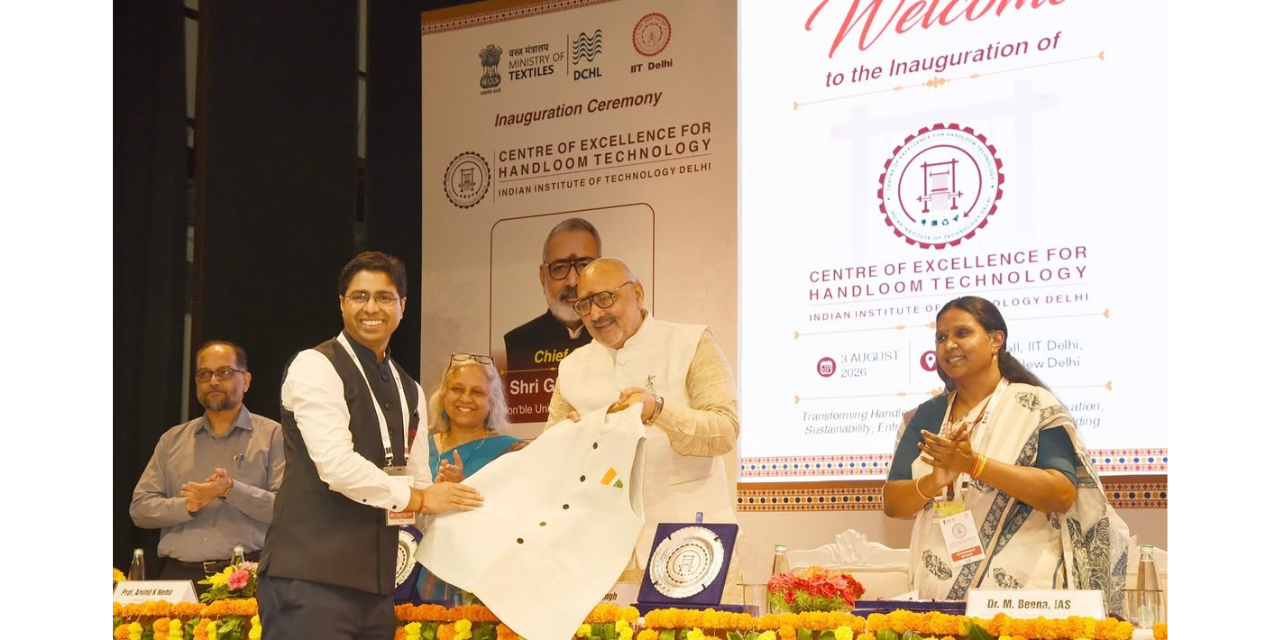
India’s handloom sector is stepping into the digital age. On August 3, 2026, Union Minister of Textiles Shri Giriraj Singh inaugurated the Centre of Excellence for Handloom Technology (CoE-HT) at the Indian Institute of Technology (IIT) Delhi. The new centre aims to blend India’s centuries-old weaving traditions with modern technology and research.
The move marks a major push by the government to overhaul how India’s handloom sector operates. Millions of artisans depend on handlooms for their livelihood, yet many struggle to compete globally. The centre plans to use AI, digital tools, and research to boost productivity, improve sustainability, and help Indian handlooms become competitive on the world stage.
Merging Tradition With Technology
At the inauguration, Minister Singh explained why the centre matters. The government wants to combine India’s rich weaving heritage with cutting-edge technology to build a handloom sector ready for the future.
According to Singh, the real impact will come from three things: innovation, sustainability, and entrepreneurship. These will help boost productivity, open new markets, and improve incomes for weavers.
The inauguration drew a range of people from India’s textile establishment: Smt. Neelam Shami Rao, Secretary of the Ministry of Textiles; Dr M. Beena, Development Commissioner for Handlooms; Smt. Amrit Raj, Development Commissioner for Handicrafts; Prof. Arvind K. Nema, Director-in-Charge of IIT Delhi; and Prof. Ashwini Agrawal, Dean of IITD. Weavers, startups, and handloom industry representatives from across the country also attended.
Five New Initiatives to Transform the Sector
The ceremony launched five initiatives aimed at different parts of the handloom business:
Handloom 4.0 Mobile App – A digital tool for tracking loom productivity, quality, maintenance, and sustainability. It gives weavers real-time data to improve their operations.
Handloom e-Vidya – An online learning platform for capacity building across the sector. Weavers, designers, and entrepreneurs can access resources on new techniques, market trends, and business skills.
HandloomX Accelerator – A startup incubator for handloom innovations. It supports new companies and entrepreneurs working in different parts of the supply chain, from raw materials to retail.
Kalagriha Handloom Studio – A digital design studio that connects consumers with handloom artisans. People can customise and visualise handloom products, creating a direct link between weavers and buyers worldwide.
Threads of Valour – A sustainability programme that recycles used defence textiles into premium handloom fabrics. It combines recycling science with traditional weaving skills.
A Research Hub for Handlooms
The centre will focus on several key areas of research and development:
- Loom Modernisation – Creating new handloom technologies that improve productivity without losing the craftsmanship
- Ergonomics – Making handlooms safer and more comfortable for weavers
- AI and Design – Using artificial intelligence for design ideas, predicting demand, and quality checks
- Sustainability – Developing eco-friendly practices across the sector
- Digital Tools – Helping weavers and businesses adopt new technology
The centre will also build a national database of handloom knowledge—everything from centuries-old weaving techniques to modern innovations. This database will be open to everyone, not just researchers.
Training Weavers for the Future
The centre plans to train at least 1,000 weavers, teachers, and handloom professionals over the next five years. The government recognises that new technology won’t work unless people know how to use it.
Bringing Everyone Together
For this to work, the government knows it needs academia, industry, and handloom businesses working together. Secretary Smt. Neelam Shami Rao emphasised the need for stronger collaboration between universities, industry, and government to develop practical technological solutions for handlooms. By placing the centre at IIT Delhi, it sits at the intersection of all three.
Dr M. Beena, Development Commissioner for Handlooms, called the centre a hub for research, knowledge sharing, and skill development. She said it would create opportunities for weavers, designers, entrepreneurs, and startups across the handloom business.
Why This Matters Globally
International designers and conscious consumers want handloom fabrics, but many Indian weavers are stuck in low-profit production. The centre wants to change that. Through research, technology, and innovation, it aims to help Indian handlooms command premium prices worldwide and give weavers better incomes.
What This Means for Weavers
India’s handloom sector has been around for centuries, but it’s struggling in a modern economy. The new centre shows that the government isn’t abandoning this heritage. Instead, it’s giving handlooms the tools, research, and platforms they need to survive and grow.
Tradition and technology don’t have to oppose each other. The centre is betting that when you bring them together thoughtfully, something powerful happens. For millions of weavers across India, that could mean better incomes and a future for their craft.
The Centre at a Glance
The Centre of Excellence for Handloom Technology (CoE-HT) is a joint venture between the Ministry of Textiles and IIT Delhi. It’s designed to be a research and innovation hub for the handloom sector, working to preserve India’s weaving traditions while making them competitive globally.
Disclaimer: All images in this article are sourced from IIT Delhi’s official Instagram account (@iitdelhi).