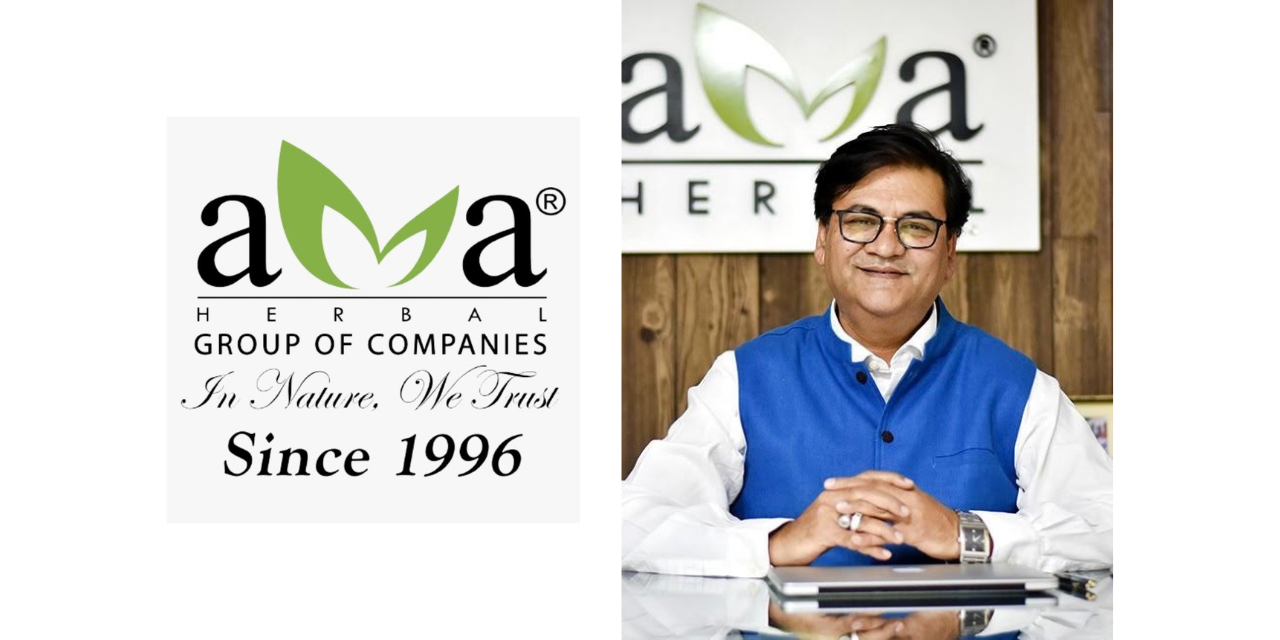
Dr. Yawer Ali Shah, Co Founder & CEO, AMA Herbal Group
Herbal Extracts Gain Importance as Consumers Seek Natural Ingredients
Ayurveda and herbs have played an important role in human life for centuries. People have used herbs, roots, flowers, bark and other natural materials for food, medicine, textiles, dyes and wellness.
However, changing lifestyles have increased demand for convenient, ready-to-use products. As a result, traditional methods of preparing and using herbs gradually declined. At the same time, synthetic products became more popular because they offered simple and faster production.
Now, consumer interest is shifting again. Growing awareness of the possible health and environmental concerns linked to some synthetic substances has renewed interest in natural products.
This shift has increased demand for herbal and botanical extracts. Consumers also want to know more about the ingredients used in products. For example, turmeric, ginger, aloe vera, green tea, ashwagandha and rosemary have become widely recognised natural ingredients.
Modern Extraction Makes Herbal Ingredients More Practical
Using whole herbs is not always practical for modern consumers. Many people lack the time or knowledge needed to process herbs themselves.
Therefore, a specialised industry has developed around the extraction, purification, standardisation and quality control of herbal products.
Traditional extraction can involve boiling herbs or preparing decoctions. However, these methods extract a wide range of compounds, including both active and inactive components.
The concentration of these compounds can also vary. Factors such as plant variety, cultivation methods, harvesting, storage and extraction conditions can all affect the final composition.
Modern extraction technologies can help address these challenges. They allow manufacturers to isolate and concentrate specific compounds while improving consistency and stability.
Turmeric Highlights the Need for Standardised Extracts
Turmeric provides a useful example. It contains several compounds known as curcuminoids.
Curcumin, one of these curcuminoids, has anti-inflammatory properties and can be useful in treating osteoarthritis. Therefore, manufacturers need appropriate extraction methods to achieve the desired concentration and quality.
Modern extraction processes can support better purification and stabilisation of botanical extracts. They can also help manufacturers produce more consistent ingredients for different applications.
Quality Control Remains Essential
Standardisation plays a key role in herbal extract production. Manufacturers first need to identify the components present in an extract.
Quality control then helps ensure consistency. The final composition depends on both the raw material and the processes used during extraction.
Therefore, manufacturers must carefully monitor factors throughout the production chain. This approach helps improve the reliability, safety and quality of herbal extracts.
Sustainable Extraction Technologies Support the Future
Sustainability will also influence the future of herbal extracts. Traditional water-based extraction can consume significant amounts of water.
Modern technologies, however, can help reduce this impact. Manufacturers can collect and reuse process water, thereby lowering overall water consumption.
Cold extraction offers another opportunity. Since the process uses limited heat, it can reduce energy consumption during production.
Solvent selection also matters. When extraction requires solvents, manufacturers can choose more sustainable and environmentally friendly alternatives.
Another promising technology is supercritical fluid extraction. In this process, carbon dioxide can act as the extraction solvent. Manufacturers can then collect the CO₂ after extraction, creating opportunities for more efficient and sustainable processing.
Combining Ayurveda with Modern Science
The future of herbal extracts lies in bringing traditional knowledge together with modern science.
Research and innovation can help manufacturers develop herbal extracts that offer greater consistency, quality and safety while reducing their environmental impact.
The journey from cultivating a plant to producing a refined extract shows how natural botanical resources can support modern applications. As consumer demand for natural ingredients continues to grow, advances in extraction technology will play an increasingly important role in the herbal products industry.