Ms Haritha Purushothaman,
Assistant Professor,
Department of Management Studies,
Kannur University

Mr Shiju C P,
Research Scholar,
Department of Journalism & Mass Communication,
Kannur University
Introduction
This case study is about the weavers of Kulapuram village, a handloom weaving conglomerate, located in Kannur District, Kerala, that has been in existence for 28 years. This case study aims to bring handloom weavers to the mainstream and improve their standard of living. Handloom weaving is a livelihood that generates employment and follows sustainable craft practices that not only preserve cultural heritage.
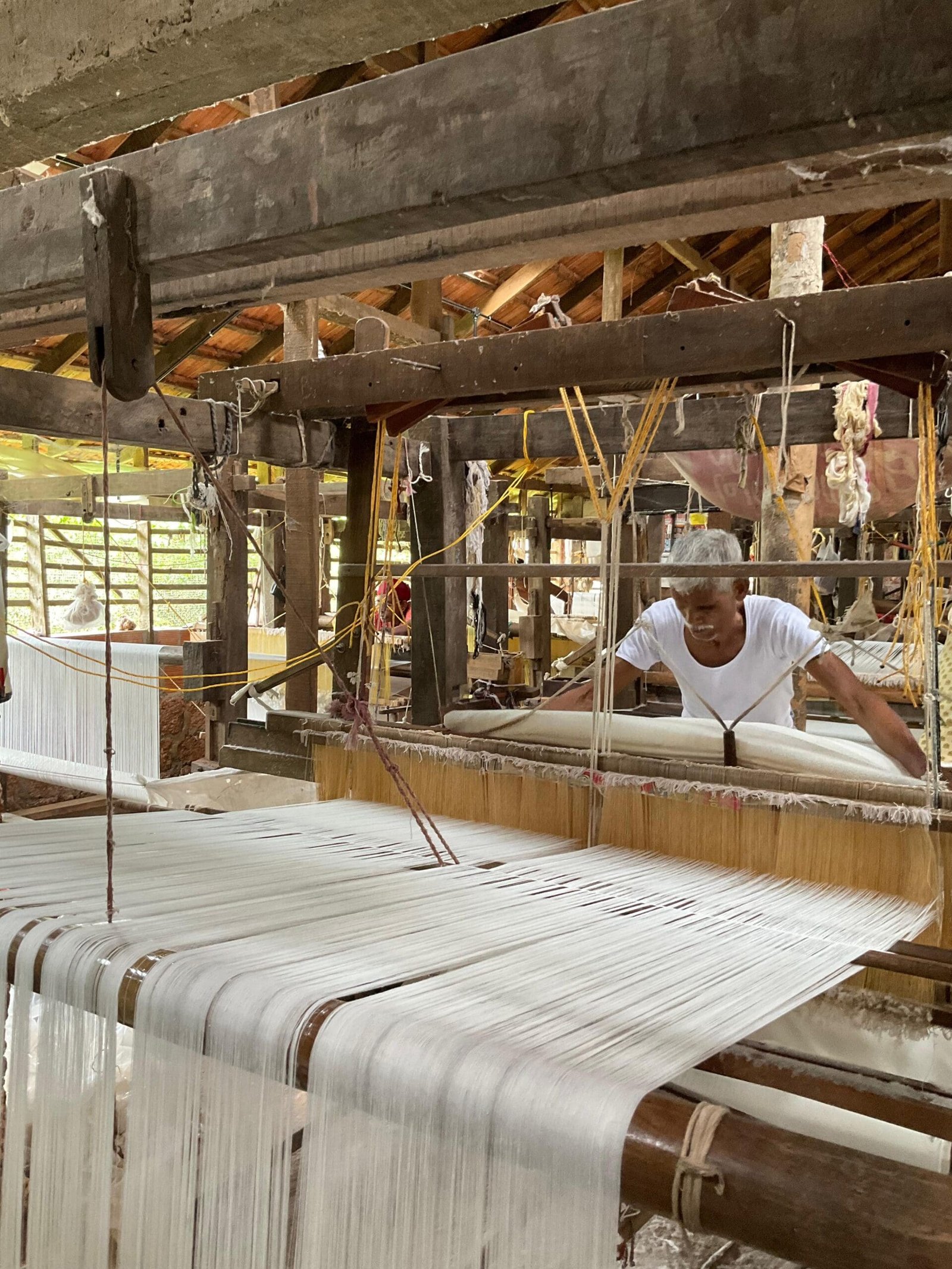
Kulapuram Weavers Society has been serving the livelihood of the local people for over two decades. It serves as a platform for artisan weavers mainly from the local area, engaging in designing and weaving various fabrics and dothis and premium sarees. Their products have buyers in domestic and international markets, with a history of exporting sarees and bedsheets. Currently, society has taken up the weaving of school uniforms to cater to the local demand with government support.
Artisans are skilled in weaving beautiful sarees and can produce about 6 meters per day. Society offers training to artisans to keep quality and efficiency high. Payment is based on a piece-rate system to encourage the creation of fewer damaged products, reducing material waste and defects. Some female artisans work here out of a passion for weaving that shows the craft’s potential to attract diverse talent.
Challenges
The younger generation shies away from this profession due to the reduced remuneration. The society is in a remote area that limits market access and puts logistic barriers. However, a decent salary can overcome this limitation. Product pricing impacts sales and profitability. The premium sarees are priced between Rs 2600 to Rs 3000, which does not have demand in the local market, and locals find it expensive. The affordable sarees for locals are priced between Rs 1000 to Rs 1200.
Market Position and Potential
The Kulapuram Weavers Society targets premium customers and can position its products as affordable luxury items. There is significant potential to tap into the emerging market for affordable premium handloom products by strategically pricing and marketing them to widen acceptance in International and domestic markets.
Sustainability and Social Impact
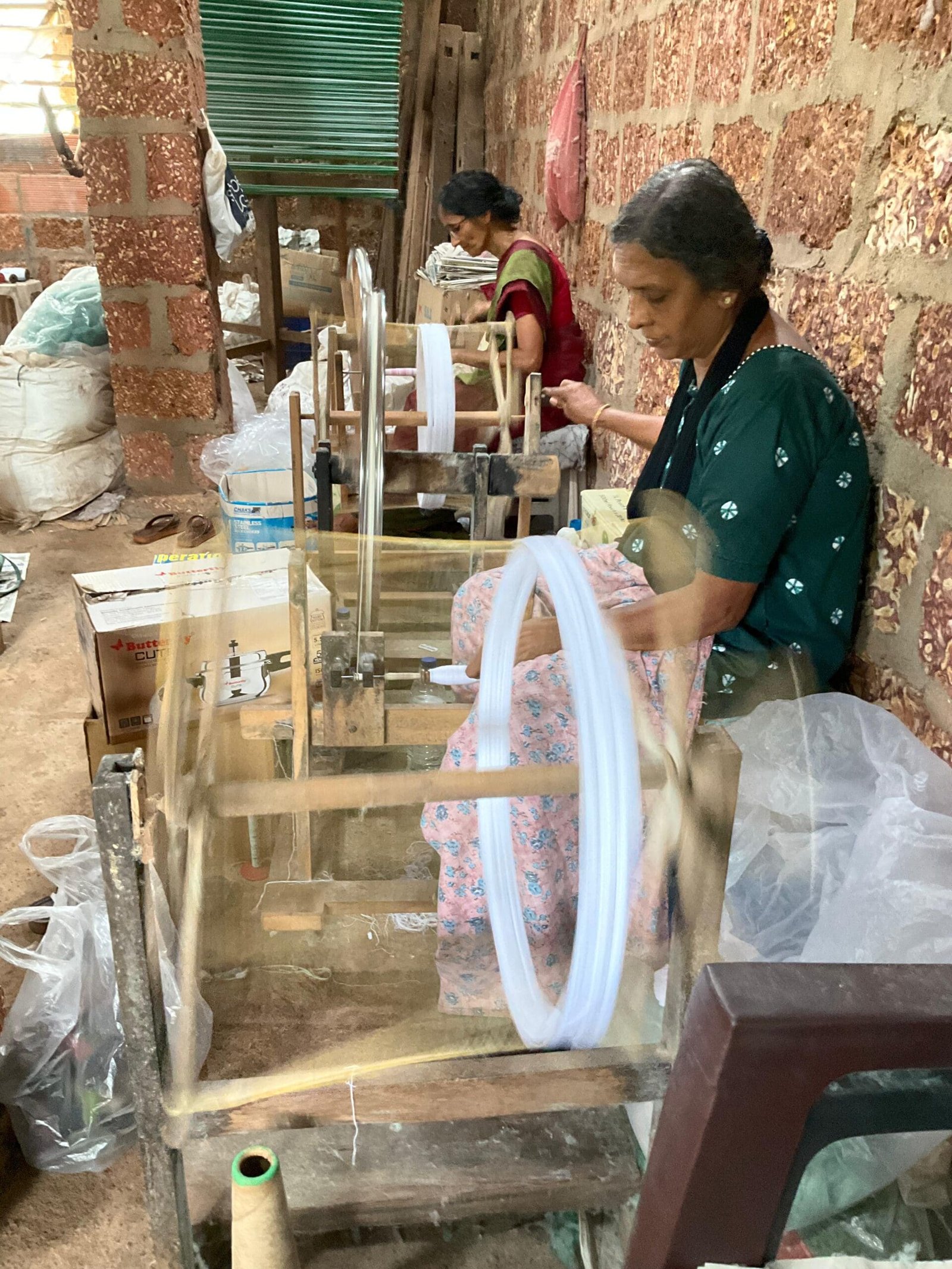
Kolapuram handloom employs craftsmen, safeguards traditional skills, and supports rural economies, all while helping the environment. By giving weavers better pay, access to markets, and support, the handloom sector can become more viable, which will raise the standard of living for weavers and help the trade continue. Modern marketing techniques can help the Kulapuram Weavers Society’s products look like inexpensive luxury items while appealing to high-end clients. The handloom itself has a design that has found a market abroad. However, collaboration with professional designers or local artists can develop exclusive and contemporary handloom designs, differentiating sarees from mass-produced options. The Luxury market strategy of creating exclusivity and limited collections creates desirability among premium buyers. Introduction of diversified pricing for flagship Luxury to retain high-end sarees for premium customers can leverage market leadership within the ₹2,600-3,000 range. The affordable luxury sarees in the ₹1,000-2,000 range can reach the product visibility that balances craftsmanship and accessibility.
Handloom weavers dedicate their mind and soul while weaving, to make each thread close to their heart, detailing the artisan stories and slow craftsmanship. The marketing team can tell this story of the value proposition to justify the price tag. Premium audiences honour purpose-driven brands, irrespective of price tag. They always value the brand’s real storytelling, its heritage, artisan profiles, sustainability aspects, and community impacts. The authenticity certifications like Geographical Indicator (GI) emphasise the origin and craft’s heritage.
Developing a user-friendly website with an integrated online shop offers easy access to global and urban buyers. Leveraging new media platforms can showcase their weaving processes and their life to build an emotional connection. An elegant packaging for a premium finishing can bring value addition.
Kulapuram handlooms support environmental conservation and low-carbon practices, making it fit in marketing aspects, as they are already an integral part of their traditional weaving process. However, the eco-consciousness luxury segment needs to hear it from the weavers directly. Given the Handloom’s legacy, participating in fairs like Bharat Tex, Asia’s largest textile trade fair, in its annual fair at New Delhi is suggested.
Conclusion
By implementing these strategies, the Kulapuram Weavers Society can successfully position itself as its brand, justifying its price point, and position its saree segment and other handlooms as sought-after, affordable luxury products in both domestic and international markets. The case study emphasises the need for managerial and logistic support for the Kulapuram Weavers. This weaving segment has the hidden power to blend tradition and sustainability to tally the goals of the handloom week celebration set by the policymakers.