Fashion Influences 30% of Global Farmland, Oxford Report Finds
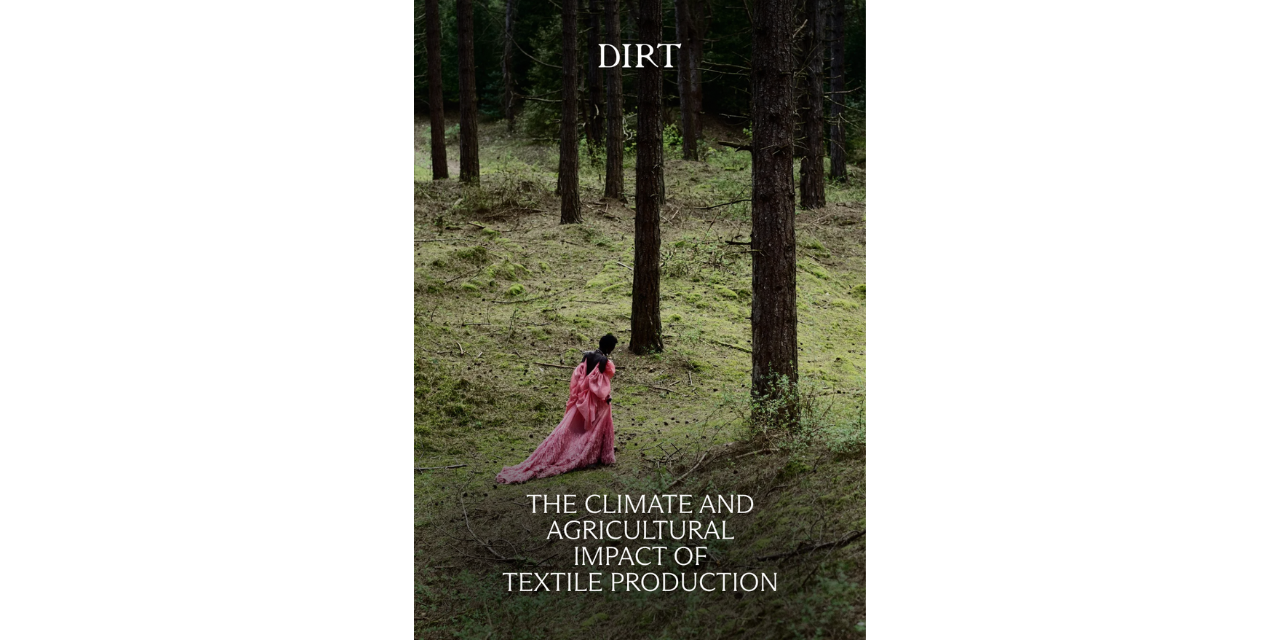
A new report from the University of Oxford’s Smith School of Enterprise and the Environment examines fashion’s relationship with global farmland.
The report was produced with DIRT Charity. It finds that fashion influences around 30% of global farmland, equal to approximately 1.45 billion hectares.
The figure includes land linked to leather and wool. It also covers textile crops such as cotton, hemp and flax.
Earlier estimates focused mainly on textile crops. Therefore, they produced a significantly smaller figure.
Farming Method Can Matter More Than Fibre Type
The report challenges the idea that fibre type alone determines textile impact.
Instead, it finds that production methods can play a major role. The environmental variation within one material can also be wider than the difference between two different fibres.
As a result, a garment’s fibre label may not provide enough information about its environmental footprint.
Report author and Director of the University of Oxford’s Smith School of Enterprise and the Environment, Sam Fankhauser, said: “Once leather and wool are counted alongside textile crops, roughly a third of the world’s agricultural land is linked to what this industry buys. That is the scale of the opportunity, and our review suggests it is currently underestimated. A brand changing how it sources is changing how land is farmed.”
DIRT Charity Calls for Greater Focus on Farming
Arizona Muse, founder of DIRT Charity and report co-author, highlighted the industry’s focus on comparing natural fibres.
She said: “Brands have spent a decade arguing about which natural fibre is more sustainable, many with little idea about how these fibres are farmed. DIRT Charity sees that fashion– as a sourcing power– has the opportunity to regenerate up to 30% of earth’s agricultural land through transitioning to regeneratively farmed biodynamic fibre. Healing the surface of the earth from toxic pollution while clothing humans.”
The findings come shortly before the EU’s Empowering Consumers for the Green Transition Directive takes effect on 27 September.
The directive will restrict generic environmental claims. It will also require sustainability labels shown to EU consumers to rely on independently verified and certified schemes.
Production Can Change a Material’s Impact
The report highlights major differences within individual materials.
For example, life-cycle studies place leather’s impact between 8.5 and 152 kg CO2e per square metre. This shows how production methods can create significant variations.
The report also examines mycelium-based alternatives. Two examples showed a twentyfold difference in emissions.
One mycelium material recorded emissions as low as 2.76 kg CO2e per square metre. That represents a 92% reduction compared with the approximately 33 kg CO2e associated with bovine leather in the cited comparison.
However, another mycelium material recorded 57 kg CO2e per square metre. Its production relied on a coal-heavy electricity grid.
Consequently, the material’s production system can influence its environmental impact significantly.
Wood-based fibres show a similar pattern. One analysis found viscose emissions ranging from 0.20 to 8.30 tonnes of CO2e per tonne.
This represents a fortyfold difference. According to the report, production and energy sources drive much of this variation.
Farming Practices and Textile Agriculture
The report also examines how agricultural practices affect textile production.
Organic and biodynamic systems are associated with greater species richness than conventional agriculture. This includes beneficial insects, soil fauna and farmland birds.
In Egypt, biodynamic insect control reduced pesticide use to below 10%. At the same time, cotton yields increased by almost 30%.
Additionally, twelve-year trials involving Indian cotton rotations found improvements in soil quality. The trials also reported stronger microbial communities under biodynamic systems.
Long-term studies reviewed in the report show positive soil-health outcomes for biodynamic agriculture. However, the lead authors Megan Siyu Liu and Clara Cecil note that further research is needed.
They identify areas such as total land use and long-term viability as topics requiring additional study.
Brands Can Influence Agricultural Practices
Arizona Muse also highlighted the role of sourcing decisions.
She said: “Every brand has a contract coming up for renewal with a supplier. They have the opportunity to ask how the fibre was farmed, to demand– contractually– that the fibre be sourced from biodynamic or organic farms, and pay for the necessary transition.”
DIRT Charity works internationally to promote biodynamic agriculture. Its work focuses on rebuilding soils, protecting biodiversity and supporting farming communities.
The charity is also working with Biodynamic Federation Demeter International on the Demeter Textile Standard.
Demeter Textile Standard Expands Certification
The Demeter Textile Standard is designed to address multiple stages of textile production.
It covers soil health, biodiversity, ecological regeneration and animal welfare. It also includes human wellbeing and farming practices.
Beyond agriculture, the standard examines processing and manufacturing. This includes fair pay and safe working conditions across the supply chain.
The standard also aims to address the end of a garment’s life. Its requirements include full compostability of finished garments.
Furthermore, the certification covers eleven raw material categories. These range from dyestuff to cotton and silk.
The partnership aims to bring the certification approach used in food and wine into the textile industry.
DIRT Charity Calls for Sourcing Changes
DIRT Charity is calling on fashion companies to focus sourcing targets on farming methods and verified outcomes, rather than fibre type alone.
The organisation also advocates auditing environmental claims and sustainability labels. In addition, it is calling for investment in regenerative agriculture and processing throughout the supply chain.
The charity supports a transition towards regenerative and biodynamic agriculture. It also advocates Demeter certification for farming and textile processing.
Finally, the organisation is calling for greater global sourcing from regenerative farms to support soil regeneration.
Findings to Be Presented During Climate Week NYC
Arizona Muse will present the report’s findings at Eco Age’s Convening the Next-Generation Materials Transition Forum.
The event will take place at the Fashion Institute of Technology during Climate Week NYC on 22 September.
The report adds to ongoing discussions around textile sourcing, agricultural practices and fashion’s environmental footprint. It also highlights the importance of looking beyond fibre labels when assessing textile sustainability.