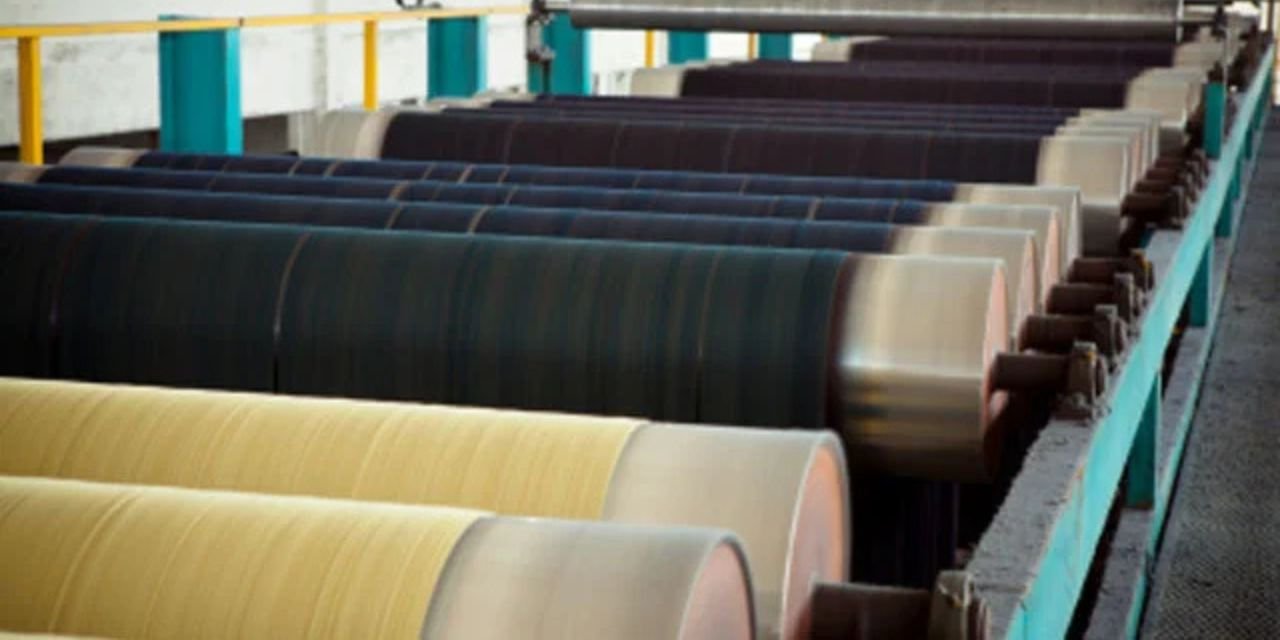
Fashion for Good has launched the industry’s first open-source blueprint for near-net-zero textile manufacturing. The initiative targets one of fashion’s most carbon-intensive stages. Developed under the Future Forward Factory programme, the roadmap offers Tier 2 manufacturers in India five practical and financially viable decarbonisation pathways. These solutions can reduce carbon emissions by up to 93 percent.
Why Practical Decarbonisation Is Urgent
Textile dyeing, processing, and finishing facilities contribute significantly to industry-wide emissions. These wet processes consume large volumes of water, energy, and chemicals. However, manufacturers continue to face major obstacles. High capital costs, fragmented solutions, and unclear implementation paths slow progress. As a result, many factories struggle to justify decarbonisation investments. This gap limits one of the industry’s biggest climate opportunities.
A Scalable Blueprint for Textile Manufacturing
The Future Forward Factory blueprint provides a unified and actionable framework. It combines energy efficiency measures, process innovations, and best-available technologies. Fashion for Good has made the blueprint freely available to accelerate adoption across the supply chain.
Moreover, the roadmap targets Tier 2 textile manufacturers in India producing cotton knits and wovens. Laudes Foundation and H&M Foundation support the initiative as catalytic funders. Apparel Impact Institute, IDH, and implementation partners Bluwin, Wazir Advisors, Grant Thornton Bharat, and Sattva Consulting also contributed. Arvind Mills serves as the anchor partner in India.
Five Pathways to Near-Net-Zero Operations
The blueprint outlines five tailored pathways based on product type and production process. Each pathway identifies the most effective technologies and innovations. With full implementation, factories can achieve up to a 93 percent reduction in carbon emissions. In addition, water usage can drop by 33 percent. Electricity consumption can fall by 41 percent.
Importantly, each pathway includes a detailed financial analysis. This covers payback periods, internal rates of return, and net present value. As a result, manufacturers can clearly assess investment feasibility. The blueprint also includes a Policy Landscape Overview. This section maps available government incentives. Furthermore, a “How to Navigate” guide helps manufacturers select the most relevant pathway.
“The Future Forward Factory blueprint removes the guesswork and delivers a pragmatic solution to a complex challenge,” said Katrin Ley, Managing Director, Fashion for Good. “By making this knowledge openly available, we address the biggest barrier to decarbonisation: the lack of a clear and implementable approach. This is not just a roadmap. It is an essential guide for factory transformation.”
Moving from Strategy to Action
Fashion for Good plans to support a selected group of Indian manufacturers. These facilities will retrofit operations using the blueprint. Apparel Impact Institute will support the implementation process. Participating factories will receive technical guidance and financial clarity.
“As we develop this facility, we are committed to sharing our learnings,” said Abhishek Bansal, SVP – Sustainability, Arvind Mills. “The blueprint shows that a holistic approach can unlock investment while improving long-term efficiency.”
To validate the roadmap, Fashion for Good and Arvind Mills are exploring the first Future Forward Factory. This near-net-zero facility will act as a live proof of concept. It will also inform future blueprints for South Asia and Latin America.
Meanwhile, Fashion for Good invites Indian manufacturers and industry stakeholders to join a webinar on 8 December 2025. Hosted on LinkedIn, the session will offer a guided walkthrough of the blueprint. It will also share practical advice for effective implementation.