
EIM by Jeanologia and BCome Connect Factory Data to Digital Product Passports
New white paper demonstrates how factory-level measurements can improve denim Life Cycle Assessments and support more accurate product traceability.
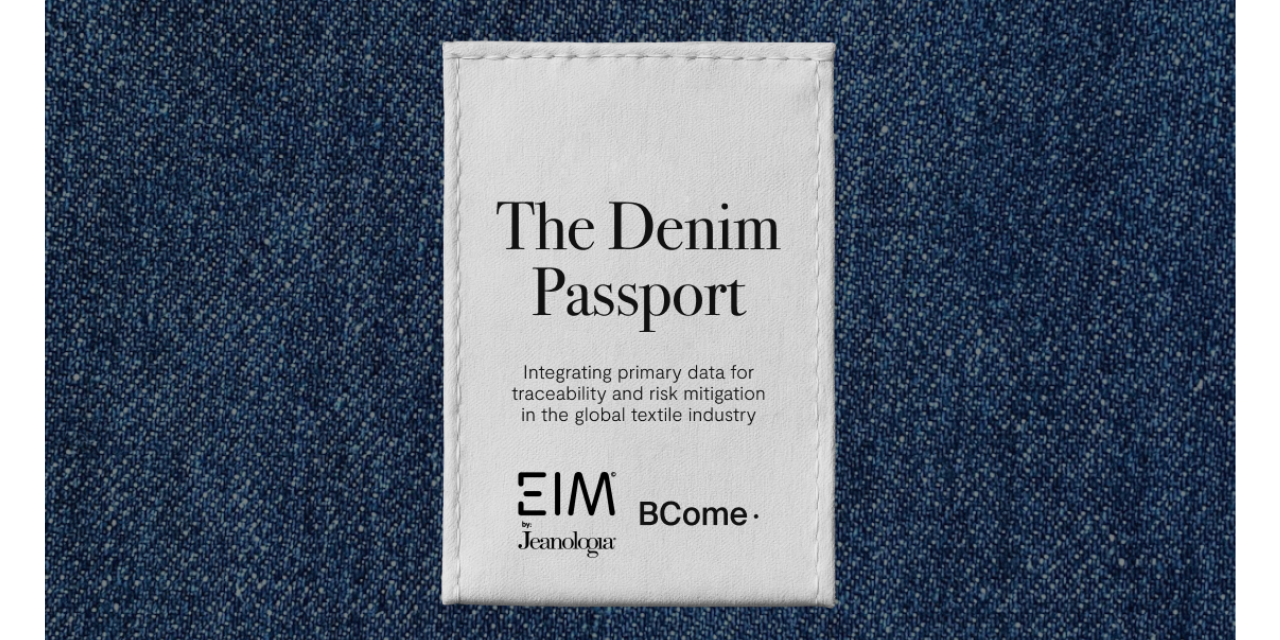
EIM by Jeanologia and BCome have released a new white paper, The Denim Passport, showing how data collected during garment production can be linked to a product’s Life Cycle Assessment (LCA) and Digital Product Passport (DPP).
The study addresses a key challenge for the textile industry. While factories are improving how they measure and reduce environmental impacts, much of this data remains within their facilities. As a result, brands often depend on industry averages that may not reflect actual production conditions.
“We need to understand what lies behind the product, connect the different stages and get the whole chain speaking the same language. Measure to understand, compare and improve”, says Begoña García, Director of EIM.
From Industry Averages to Real Production Data
The white paper presents a case study of a 100% cotton denim garment. It connects factory-level measurements with the environmental impact of the complete product.
EIM by Jeanologia measures the impact of garment finishing directly on the factory floor. This includes water and energy use, chemical consumption and worker health. BCome then incorporates this specific data into the garment’s Life Cycle Assessment, while also considering earlier stages of the supply chain.
The study compares a conventional finish using stone wash and potassium permanganate spray with Jeanologia’s ATMOS technology.
Factory measurements show that ATMOS reduces water consumption by 96.3% and energy consumption by 20.8%. Process-related emissions fall by 38.2%, while chemical impact decreases by 77%. The worker health indicator also improves by 93%.
These changes are reflected in the EIM Score. The conventional process scores 78 points, indicating high impact, while ATMOS scores 17 points, indicating low impact.
The study also examines these improvements across the complete garment Life Cycle Assessment. It reports a 1.99% reduction in global warming impact, a 1.18% reduction in the water scarcity indicator and a 9.88% reduction in marine eutrophication.
By connecting factory measurements with product-level data, the study helps brands identify where environmental impacts occur. It also supports better comparisons between production methods and more informed decisions.
The Digital Product Passport Starts Before the QR Code
Upcoming EU Digital Product Passport requirements for textiles are making product data collection and sharing a priority for the industry.
However, a QR code or digital product sheet alone does not guarantee reliable information. A useful DPP needs product-specific data that is properly structured and supported by credible sources.
The collaboration between EIM by Jeanologia and BCome demonstrates how this can work. EIM collects and standardises primary data from finishing processes. BCome integrates this information into the Life Cycle Assessment, following the EU Product Environmental Footprint (PEF) framework. It then structures the results for use in the Digital Product Passport.
This approach connects information that has traditionally remained separate. It also allows data to move from the factory floor into brand information systems. As a result, environmental measurements become useful for product traceability, impact assessment and preparation for upcoming regulatory requirements.
“The quality of a DPP depends on the quality of the data that feeds it. That’s why collecting primary data from the supply chain is an essential part of the process”, say Alba García and Anna Cañadell, co-founders of BCome.
From Transparency to Data-Backed Decisions
The Denim Passport highlights the importance of connecting factories and brands through reliable environmental data. This can improve product assessments, support environmental claims and reduce dependence on generic industry estimates.
For brands, the next step is to connect the information already available across their supply chains. They can then turn it into consistent, traceable data for internal decisions, product communication and Digital Product Passport requirements.
The white paper offers a practical example of how factory-level measurements and Life Cycle Assessment can work together. It focuses on denim, one of the fashion industry’s most widely used product categories.
Download the white paper: The Denim Passport


