Ms. Shreya Trivedi, Post-Graduate Academic Scholar in Fashion Management, National Institute of Fashion Technology, Ministry of Textiles, Daman campus
Abstract
The jewelry industry has witnessed a significant transformation in consumer preferences due to the continuous rise in gold prices. Traditionally, high-karat gold jewelry (22K and 24K) dominated the market, particularly in countries like India where gold holds cultural and investment value. However, increasing gold prices have made such jewelry less accessible, especially for middle-income consumers.
Recent reports indicate that jewelry demand in India declined by 24% in 2025 due to rising gold prices, reflecting strong price sensitivity among consumers (The Economic Times). This has resulted in a shift toward affordability-driven purchasing behavior and the growing acceptance of lower-karat gold such as 14K and 9K.
This paper explores how rising gold prices influence customer buying patterns and how the jewelry industry has responded strategically. It concludes that while gold remains desirable, its consumption pattern has evolved significantly toward practicality and affordability.
Introduction

Gold has traditionally been associated with wealth, security, and cultural identity. In India, it plays a central role in weddings, festivals, and long-term investment. For decades, consumers preferred high-purity gold jewelry such as 22K due to its intrinsic value.
However, recent years have witnessed a sharp increase in gold prices. Reports show that gold prices rose by over 30% globally and more than 50% year-on-year in India, driven by inflation, currency fluctuations, and global uncertainty (Informist). This surge has significantly impacted affordability, particularly for jewelry buyers.
As a result, consumer behavior is evolving. Instead of reducing overall interest in gold, buyers are adapting by:
- Purchasing lighter jewelry
- Reducing gold quantity
- Opting for lower-karat alternatives
Additionally, gold price trends in cities like Mumbai clearly show the price gap between purities—for instance, 14K gold is significantly cheaper than 22K and 24K, making it a more accessible option for consumers (Candere by Kalyan Jewellers).
Objectives of the Study
- To analyze the impact of rising gold prices on customer buying behavior
- To examine the shift from high-karat to lower-karat gold jewelry
- To understand industry adaptation strategies
- To explore the increasing popularity of 14K and 9K gold
- To evaluate future implications for the jewelry market
Literature Review
Numerous studies and industry reports highlight the strong relationship between gold prices and jewelry demand.
According to the World Gold Council, India’s jewelry demand dropped significantly due to rising prices, with a 24% decline in volume despite record-high value (The Economic Times). This indicates that consumers are buying less quantity but still spending more due to higher prices.
Further research suggests that India’s total gold consumption is expected to decline due to affordability constraints, as prices surged by over 65% in recent years, reducing accessibility for middle-income consumers (jewelbuzz.in).
Another report highlights that jewelry consumption fell by around 26% year-on-year during high price periods, while investment demand increased, showing a shift in consumer priorities (Informist).
At the same time, industry observations reveal that:
- Consumers are shifting toward lightweight jewelry
- Lower-karat gold such as 14K and 18K is gaining popularity
- Younger consumers prefer jewelry for daily wear rather than investment
News reports further confirm that rising gold prices have made 14K and 18K “the new 22K”, especially among urban buyers seeking affordability (The Times of India).
Additionally, jewelers are responding by promoting:
- Lower-carat jewelry
- Contemporary designs
- Affordable collections targeting younger audiences
This reflects a structural shift in the jewelry market.
Discussion

- Impact of Rising Gold Prices on Consumer Behavior
Rising gold prices have significantly altered purchasing patterns. Key changes include:
- Decline in jewelry consumption volume
- Increased price sensitivity
- Shift toward planned and budget-based buying
Data shows that even though demand value remains high, volume has decreased due to affordability challenges (World Gold Council).
Consumers are also exploring alternatives such as:
- Gold coins and bars
- Lightweight jewelry
- Lower-karat options
This indicates a shift from traditional buying habits to more rational and economic decision-making.
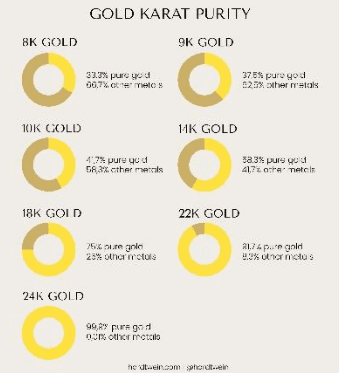
- Emergence of Lower Karat Gold (14K and 9K)
One of the most significant industry responses to rising gold prices is the introduction and promotion of lower-karat gold jewelry.
Reasons for Growing Popularity:
- Affordability: Lower gold content reduces cost significantly
- Durability: Higher alloy composition makes jewelry stronger
- Modern appeal: Suitable for contemporary and minimal designs
- Target audience: Appeals to Gen Z and working professionals
Reports indicate that lower-karat jewelry, particularly 14K, is increasingly accepted as a practical alternative to traditional gold jewelry (Reuters).
- Changing Consumer Mindset
Consumer perception of jewelry is evolving rapidly:
| Traditional Mindset | Modern Mindset |
|---|---|
| Investment-focused | Lifestyle-focused |
| High purity priority | Design & affordability priority |
| Occasion-based wear | Daily wear usage |
| Heavier jewelry | Lightweight & minimal |
This shift is particularly evident among younger consumers, who prioritize versatility and style over purity.
- Industry Adaptation Strategies
Jewelry brands have adapted strategically to these changes by:
- Launching 14K and 9K collections
- Promoting lightweight jewelry
- Introducing flexible pricing and EMI options
- Leveraging digital and omnichannel retail
- Targeting younger demographics through branding and design
Retailers are also focusing on innovation to maintain demand despite rising prices.
- Dual Market Structure
The jewelry market is now divided into two key segments:
Traditional Segment (22K Gold)
- Wedding and cultural jewelry
- Investment-driven purchases
Contemporary Segment (14K & 9K Gold)
- Daily wear jewelry
- Fashion-oriented consumption
- Affordable price points
This dual structure ensures that the industry caters to both traditional and modern consumers.
Conclusion

The rising price of gold has significantly influenced customer preferences in the jewelry market. While traditional high-karat gold jewelry continues to hold cultural importance, its dominance is gradually being challenged by more affordable alternatives.
The emergence of 14K and 9K gold jewelry reflects a shift toward affordability, practicality, and lifestyle-oriented consumption. Consumers are no longer solely driven by investment motives but are increasingly focused on design, usability, and value for money.
The jewelry industry has successfully adapted by diversifying its offerings and targeting new consumer segments. This transformation highlights the industry’s resilience and ability to evolve with changing economic and social conditions.
In the future, the jewelry market is expected to continue evolving, with sustained growth in lower-karat segments alongside traditional gold jewelry. The key to success will lie in balancing innovation with cultural relevance.
References (With Links)
- Gold price rise hits jewelry demand in India (Economic Times)
- India Gold Market Update – World Gold Council
- India’s Gold Consumption Trends (JewelBuzz)
- Gold price surge shifting jewelry demand (Informist Media)
- Gold Rate Trends in Mumbai (Candere)
- Out-of-reach gold prices make 14–18K popular (TOI)
- Gold hits records; buyers shift preferences (Reuters)