Can Sustainable Manufacturing Give Sportswear Brands an Edge?
By Arjun Gupta, Founder & CEO, KragBuzz Sports
India’s textile and apparel industry is giving greater importance to sustainable manufacturing. The sector contributes around 2% of India’s GDP and 11% of its manufacturing gross value added (GVA). It also employs more than 45 million people.
At the same time, India generates around 70.73 lakh tonnes of textile waste every year. More than 70% of this waste is recovered through recycling, reuse and upcycling.
For sportswear brands, sustainability is becoming increasingly important. Jerseys, T-shirts, track pants and activewear are now part of everyday wardrobes, not just sports kits. As demand grows, manufacturers must also consider how they use materials and manage waste.
This raises an important question: Can sustainable manufacturing become a competitive advantage for sportswear brands?
Sustainability Must Start Inside the Factory
For years, fashion brands have focused on sustainable products, recycled fabrics and eco-friendly packaging. However, meaningful change must begin much earlier in the manufacturing process.
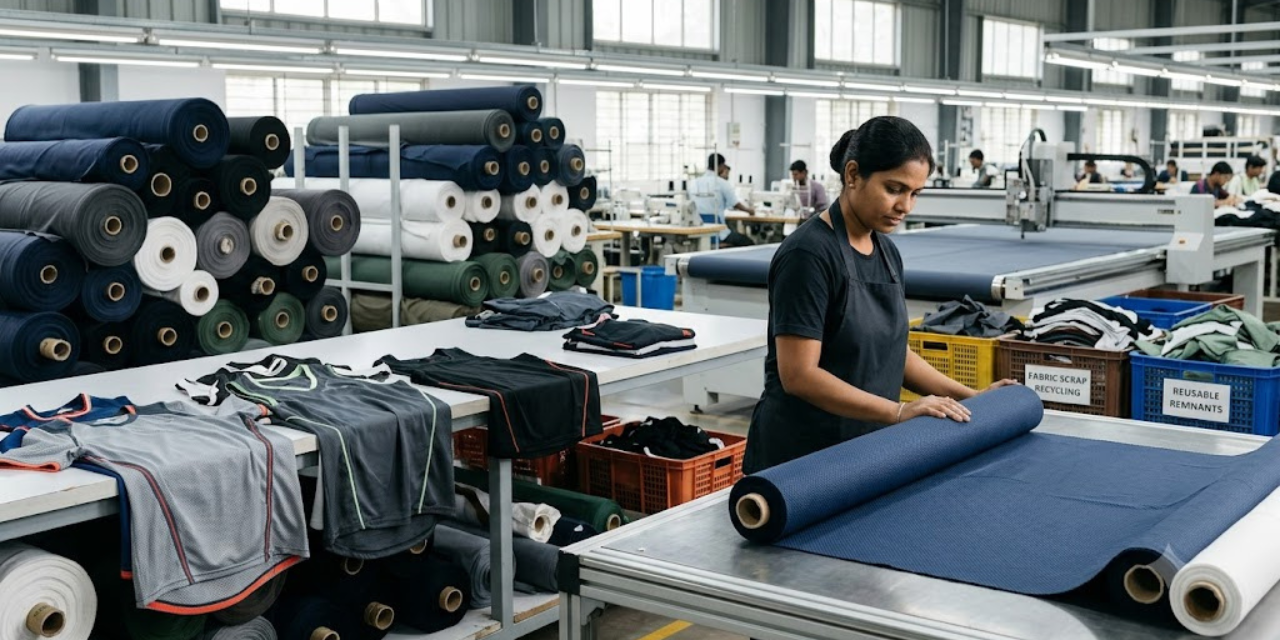
Manufacturers need to consider how they source fabrics, reduce cutting waste and plan production. They must also manage energy use and find better ways to handle unused or rejected materials.
This is especially important in sportswear manufacturing. Customisation is a major part of the business, with different designs, colours, sizes and team requirements. Without proper planning, manufacturers may end up with excess fabric, unused stock and avoidable waste.
Therefore, better planning and technology can help sportswear businesses reduce waste while improving production efficiency.
Less Waste Can Mean Better Business
Many manufacturers view sustainability as an added cost. However, better resource management can also improve efficiency and reduce expenses.
For example, precise fabric cutting can reduce material waste. Digital design can limit the need for physical samples. Similarly, better inventory planning can prevent overproduction, while efficient machinery can help control energy use.
Individually, these changes may seem small. However, their impact can grow significantly when manufacturers apply them across large production volumes.
India’s textile industry is already moving in this direction. According to the India Brand Equity Foundation (IBEF), around 95% of pre-consumer textile waste is recycled. In addition, India’s textile recycling market is projected to reach around US$3.5 billion by 2030.
These developments offer manufacturers an opportunity to rethink waste. Instead of treating it only as an environmental problem, businesses can explore ways to recover and reuse valuable materials.
Customers Are Asking Different Questions
Sportswear customers are also changing. Increasingly, buyers want to know where products are made, which materials manufacturers use and how responsibly brands operate.
This shift is particularly relevant for sports academies, professional teams, schools, institutions and corporate organisations. These customers often place bulk orders or return for repeat purchases.
Consequently, sustainability can influence buying decisions alongside price, quality, delivery times and customisation.
A brand that combines reliable delivery and quality products with flexible designs and responsible manufacturing can offer customers greater value. It can also build a stronger market position than a business competing on price alone.
India Has an Opportunity to Move Forward
India already has a strong textile and apparel manufacturing base. According to IBEF, the country ranks as the world’s sixth-largest exporter of textiles and apparel. The sector also produces around 22 billion garments annually.
The next opportunity is to move further up the value chain.
For sportswear manufacturers, this means investing in better production technology and waste management. They can also explore recycled and responsibly sourced materials, alongside renewable energy where practical.
However, technology alone cannot deliver lasting change. People and skills are equally important.
Workers and production teams need training in quality control, material use, production planning and efficient manufacturing practices. With the right training, they can help reduce waste and improve product quality.
For Indian sportswear companies, combining technology, skilled workers and better processes can support both business efficiency and responsible production.
Sustainability Can Become a Competitive Advantage
The biggest mistake brands can make is treating sustainability only as a marketing message.
Customers will increasingly look beyond claims such as “eco-friendly”. Instead, they will want to know what happens inside the factory and how manufacturers manage their resources.
For sportswear brands, these practices can become an important competitive advantage.
The goal is to combine quality, speed, customisation and responsible production. Sustainability does not have to come at the expense of these business priorities. When manufacturers plan carefully, they can reduce waste, improve efficiency and use resources more effectively.
India already has a strong manufacturing base, a large workforce and a growing market. Now, the opportunity is to make sustainability part of everyday production, from design and fabric sourcing to cutting, manufacturing, quality checks and dispatch.
Ultimately, the strongest sustainability story may not be the biggest claim on a product label. It may be a manufacturing process where better planning, less waste and smarter resource use are simply part of doing business.