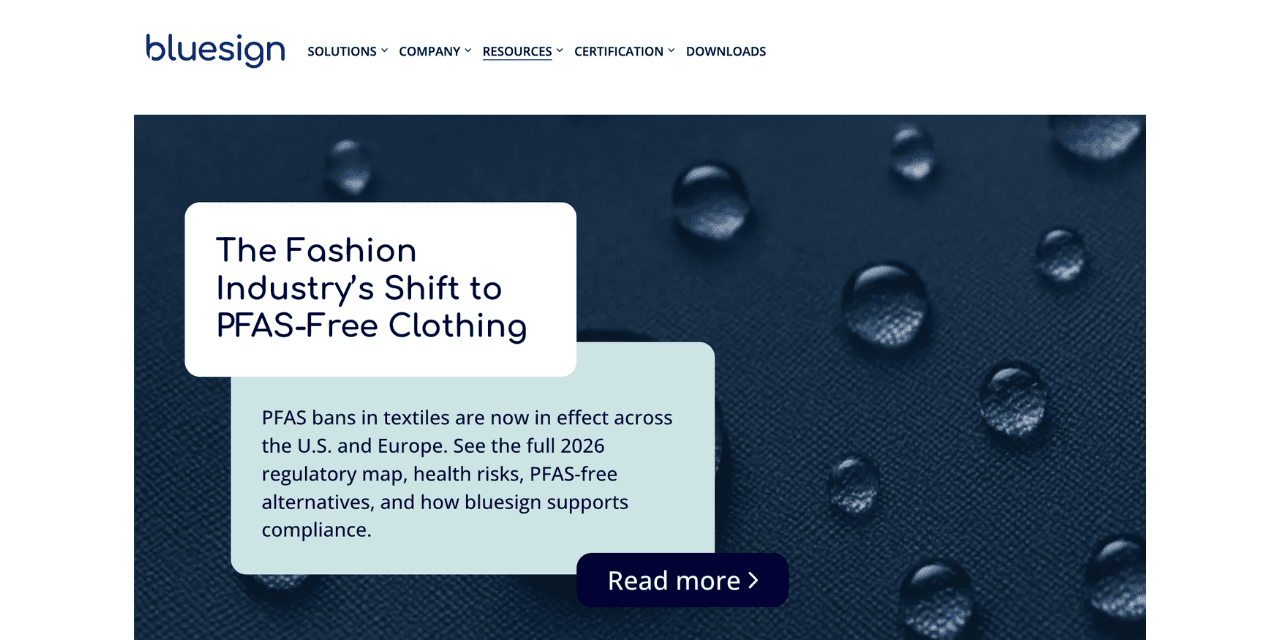
bluesign has updated its consumer-facing educational resource focused on PFAS in clothing, offering fresh insights into how the fashion and outdoor industries are navigating the global transition towards PFAS-free textiles amid tightening environmental regulations and growing demand for verified sustainability practices.
The updated resource arrives at a crucial time as governments across the United States and Europe introduce stricter restrictions on fluorinated chemistries, while brands, manufacturers, and consumers increasingly scrutinise the use of so-called “forever chemicals” in apparel, footwear, outdoor gear, and performance textiles.
PFAS (per- and polyfluoroalkyl substances) have historically been used in textiles to provide water repellency, stain resistance, and durability in products such as rainwear, sportswear, uniforms, footwear, outdoor equipment, and household textiles. However, growing scientific concerns surrounding their environmental persistence and potential health risks have intensified global regulatory action.
The updated bluesign resource outlines where PFAS are commonly found in textiles, the environmental impact associated with their lifecycle, and the technical challenges brands face while transitioning to alternative chemistries that maintain product performance without relying on fluorinated compounds.
The development also reflects a broader industry shift away from generic sustainability marketing claims towards evidence-based communication supported by verified data and transparent supply chain management.
As part of this transition, bluesign highlighted the increasing importance of verified chemical input management, especially as new regulations such as the EU’s Empowering Consumers for the Green Transition Directive (ECGT) begin reshaping how brands communicate environmental claims and sustainability credentials.
bluesign stated that the fashion and textile industries are now under growing pressure to provide greater traceability, verified compliance data, and transparent product-level information across global supply chains.
The updated resource further explores the rapidly evolving regulatory landscape surrounding PFAS. Several U.S. states including California, New York, Maine, Vermont, Connecticut, Minnesota, and Washington have already implemented or announced PFAS restrictions affecting apparel and textile products. Europe is simultaneously advancing EU-wide restrictions through REACH regulations and national legislation in countries including France and Denmark.
The resource also examines the operational and technical challenges involved in phasing out PFAS across textile manufacturing. Key industry concerns include maintaining water repellency and durability standards, managing differing regulatory requirements across regions, achieving supply chain visibility, and meeting rising consumer expectations regarding product safety and sustainability claims.
bluesign additionally highlighted alternative chemistries currently being adopted across the industry, including polyurethane-based repellents, polyacrylates, plant-based waxes, and silicone-based finishes. Emerging innovations in sustainable coatings and fluorine-free performance technologies are also gaining momentum as brands seek scalable PFAS-free solutions.
Several major global brands are already transitioning towards PFAS-free product development strategies, particularly across outdoor apparel, sportswear, and performance textiles.
The updated resource also outlines bluesign’s long-term PFAS phase-out strategy, which began with restrictions on long-chain PFAS chemistry in 2015 and culminated in a complete PFAS restriction across bluesign-approved materials and products by January 2026, except for limited essential-use exemptions.
According to bluesign, the transition away from PFAS represents a broader transformation within the textile industry towards safer chemistry management, transparent sourcing practices, and scientifically verified sustainability standards.
The organisation noted that future competitiveness within the fashion and textile sectors will increasingly depend on proactive chemical management systems, reliable regulatory compliance, and credible sustainability communication supported by independently verified data.