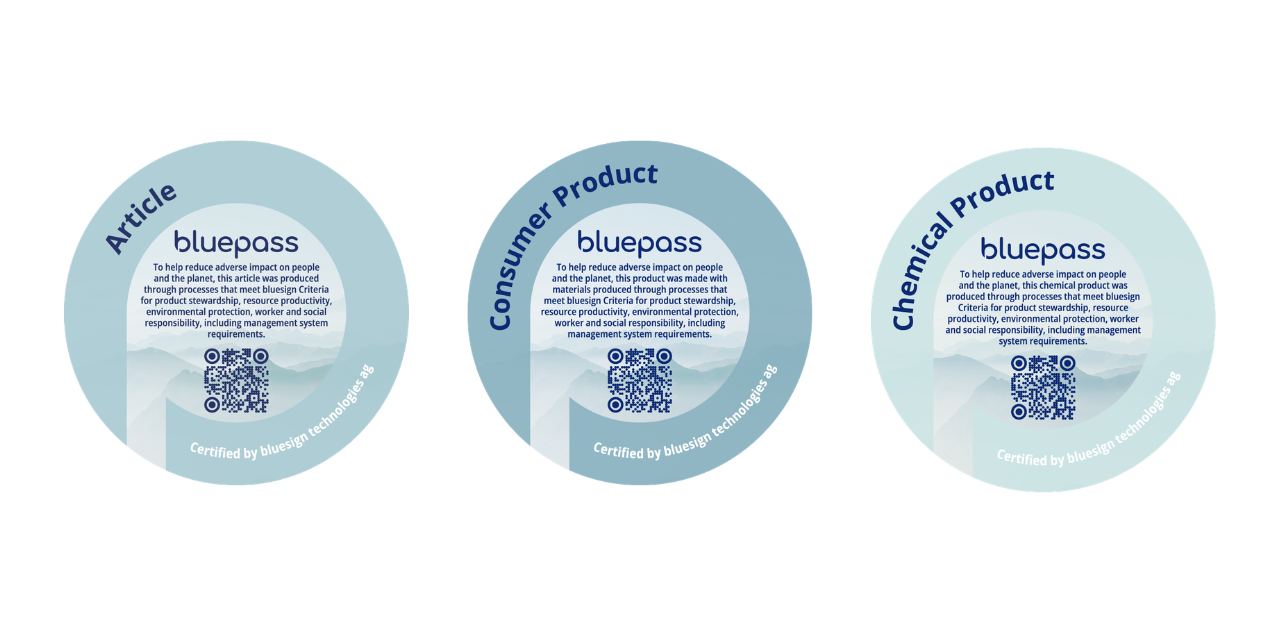
bluesign technologies ag has unveiled bluepass, a newly developed certification mark and product labelling system designed to provide clear, credible, and verifiable sustainability claims at scale.
Created in close partnership with bluesign System Partner companies and aligned with emerging EU regulatory frameworks, bluepass replaces the existing bluesign® PRODUCT and bluesign® APPROVED labels with a single, unified certification system. This new framework is intended to support both consumer transparency and compliance with regulatory standards.
“At a time when sustainability claims are under increasing scrutiny, the industry needs clarity, consistency, and proof,” said Barbara Oswald, Chief Commercial Officer at bluesign. “bluepass now provides our over 900 global System Partner companies a standardized way to communicate verified performance, grounded in real production processes and supported by accessible data.”
The introduction comes as brands prepare for the EU’s Empowering Consumers for the Green Transition Directive (ECGT), which will require all consumer-facing environmental claims to be supported by accessible and verifiable evidence from September 27, 2026.
To meet these requirements, bluepass introduces a structured labelling system that integrates a certification mark, fixed claim language, and a QR code linking to a bluesign-managed verification platform. This ensures that claims are substantiated and independently verified, rather than self-declared.
The system applies to products, materials, and chemical inputs that meet bluesign’s standards across six responsibility areas, including environmental protection, resource efficiency, and social and worker welfare.
bluepass introduces three certification categories aligned with different stages of the value chain:
- bluepass consumer product for finished goods
- bluepass article for intermediate materials and components
- bluepass chemical product for chemical inputs
Each label follows a standardised format, incorporating the certification mark, defined claim text, QR code, and a unique certification ID to ensure consistency and traceability.
“When a consumer recognizes and scans a bluepass label, they are not just seeing a claim, they are accessing the verified information behind it,” added Oswald. “That level of transparency is becoming the expectation, not the exception.”
Scanning the QR code directs users to a dedicated verification page managed by bluesign, offering detailed insights into certification criteria and the processes behind compliance. This creates a direct connection between on-product communication and underlying supply chain data.
The rollout will extend across bluesign’s global network of more than 900 partners, including brands, manufacturers, and chemical suppliers, enabling consistent use of verified sustainability claims throughout the textile value chain.
As adoption increases, bluepass is positioned to become a global benchmark for sustainability communication, aligning with current regulatory requirements while preparing the industry for future developments such as digital product passports and enhanced claim verification systems.
“The industry is moving toward evidence-based communication,” said Oswald. “bluepass gives brands the structure to meet that expectation with confidence, while maintaining the integrity of the data behind every claim.”
The launch of bluepass reflects a wider industry transition, moving from marketing-driven sustainability messaging to systems rooted in verified, data-backed transparency.A