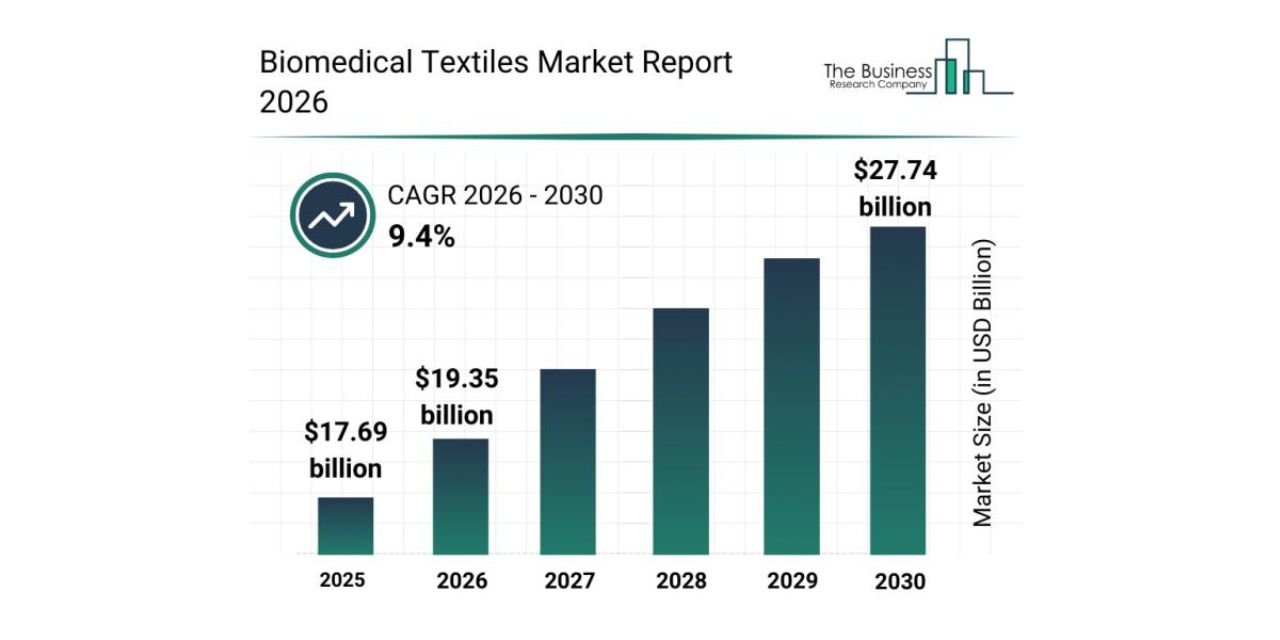
The global biomedical textiles market is projected to reach $27.74 billion by 2030, expanding at a CAGR of 9.4%, according to insights from The Business Research Company. The sector is witnessing accelerated growth as advancements in medical-grade materials and increasing healthcare demand reshape the landscape of textile-based medical solutions.
Biomedical textiles are evolving into high-performance materials that enhance patient outcomes, improve medical device functionality, and support advanced treatment methodologies. Their growing adoption spans applications such as implants, wound care, and smart healthcare textiles.
Key Growth Drivers
One of the primary drivers of market expansion is the increasing adoption of bioresorbable materials. These materials integrate seamlessly with human tissue and reduce long-term complications, making them highly preferred in modern medical applications.
The rising demand for minimally invasive surgical solutions is another critical factor. Textile-based implants and devices are enabling faster recovery, reduced risk, and improved patient comfort, driving their adoption across healthcare systems.
Additionally, the growing focus on infection prevention and patient safety is boosting demand for antimicrobial fabrics and advanced wound care solutions.
Emerging Trends Shaping the Market
- Smart Healthcare Textiles: Integration of sensors and responsive materials for monitoring and treatment
- Biodegradable Fibres: Increasing shift towards sustainable, bio-based medical textiles
- 3D-Printed Implants: Customised, patient-specific solutions improving surgical outcomes
- Advanced Implantable Materials: Enhanced durability, flexibility, and tissue compatibility
A notable innovation includes the development of 3D-printed, patient-specific implants. For instance, restor3D Inc. received regulatory clearance for its advanced knee replacement system featuring porous lattice structures that support natural bone integration and long-term stability.
Industry Collaboration and Innovation
Strategic partnerships are playing a key role in advancing product capabilities. In one such collaboration, Riverpoint Medical partnered with DSM Biomedical to integrate osteoconductive coating technology into textile-based implants, enhancing bone regeneration and implant performance.
Key Market Players
The competitive landscape includes major global companies such as:
- Johnson & Johnson Services Inc
- 3M Company
- B. Braun Melsungen AG
- Smith & Nephew PLC
- Medline Industries Inc
- Freudenberg Medical LLC
- Asahi Kasei Corporation
- Milliken & Company
- Kimberly-Clark Corporation
- Zimmer Biomet Holdings
These players are continuously investing in R&D and expanding their portfolios to address evolving clinical and technological requirements.
Market Segmentation Overview
The biomedical textiles market is segmented across:
- Product Type: Implantable and non-implantable textiles
- Fabric Type: Woven, non-woven, and knitted textiles
- Fibre Type: Biodegradable and non-biodegradable materials
- Applications: Cardiology, orthopaedics, neurology, dentistry, and general surgery
- End Users: Hospitals, clinics, ambulatory centres, and community healthcare
Conclusion
The biomedical textiles market is entering a high-growth phase, driven by material innovation, technological integration, and rising healthcare demands. With advancements in smart textiles, bioresorbable materials, and customised implants, the sector is poised to play a crucial role in the future of medical treatment and patient care.