Harshita Patidar
Student-M. Design
Renaissance University
Indore
Ananya Sharma
Assistant Professor
School of Fashion
Renaissance University,
Indore
Traditional textiles occupy a space far beyond that of ordinary fabric. They are living expressions of culture, memory, and identity—woven, dyed, and printed through knowledge passed down across generations. Each motif carries meaning, each technique reflects centuries of experimentation, and each textile bears the quiet labor of skilled hands. Yet today, these rich traditions stand at a fragile crossroads.
In contemporary markets, traditional textiles increasingly compete with mass-produced imitations. Power looms, digital printing, and mechanized processes replicate surface appearances at a fraction of the cost, flooding the market with cheaper alternatives. For consumers, this creates confusion. For artisans, it represents a profound injustice. When a textile that requires weeks—or even months—of meticulous handwork is reduced to a machine-made replica, the value of craftsmanship is diminished, and the dignity of the artisan is undermined.
Traditional textiles are not merely decorative commodities; they are cultural archives. From handwoven silks and naturally dyed cottons to resist-dyed and embroidered fabrics, these textiles embody deep relationships between artisans, their communities, and the natural environment. The skills involved are often region-specific and environmentally sensitive, relying on local materials, climate knowledge, and ritual practices. Losing these crafts means losing irreplaceable forms of cultural intelligence.
The digital age has dramatically reshaped how textiles are produced, marketed, and consumed. On one hand, digital platforms have opened unprecedented opportunities. Social media, online marketplaces, and global exhibitions allow artisans and craft clusters to reach audiences far beyond their local geographies. Stories of heritage, process, and people can now travel across borders, creating new appreciation and economic possibilities. For many artisans, digital visibility has become a lifeline.
However, the same technologies that enable visibility also enable exploitation. High-resolution images shared online make it easier than ever to copy designs without consent. Fast fashion cycles demand rapid production, encouraging manufacturers to imitate traditional patterns without understanding their cultural depth or technical complexity. As a result, replicas produced by machines dominate markets, while authentic handcrafted textiles struggle to survive.
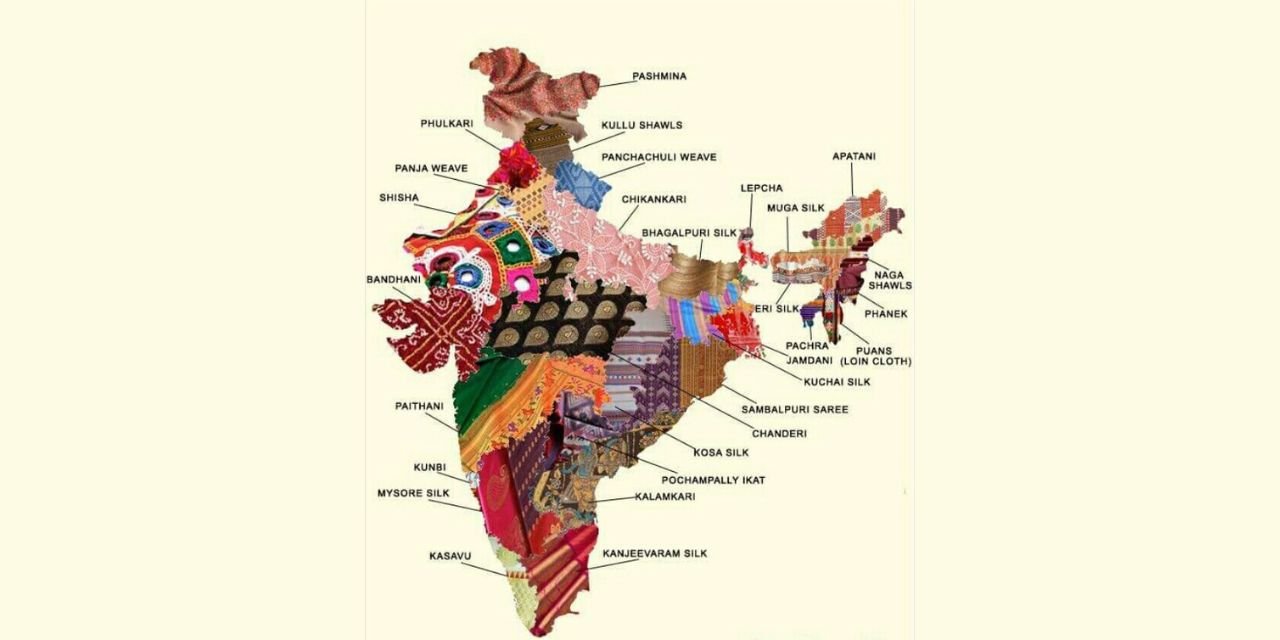
This challenge is visible across cultures and geographies. In India, Banarasi silk—celebrated for its intricate brocade and time-intensive weaving—is frequently reproduced on power looms. Kanjeevaram silk, renowned for its durability and symbolic motifs, faces similar imitation. Crafts such as Ikat, which involves resist-dyeing yarns before weaving, or Ajrakh printing, with its layered natural dyeing process, are often reduced to digital prints that mimic only their visual surface. Globally, Andean handwoven textiles, African Kente cloth, and Japanese Kasuri face parallel threats, where traditional knowledge is diluted through mass reproduction.
Legal frameworks such as Geographical Indication (GI) protection play a critical role in addressing this issue. GI tags link a product to its place of origin and traditional methods of production, helping consumers identify authentic textiles while preventing the misuse of traditional names and designs. In India, textiles such as Banarasi silk, Pashmina, and Chanderi fabric have received GI recognition. While these measures offer protection on paper, enforcement remains uneven, and awareness among consumers is limited.
Despite legal safeguards, artisans continue to face systemic challenges. Many struggle with low incomes, limited access to digital tools, and a lack of awareness about how their designs are being copied online. Digital illiteracy prevents them from protecting their intellectual and cultural property, while middlemen and large manufacturers often reap disproportionate benefits. This imbalance deepens economic inequality and threatens the sustainability of craft traditions.
Consumer awareness is another critical concern. In online marketplaces, it is often difficult to distinguish between handcrafted and machine-made textiles. Without transparency, certification, or meaningful storytelling, authenticity becomes invisible. When consumers are unaware of the time, skill, and cultural significance embedded in traditional textiles, price becomes the primary deciding factor—often at the expense of artisans.
The future of traditional textiles in the digital age depends on a balanced and ethical use of technology. Digital tools must function as instruments of preservation rather than exploitation. Initiatives such as artisan-led digital platforms, QR-based authentication systems, virtual craft exhibitions, and process-driven storytelling can help bridge the gap between makers and consumers. By revealing the journey of a textile—from raw material to finished product—technology can restore value, trust, and emotional connection.
Fashion brands and designers also bear responsibility. Ethical collaboration, fair compensation, proper credit, and respect for cultural origins are essential. When designers engage thoughtfully with traditional crafts, they can help ensure that innovation does not come at the cost of erasure.
Traditional textiles have survived centuries of social, political, and economic change. Their survival in the digital age will depend on collective responsibility—of policymakers, designers, platforms, and consumers alike. Protecting these textiles is not merely about preserving fabric; it is about safeguarding human creativity, cultural memory, and the livelihoods of artisans who continue to weave history into every thread.