Technologies for recycling increasingly complex waste streams are steadily progressing. However, turning these innovations into functioning industrial systems requires more than an effective recycling process.
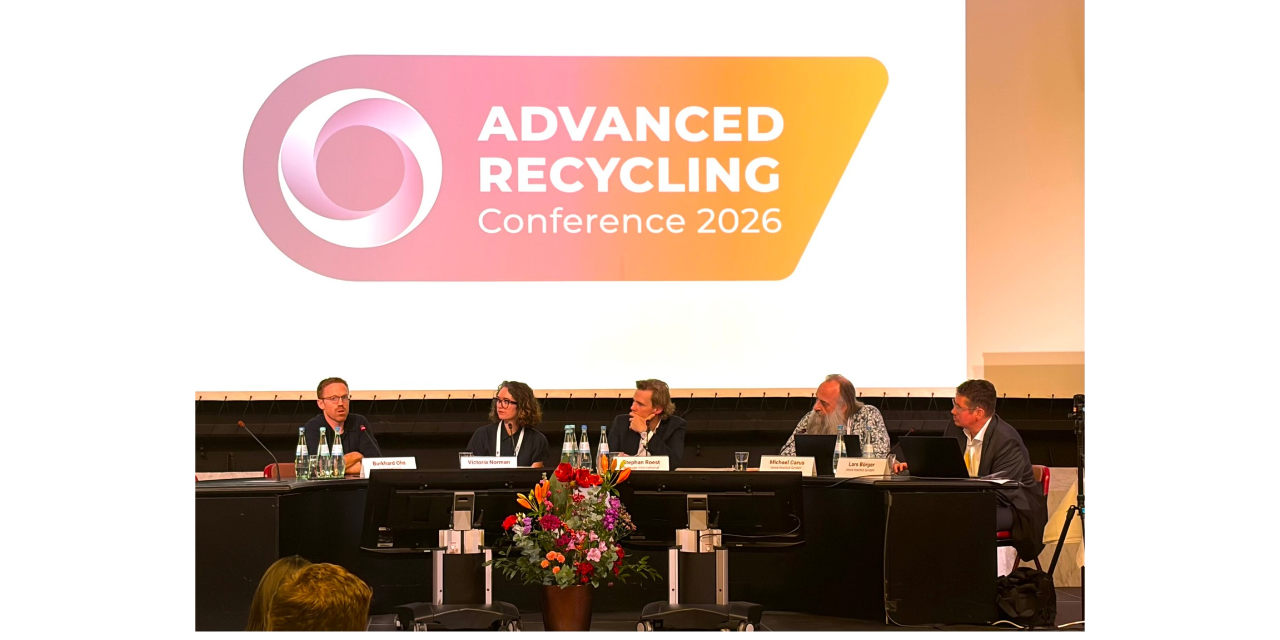
At the Advanced Recycling Conference (ARC) 2026, held on 17 and 18 November in Cologne, Germany, more than 160 international experts from industry, research and policy examined how to bridge the gap between technological development and commercial implementation. Discussions on PVC and textile recycling highlighted the opportunities of combining different recycling approaches. They also explored the challenges of building the value chains needed to make these technologies work.
A central message emerged throughout the conference: there is no single universal recycling solution. Different materials and waste streams require different technologies. Their effectiveness also depends on how well these solutions integrate with existing industrial processes.
Mechanical recycling, chemical recycling and dissolution-based technologies should therefore be viewed as complementary rather than competing approaches. The challenge is to identify the right combination for each application and establish the technical, economic and organisational conditions for successful deployment.
Textile Recycling: Who Will Build the Infrastructure?
Textile recycling emerged as a major topic at ARC 2026, raising an important question: where should textile recycling take place, and who will invest in the required infrastructure?
A dedicated session explored the wider implications of this challenge. Innovative recycling processes are creating new possibilities for blended and complex fabrics. However, the global organisation of textile value chains remains a major obstacle for recyclers.
Much of Europe’s textile supply originates in Asia. As European waste regulations evolve, questions arise about where recycling should take place and how international material flows should be managed.
Collection, sorting and logistics require substantial investment. However, responsibility for financing these systems remains a pressing issue. Extended Producer Responsibility (EPR) could play an important role, but its effective implementation will be essential.
Meanwhile, technological developments are creating new opportunities. Jiaren Chemical Recycling presented progress in textile-to-textile recycling. Research into alternative solvents also highlighted their potential to separate complex fibre blends. However, selecting suitable solvents and ensuring efficient recovery remain important for industrial viability.
Marcel Gausmann of re.solution addressed the economic dimension through his Cheaper Protons approach, which aims to reduce the costs of chemical textile recycling. Discussions on Life Cycle Assessment (LCA) further emphasised the need to evaluate environmental performance alongside technical and economic feasibility.
PVC Recycling: Different Technologies, Shared Opportunities
The dedicated PVC recycling session, co-organised by VinylPlus, demonstrated the value of technological diversity. Presentations covered established mechanical recycling, dissolution-based processes and chemical recycling.
Each approach can address specific PVC waste streams. Rather than competing, these technologies can complement one another and expand recycling opportunities for materials that are difficult to process through conventional methods.
Sorting and Pre-treatment: Preparing Waste for Recycling
Effective sorting and mechanical pre-treatment are also essential to successful recycling. Companies such as EREMA Group highlighted the importance of preparing waste streams appropriately. Better preparation can improve feedstock quality and support more efficient downstream recycling processes.
While PVC demonstrated the potential of combining different technologies, discussions on textile recycling revealed the wider challenges of organising the value chains required to make these approaches work.
From Individual Technologies to Functioning Value Chains
Across both sectors, ARC 2026 reinforced the importance of connecting technological innovation with industrial implementation.
This requires cooperation between waste managers, technology providers, recyclers and manufacturers. Together, these stakeholders must align collection, sorting, pre-treatment and recycling processes with reliable markets for recovered materials.
Investors and policy-makers also have a crucial role in establishing the financial and regulatory conditions needed for scale-up.
As European recycling requirements evolve, the priority is to build integrated systems that are economically viable, environmentally sound and capable of operating at industrial scale. The challenge now is to connect the right technologies, secure investment and turn recycling potential into industrial reality.
Conference Acknowledgement
nova-Institute sincerely thanks the conference sponsors for their valuable support: Gold Sponsor Siemens, Silver Sponsors BUSS ChemTech and Yncoris, and Bronze Sponsor EREMA Group, as well as partner VinylPlus for the co-organisation of the PVC session.